MAM
NCLT says yes to Times Group proposal to tear itself in half
MUMBAI: India’s Times Group is splitting down the middle. On Wednesday (19 November), Mumbai’s National Company Law Tribunal blessed Bennett, Coleman & Company Limited’s plan to carve out everything that isn’t newspapers and hand it to a freshly minted entity called Times Horizon Private Limited.
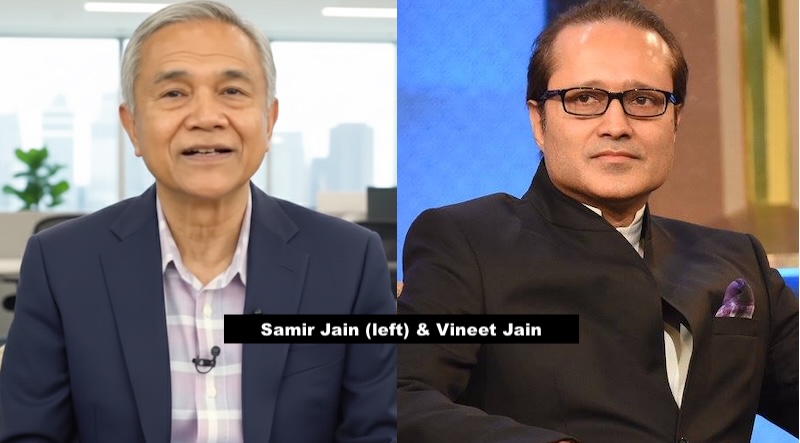
The demerger, sanctioned by judicial member Sushil Mahadeorao Kochey and technical member Prabhat Kumar, draws a sharp line through the 112-year-old media giant. On one side: the storied publishing business behind the Times of India, under the watchful eye of Samir Jain. On the other: a sprawling digital and entertainment empire spanning television, internet platforms, radio, music, films, real-estate classifieds, fintech, edtech, sports, gaming, outdoor advertising, events and investments, under the guardianship of Vineet Jain. .
The rationale is stark. These businesses demand different skills, capital and risk appetites. Publishing newspapers requires one mindset; running streaming services quite another. The group’s board concluded in September that focused management teams would extract more value from each vertical than a single leadership juggling broadsheets and bandwidth.
Times Horizon was incorporated specifically to house what the tribunal documents call the “EIBME Business”—a catch-all for entertainment, internet, broadcasting, music and events. The acronym barely captures the breadth: major subsidiaries Times Internet and Entertainment Network India fall into this bucket, alongside ventures in advertising, brand capital and multiple asset classes.
The numbers tell the story of consolidation. BCCL’s paid-up capital stands at Rs 2.87 billion across 28.7 million equity shares held by just 11 shareholders. Times Horizon started as a shell with Rs 100,000 in capital. After the demerger, its shareholding will mirror BCCL’s—then immediately shift. A preferential share issue will hand a consortium of “specified shareholders” acting in concert a 50.05 per cent voting stake, with Sanmati Properties identified as the lead investor.
The tribunal dispensed with shareholder meetings after all 11 equity holders signed consent affidavits. Over 90 per cent of BCCL’s 3,833 unsecured creditors, owed Rs5.49bn, also approved. Neither company carries secured debt or preference shares—a clean surgical cut.
The appointed date is 1st April 2026, though it could arrive sooner. The tribunal ordered notices sent to the regional director, registrar of companies, income tax and GST authorities, the Competition Commission and the ministry of information and broadcasting. Regulatory authorities have 30 days to object; silence means consent.
BCCL must also disclose guarantees, contingent liabilities, insolvency proceedings, material litigation and letters of credit—the fine print that often trips up corporate restructurings. An affidavit of service is due within ten working days.
What emerges is a bet on divergence. The publishing business—print and digital news—stays with the Bennett Coleman name and legacy. Everything else gets a new vehicle, new capital and presumably new ambitions. For shareholders, it’s a choice: bet on journalism or ride the entertainment and tech wave. For a business born in 1913, it’s an admission that the future lies beyond the press room.

Digital
Content India 2026 opens with a copro pitch, a spice evangelist and a £10,000 prize for Indian storytelling
Dish TV and C21Media’s three-day summit puts seven ambitious projects before an international jury, and two walk away with serious development money
MUMBAI: India’s content industry gathered in Mumbai this March for Content India 2026, a three-day summit organised by Dish TV in partnership with C21Media, and it wasted no time making a statement. The event opened with a Copro Pitch that put seven scripted and unscripted television concepts before an international panel of judges, and by the end of it, two projects had walked away with £10,000 each in marketing prize money from C21Media to support development and international promotion.
The jury, comprising Frank Spotnitz, Fiona Campbell, Rashmi Bajpai, Bal Samra and Rachel Glaister, evaluated a shortlist that ranged from a dark Mumbai comedy-drama about mental health (Dirty Minds, created by Sundar Aaron) to a Delhi coming-of-age mystery (Djinn Patrol, by Neha Sharma and Kilian Irwin), a techno-thriller about a teenage gaming prodigy (Kanpur X Satori, by Suchita Bhatia), an investigative crime drama blending mythology and modern thriller (The Age of Kali, by Shivani Bhatija), a documentary on India’s spice heritage (The Masala Quest, hosted by Sarina Kamini), a documentary on competitive gaming (Respawn: India’s Esports Revolution, by George Mangala Thomas and Sangram Mawari), and a reality-horror competition merging gaming and immersive fear (Scary Goose, by Samar Iqbal).
The session was hosted by Mayank Shekhar.
The two winners were Djinn Patrol, backed by Miura Kite, formerly of Participant Media and known for Chinatown and Keep Sweet: Pray & Obey, with Jaya Entertainment, producers of Real Kashmir Football Club, also attached; and The Masala Quest, created and hosted by Sarina Kamini, an Indian-Australian cook, author and self-described “spice evangelist.”
The summit also unveiled the Content India Trends Report, whose findings made for bracing reading. Daoud Jackson, senior analyst at OMDIA, set the tone: “By 2030, online video in India will nearly double the revenue of traditional TV, becoming the main driver of growth.” He noted that in 2025, India produced a quarter of all YouTube videos globally, overtaking the United States, while Indians collectively spend 117 years daily on YouTube and 72 years on Instagram. Traditional subscription TV is declining as free TV and connected TV gain ground, forcing broadcasters to innovate. “AI-generated content is just 2 per cent of engagement,” Jackson added, “highlighting the dominance of high-quality human content. The key for Indian media companies is scaling while monetising effectively from day one.”
Hannah Walsh, principal analyst at Ampere Analysis, added hard numbers to the picture. India produced over 24,000 titles in January 2026 alone, with 19,000 available internationally. The country now accounts for 12 per cent of Asia-Pacific content spend, up from 8 per cent in 2021, outpacing both Japan and China. Key exporters include JioStar, Zee Entertainment, Sony India, Amazon and Netflix, delivering over 7,500 Indian-produced titles abroad each year. The top importing markets are Saudi Arabia, the UAE, Egypt, the United States and the Philippines. Scripted content dominates globally at 88 per cent, with crime dramas and children’s and family titles performing particularly strongly.
Manoj Dobhal, chief executive and executive director of Dish TV India, framed the summit’s ambition squarely. “Stories don’t need translation. They need a platform, discovery, and reach, local or global,” he said. “India produces more movies than any country, our streaming platforms compete globally, and our tech and creators win international awards. Yet fragmentation slows growth. Producers, platforms, and tech move in different lanes. We need shared spaces, collaboration, and an ecosystem where ideas, technology, and people meet. That is why we built Content India.”
The data, the pitches and the prize money all pointed to the same conclusion: India is not waiting for the world to discover its stories. It is building the infrastructure to sell them.