Digital
How Working Professionals Are Using Online AI Courses to Switch Careers

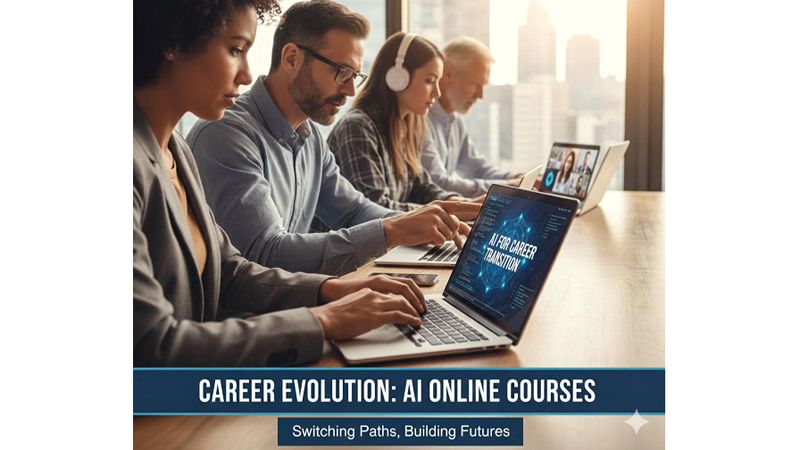
According to recent industry data, 90% of Indian professionals now view generative AI skills as critical for career growth, and 42% are actively seeking training or considering career pivots.
Working professionals are leveraging online AI courses to fundamentally transform their career trajectories, with a significant shift currently underway in the workplace landscape.
The key difference from traditional tech transitions is that these professionals are not learning programming languages. Instead, they’re mastering AI tools like ChatGPT, prompt engineering, and automation workflows to enhance their productivity and become invaluable to their organisations.

The AI Skills Gap: Why Now is the Perfect Time
Organisations across industries are racing to adopt AI, yet they face a critical problem: there aren’t enough skilled professionals who understand how to implement these technologies effectively. This creates a golden opportunity for working professionals who are willing to upskill.
Unlike traditional career transitions that require years of study and financial strain, AI learning for professionals is remarkably accessible. You don’t need to abandon your current job or go back to school.
You can learn at your own pace, apply what you learn immediately to your current role, and gradually position yourself for advancement or lateral movement into AI-focused positions.
According to Microsoft and LinkedIn’s Work Trend Index, 75% of knowledge workers are already using generative AI for work.
Workers using AI tools report saving approximately 5-6 hours per week on routine tasks, freeing up significant time for strategic work that actually matters.
Real Productivity Gains Translate to Career Value
When using ChatGPT for document writing, professionals completed tasks 59% faster while also improving the quality of their work. In practical terms, this means a professional who typically writes 17 documents in a workday could produce nearly 28 documents using AI assistance.
AI courses in Delhi are not just about acquiring random skills. You’re learning frameworks that apply directly to your industry. Whether you’re in marketing, finance, human resources, customer support, or operations, AI has specific applications that solve real problems in your field.
How Working Professionals Integrate Learning Into Their Schedules
The practical concern every working professional faces: where does this learning fit? The answer lies in the design of modern AI education.
Unlike traditional degree programs or bootcamps requiring full-time commitment, structured online AI courses for professionals operate differently.
Quality programs recognise that working professionals have existing commitments. They structure content in modular formats, offer flexible pacing, include asynchronous learning options, and provide practical projects you can work on alongside your current job.
Many professionals report dedicating 5-10 hours weekly to learning while maintaining their full-time employment..
Why AI Courses Without Coding Matter
The historical barrier to tech careers was coding. It required distinct cognitive skills, extended learning periods, and often felt alien to professionals from non-technical backgrounds. This barrier created the “tech career vs. everything else” divide.
No-code AI courses have democratised AI education in a meaningful way. You can genuinely develop professional-grade AI capabilities without learning Python or Java.
You can architect sophisticated workflows, interpret complex data analysis, and lead AI implementation projects while remaining fundamentally non-technical.
This matters because it means your existing professional experience becomes an asset rather than a liability. Your domain knowledge in marketing, finance, HR, or operations?
That’s precisely what these AI projects need. The learning curve focuses on AI-specific concepts rather than programming fundamentals.
Common Fears and What Actually Happens
“I’m too old to learn new technology” — Yet many professionals in their 40s, 50s, and beyond are successfully making this transition. Age brings advantages: deeper business understanding, existing professional networks, and clearer perspective on what problems matter most.
“I don’t have the technical background” — This is precisely why no-code AI courses exist. Hundreds of thousands of non-technical professionals now have meaningful AI skills. Your background in marketing, sales, operations, or customer service is actually valuable context for AI work.
Frequently Asked Questions
Q: Do I really need to learn programming to become proficient in AI?
A: Absolutely not. While some AI roles require programming, a significant and growing portion don’t. No-code AI platforms, prompt engineering, workflow automation, and business analysis roles don’t require coding knowledge. Many working professionals advance into high-value AI roles without ever writing a line of code. Your professional domain knowledge is often more valuable than programming ability.
Q: How long does it typically take to develop job-ready AI skills?
A: Most working professionals develop foundational AI competency in 2-3 months with consistent effort. Building specialised expertise and a portfolio of real projects typically takes 4-6 months of focused learning while working. The timeline depends on your starting experience level, how much time you invest weekly, and your specific career goals. The advantage is you don’t need to wait until you’re “done learning” to add value—practical skills become immediately applicable.
Q: Will learning AI actually improve my career prospects?
A: The evidence strongly suggests yes. Nearly 90% of Indian professionals view generative AI skills as critical for career growth. Organizations are actively seeking professionals who understand both business problems and AI solutions. Many professionals report promotions, salary increases, or better opportunities within 6-12 months of developing AI skills. The scarcity of AI-capable working professionals means those who acquire these skills are in high demand.







Digital
Maharashtra partners OpenAI, Sarvam AI to boost state’s tech ecosystem
State to set up dedicated AI department and roll out frontier technology policies
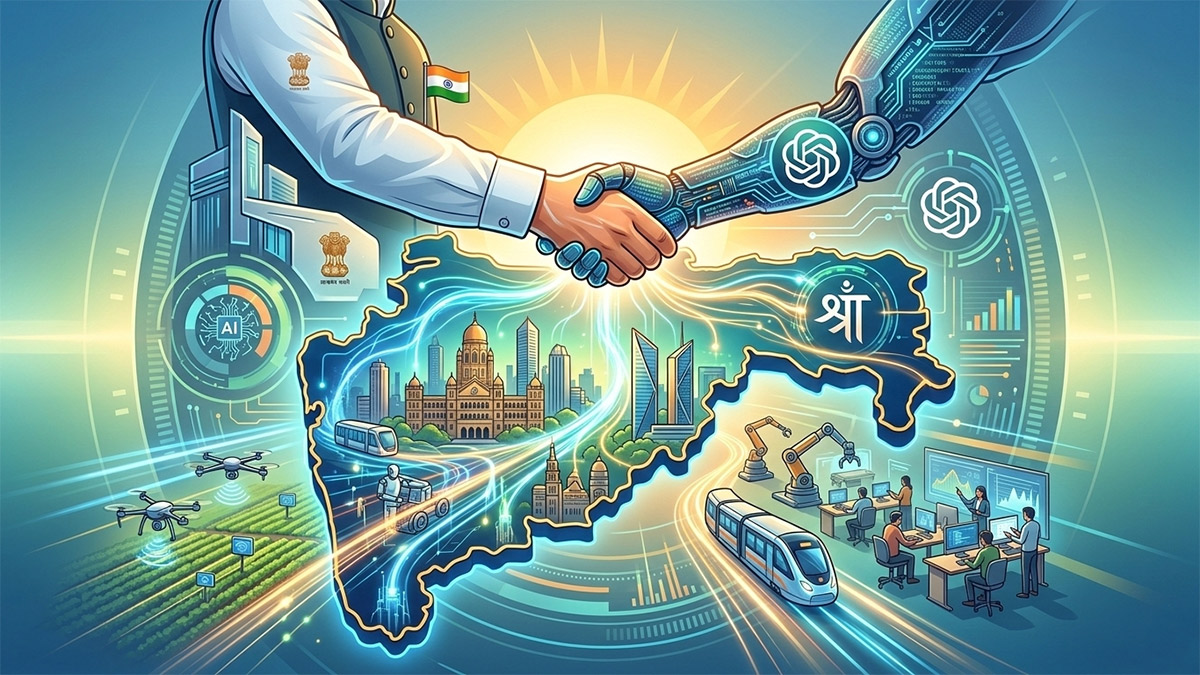
MUMBAI: Maharashtra is set to become a primary hub for artificial intelligence following the 2026–27 Budget announcement. chief minister Devendra Fadnavis confirmed that the state has signed letters of intent with global giant OpenAI and national pioneer Sarvam AI to integrate advanced technology into the state’s economic and administrative framework.
The collaboration with OpenAI and Sarvam AI marks a shift towards adopting cutting-edge generative tools for governance. These partnerships, alongside MoUs with IIT Bombay and BharatGen, are designed to create a robust ecosystem for research and innovation. The move signals the state’s intent to bring together global technology leaders and domestic research institutions to accelerate the development and adoption of artificial intelligence across sectors.
Regarding the strategic intent of these alliances, chief minister Fadnavis stated, “With the objective of making the State’s Information Technology and Artificial Intelligence sector dynamic, letters of intent have been signed with globally and nationally reputed institutions like OpenAI and Sarvam AI to facilitate the Information Technology and Artificial Intelligence sector in the state.”
To manage these high-level partnerships and ensure effective implementation, the government is establishing an independent department of electronics, Information technology, and artificial intelligence. The new department will function with a dedicated commissionerate and specialised technical manpower, enabling faster decision-making, improved coordination, and stronger accountability in executing technology-driven initiatives.
The state also plans to introduce special policies aimed at strengthening its position in emerging technology sectors. These policies will focus on advancing Maharashtra as a global hub for frontier technologies such as artificial intelligence, quantum computing, drones, autonomous vehicles, and deep technology.
According to the chief minister, “The state government plans to introduce special policies to develop Maharashtra as a world-class hub for frontier technologies such as Artificial Intelligence, quantum computing, drones, autonomous vehicles and deep technology.”
Artificial intelligence is already being integrated into the state’s governance framework. A collaboration with Microsoft has led to the development of MahaCrimeOS AI, a platform that has reportedly reduced police investigation times by 80 per cent across 23 police stations in Nagpur. The initiative demonstrates how AI-driven tools can significantly enhance law enforcement efficiency and data analysis capabilities.
The government is also working toward building a fully digitised administrative ecosystem. Plans are underway to achieve complete digitisation of land transactions and implement electronic office systems across departments, paving the way for a paperless government. In addition, a pilot project will introduce AI-powered solutions in 75 selected villages to improve infrastructure, governance efficiency, and overall quality of life in rural areas.
To strengthen digital infrastructure and data protection, the state also intends to establish an advanced data centre in Nagpur. This facility will be designed to safeguard sensitive and sovereign information while supporting large-scale digital services and government platforms.
These initiatives form part of Maharashtra’s broader cyber security and digital transformation strategy aligned with the Viksit Maharashtra 2047 vision. By partnering with global and domestic technology leaders such as OpenAI and Sarvam AI, the state aims to build a secure, future-ready digital ecosystem that enhances citizen services, supports innovation, and strengthens India’s position in emerging technologies.