Brands
Under 30, 35, 40: Hurun India Uth report spotlights young tycoon trailblazers

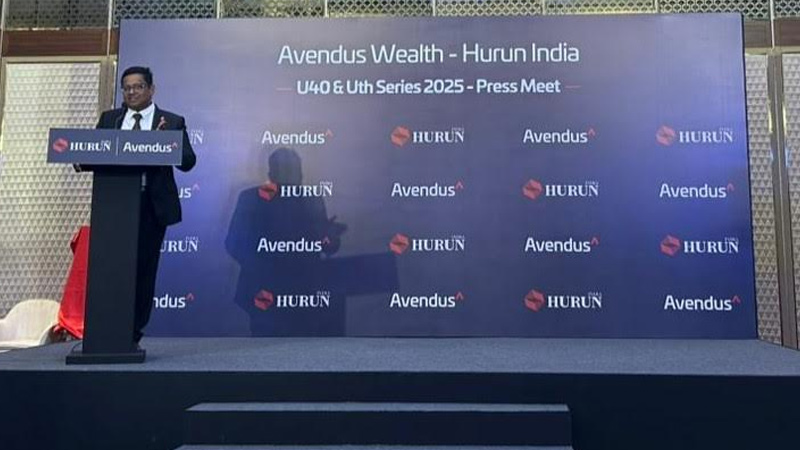
MUMBAI: India’s next generation of business leaders has decided that experience can be overrated and age is just another metric to beat. The Avendus Wealth – Hurun India Uth Series 2025, unveiled on Tuesday, brings together 436 entrepreneurs under 40 who are already shaping companies valued higher than the GDP of Switzerland.
Spanning the Under 30, Under 35 and Under 40 lists, the Uth Series captures a cross section of India’s modern enterprise, from first-time founders building category-defining start-ups to heirs reinventing legacy businesses. Together, companies led by these entrepreneurs command a cumulative valuation of more than $950 billion or about Rs 83 lakh crore, and employ over 1.2 million people.
The muscle behind the numbers is largely self-made. Nearly 80 per cent of those featured, 349 entrepreneurs, are first-generation founders, signalling a decisive shift away from inherited business power. Second-generation leaders account for 37 names, while third-generation entrepreneurs add another 36, suggesting that while legacy still matters, merit is now the louder voice.

The youngest entrants may lack grey hair, but not ambition. Across the series, the average age stands at 35, with women accounting for 36 of the 436 names. While the gender gap remains stark, the presence of women founders increases steadily across the older cohorts, hinting at momentum as ventures scale and mature.
Geography tells its own story. Bengaluru tightens its grip as India’s undisputed youth capital, contributing 109 entrepreneurs across the three lists. Mumbai follows with 87, while New Delhi adds 45. Gurugram chips in with 36, and even San Francisco makes an appearance with 18 India-linked founders, underlining the global footprint of the country’s entrepreneurial class.
Bengaluru’s dominance is no accident. The city benefits from decades of start-up maturity, dense venture capital networks and policy tailwinds, including Rs 1 lakh crore of infrastructure investments announced by Karnataka in 2025 alone. Mumbai, by contrast, draws strength from scale, finance and conglomerate muscle, while Delhi NCR’s showing reflects its deepening technology and services base.
Education remains a powerful launchpad. IIT Kharagpur tops the list of undergraduate institutions with 27 entrants, narrowly ahead of IIT Delhi with 26 and IIT Madras with 22. IIT Bombay and IIT Roorkee round out the top five, reinforcing the IIT system’s role as a conveyor belt for high-impact founders.
Sectorally, software still rules the roost. Software Products and Services accounts for 77 entrants, or 18 per cent of the list, mirroring India’s booming SaaS market that is projected to grow at over 27 per cent annually through the next decade. Financial Services follows with 44 names, buoyed by fintech’s steady funding flows, while Healthcare adds 37 entrepreneurs, many building AI-driven diagnostics and digital health platforms for underserved markets.
Consumer goods, logistics, education, e-commerce and real estate together bring breadth to the list, reflecting an ecosystem that is no longer obsessed with one idea of growth.
Money, unsurprisingly, follows momentum. At the top of the funding pile sits Prism, better known as Oyo, which has raised $3.7 billion under 31-year-old Ritesh Agarwal. Zepto’s 22-year-old founders Aadit Palicha and Kaivalya Vohra have already pulled in $1.95 billion, while Meesho, led by founders in their mid-thirties, has raised $1.36 billion.
Beyond the headline names, companies such as ShareChat, Cars24, Uniphore, Perplexity, OfBusiness and Zetwerk, each with funding between $850 million and $1.3 billion, show investor conviction stretching well beyond consumer apps into deep tech, infrastructure and enterprise software.
As founders age through the Uth ladder, their companies mature too. Sixty percent of U30 ventures are still in Series A or B, while half of U40-led companies are already late-stage and a third are listed. It is a neat illustration of how today’s hoodie-wearing founders become tomorrow’s boardroom fixtures.
Influence, meanwhile, is no longer confined to balance sheets. On LinkedIn, Zerodha’s Nikhil Kamath leads the popularity race with 1.39 million followers, followed closely by Ritesh Agarwal at 1.32 million. Ghazal Alagh of Mamaearth remains the most followed woman entrepreneur with 633,000 followers, proving that personal brand has become a serious business asset.
Scale shows up most starkly in employment. Reliance Retail, led by U35 entrant Isha Ambani, is the largest employer on the list with 247,782 staff, followed by Shahi Exports with 100,000. Reliance Jio Infocomm, the RP-Sanjiv Goenka Group and Apollo Hospitals complete the top five, underscoring how youth leadership now extends deep into India’s largest enterprises.
Recent developments among Uth Series companies suggest the pace is only quickening. Physics Wallah and Groww made strong stock market debuts, Razorpay completed a strategic reverse flip to anchor itself firmly in India, Ola Electric moved into home energy storage, and Leverage Edu doubled revenues past Rs 180 crore in FY25. Several others, including BharatPe and Capillary Technologies, reported first-time profitability, a sign of a maturing ecosystem learning fiscal discipline.
Seen alongside China and the UK, India’s cohort stands out for its sheer first-generation firepower. While the UK leads on that metric with 92 per cent self-made founders, India’s 80 per cent is driven by demographics, digital adoption and a rapidly expanding middle class.
The message from the Uth Series is clear. India’s future business leaders are not waiting for permission, nor are they content with incremental wins. They are building fast, scaling early and broadcasting their ambition loudly.







Brands
Google nears Nvidia in race for world’s most valuable company
Market cap gap narrows as Google hits $4.65 trillion, Nvidia at $4.86 trillion.
MUMBAI: In the AI gold rush, even the giants are sprinting and Google is suddenly gaining ground. Google is rapidly closing in on Nvidia in the race to become the world’s most valuable publicly listed company, with the gap between the two narrowing sharply amid diverging stock momentum. The tech giant’s market capitalisation has surged to around $4.65 trillion, following a more than 140 per cent rise in its share price over the past year.
That rally has added over $2.6 trillion in value in just 12 months, including nearly $900 billion since January alone. Its stock recently hovered at $381.80, slipping marginally by 0.04 per cent, but still reflecting strong upward momentum.
Nvidia, meanwhile, continues to hold the top spot with a valuation of approximately $4.86 trillion. The chipmaker crossed the $5 trillion milestone in October last year and peaked at $5.27 trillion on 27 April. However, its shares have largely plateaued over the past six months, rising just 0.2 per cent recently to $199.99.
The contrast in trajectories is striking. While Nvidia has seen relatively flat movement, Google has gained over 36 per cent in the same six-month period. Barron’s estimates suggest that if current trends hold, the valuation gap could shrink to as little as $190 million by the time Nvidia reports its first-quarter earnings on 20 May.
Daily momentum paints a similar picture. Nvidia recorded average daily gains of about 0.66 per cent last month, compared to Google’s stronger 1.42 per cent, an edge that could prove decisive in the short term.
Driving Google’s resurgence is its aggressive push into artificial intelligence across its ecosystem, from search and YouTube to cloud computing. The company has already invested $144 billion in capital expenditure over the past two years and plans to deploy a further $490 billion over the next two.
Its cloud division is also gathering pace. Google Cloud reported an order backlog of nearly $220 billion in the latest quarter, with total backlog touching a record $462 billion, around half of which is expected to be realised within two years. The company’s entry into chip sales is also beginning to factor into its growth narrative.
The last time Google briefly topped the S&P 500 by market value was in February 2016, when it edged past Apple for just two days. This time, the stakes and the numbers are far higher.
At the heart of the contest lies a single force: artificial intelligence. As both companies pour billions into infrastructure, chips and platforms, the leaderboard is no longer just about size, it is about who can scale the future faster.