Brands
CropLife India flags illegal pesticide sales on e-commerce platforms
NEW DELHI: CropLife India has raised alarm over the growing online sale of unauthorised pesticides, warning that gaps in regulation and enforcement across e-commerce platforms risk exposing farmers to hazardous and spurious products.
The industry body, which represents 17 research-led crop protection companies, called for a strong joint government–industry framework to bring accountability, licensing and traceability into digital agri-input supply chains. The concerns come as the government reviews pesticide regulation under the draft pesticides management bill, 2025.
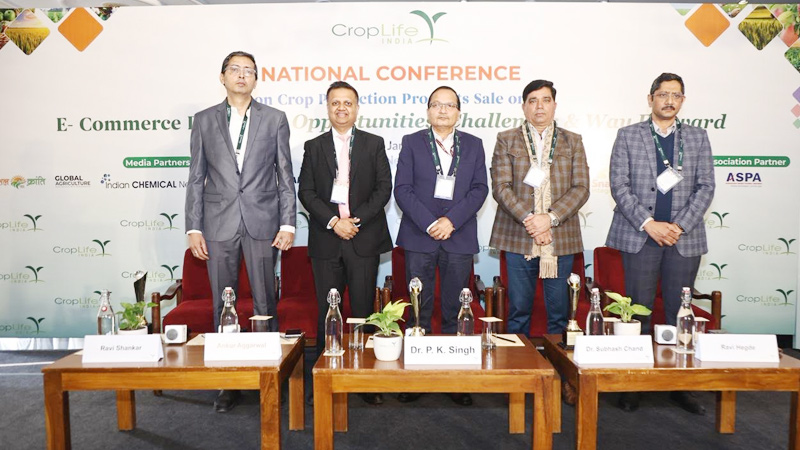
The issue took centre stage at CropLife India’s national conference on crop protection products sale on e-commerce platforms, held in New Delhi, where policymakers, regulators and industry executives examined how agri-input sales are shifting online and where oversight is falling short.
Addressing the gathering, ministry of agriculture & farmers welfare agriculture commissioner P K Singh, said basic compliance checks such as GST verification were inadequate when hazardous products are sold digitally. He stressed the need for tighter quality assurance, traceability and supply-chain accountability, and said these risks must be addressed explicitly in the new law.
Insecticides board & registration committee secretary Subhash Chand, warned that while digitisation is expanding access in rural India, pesticides remain hazardous products requiring shared responsibility between platforms and manufacturers. ONDC domain lead – agriculture Ravi Shankar underlined the importance of better cataloguing, advisory information and traceability to help farmers distinguish genuine products from fakes.
CropLife India chairman Ankur Aggarwal said the industry was not opposed to online sales but to the absence of enforceable safeguards. “Tackling unauthorised products is critical for farmer safety, food security and trust,” he said, adding that regulation must evolve with digital commerce.
The association pointed out that pesticides are governed by the insecticides act, 1968 and insecticides rules, 1971, which strictly limit sales to licensed sellers, approved products, defined geographies and valid at from manufacturers or importers. However, e-commerce platforms facilitating such sales are not required to hold licences under pesticide law, nor explicitly mandated to verify product authorisations, creating a regulatory blind spot.
Risks are sharper in inventory-led e-commerce models, where storage and dispatch may occur from warehouses not licensed under existing rules, weakening inspection, sampling and traceability. CropLife India also clarified that rule 10E, introduced in 2022 to permit online or doorstep delivery, does not waive licensing or authorisation requirements, despite being widely misinterpreted.
With inspections largely tied to licensed premises, enforcement agencies struggle to track responsibility across fragmented digital supply chains, delaying action against illegal products. While welcoming the intent of the draft bill, CropLife India said it fails to clearly address platform-level accountability, licensing in inventory models and digital traceability.
The association said it will submit its recommendations through the formal consultation process, calling for what it described as “regulated enablement” of digital agri-commerce.

Brands
33 per cent of women believe the salary scale is rigged: Naukri report
Voices @ Work study finds rising calls for equal pay audits and lingering bias
MUMBAI: Progress may be visible in India’s workplaces, but many women still feel the need to tread carefully. A new report by Naukri reveals that one in two women hesitate to disclose marriage or maternity plans during job interviews, worried that such information could influence hiring decisions.
The findings come from the second edition of Naukri’s annual Voices @ Work International Women’s Day report, titled “What Women Professionals Want.” Drawing insights from more than 50,000 women across over 50 industries, the survey sheds light on evolving workplace aspirations alongside the biases that continue to hold women back.
One of the report’s most striking insights is the growing demand for equal pay audits. The share of women calling for regular pay parity checks has climbed to 27 per cent this year, up from 19 per cent a year ago. The demand now stands alongside menstrual leave as the most sought after workplace policy.
Interestingly, the call for pay transparency grows louder higher up the income ladder. Nearly half of women earning between Rs 50 lakh and Rs 1 crore annually say equal pay audits are a priority, suggesting that pay gaps become more visible as women move up the career ladder.
At the same time, confidence and ambition appear to be rising. About 83 per cent of women say they feel encouraged to pursue leadership roles, a significant jump from 66 per cent last year. Cities in southern India appear particularly supportive, with Hyderabad leading the way as 86 per cent of respondents there reported encouragement to step into leadership positions. The education sector recorded the highest sense of encouragement at 87 per cent.
Yet the report also highlights a growing trust deficit around pay equity. Nearly one in three women, or 33 per cent, say they do not believe men and women are paid equally at their workplace. That figure has risen from 25 per cent last year, pointing to widening perceptions of disparity as careers progress.
Bias in hiring and promotions continues to be the biggest hurdle. About 42 per cent of respondents say workplace bias is the main challenge for women from diverse backgrounds. The concern is consistent across major metros, with Chennai and Delhi NCR reporting similar levels.
Reluctance to discuss personal milestones during hiring processes is also widespread. While 34 per cent overall said they hesitate to share marriage or maternity plans in interviews, the anxiety increases with experience. Among professionals with 10 to 15 years of work experience, the figure rises to 40 per cent.
Info Edge group CMO Sumeet Singh, said the data reflects both progress and unfinished work. “Behind every data point in this report is a woman who is ambitious. The fact that 83 per cent feel encouraged to lead is something to celebrate. However, the fact that one in two still hide their marriage or maternity plans in interviews tells us the work is far from done. As India’s leading career platform, it felt not just important but necessary for us to shine a light on these gaps through the second edition of our report,” he said.
The report suggests that while ambition among women professionals is growing, structural changes around pay transparency, fair hiring and supportive policies will be key if workplaces hope to keep pace.