MAM
Work hard, travel harder: Balaji’s CRO Nitin Burman on life beyond telly

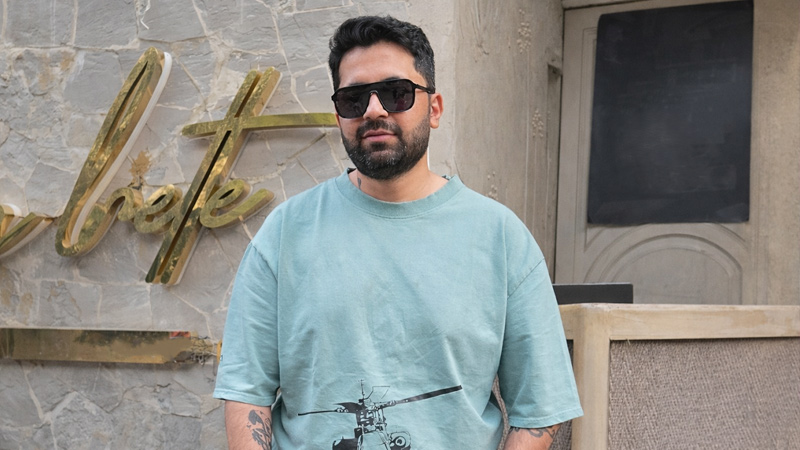
MUMBAI: There’s something refreshingly grounded about Nitin Burman, group chief revenue officer at Balaji Telefilms. In an industry where executives often wear their 80-hour workweeks like badges of honour, Burman’s figured out something many haven’t: you can be excellent at your job without sacrificing everything else.
He’s out the door by 7:40 pm most evenings. His weekends? Strictly off-limits. “I’m available 24/7 when needed. But we’re not doctors. Nobody’s going to die. It’s only doctors, army officers, or police officers where something terrible might actually happen. Things work out. You just need to know how to manage your time.”
It’s efficiency, not absence. It’s about working smarter, not endlessly. And judging by his role steering one of India’s biggest entertainment brands, it’s clearly working.
That efficiency extends beyond the office. When Burman clocks out, he genuinely switches off, and that’s where the real recharging happens.
When Burman clocks out, he truly switches off. That’s when the wheels come out, the road opens up, and the real recharging happens. He’s already conquered Ladakh and Spiti on bike, the kind of high-altitude adventures that require focus, stamina, and serious planning. Scotland’s on the cards this year, complete with a road trip through the Highlands.
“I’m a soldier’s son,” Burman explains, and there’s genuine pride in his voice. “I’d love to travel all of India.” He’s methodically working through his bucket list: Kerala’s waiting, along with countless smaller trips. He’s already ticked off Igatpuri and Malshej Ghat during monsoon season, squeezing in those rain-soaked weekend rides when most people are nursing hangovers on their sofas.
Staying plugged in without burning out
When he’s not planning family getaways, Burman’s consuming content with the sharp eye of someone who needs to know what’s working and why. For someone in his role, viewing habits aren’t just entertainment, they’re market research. He watches everything. Hindi, English, the occasional late-night binge. Korean content hasn’t quite grabbed him yet, but give it time.
“Even if I have to fast forward and watch it, I will watch it,” he admits. It’s a professional necessity wrapped in genuine curiosity. He caught 120 Bahadur just recently. Nowadays, most viewing happens at home rather than theatres. His daughter isn’t keen on cinema halls, so family time and content consumption merge seamlessly.
His all-time favourite: “Suits,” the slick legal drama that wrapped years ago but refuses to fade. “Whenever you’re getting bored, watch Suits or Friends. Just open any episode and start watching from there.”
Then there’s Sarabhai vs Sarabhai, the cult sitcom that’s achieved legendary status. His entire friend circle hosts dedicated viewing parties. “We just meet late night when tomorrow’s a holiday, when the kids are sleeping, and open any random episode,” he explains. It’s nostalgia, and decompression rolled into one.
Recent discoveries include Haq & Taskaree, he’s convinced Emraan Hashmi is back in form after The Bard of Blood. He’s working through Beast Games, keeps up with Bigg Boss (it helps with business, he insists), and watched Black Warrant when it dropped.
That Bigg Boss habit actually paid professional dividends. He cast Avinash Mishra and Chahat Pandey in one of his shows precisely because he and his wife had watched them on the reality programme. “I knew they were doing well,” he says. In television, staying plugged into what audiences are watching isn’t optional, it’s essential. The difference is Burman’s managed to turn necessary research into quality time with his wife.
Adding another string
He’s taken that same principle even further. Burman isn’t just consuming content anymore, he’s creating it, and it’s a masterclass in leveraging existing resources. Six months ago, he launched Impact Circle, a podcast that emerged from a typically pragmatic business decision: Balaji wanted YouTube content, and hiring external hosts seemed wasteful.
“We thought, rather than taking hosts from outside, let’s save money and start on our own,” Burman laughs. It’s the kind of entrepreneurial thinking that probably serves him well in the boardroom.
He’s recorded six episodes so far, fitting recordings around his schedule. He started with CEOs and CMOs from the media world, then pivoted to startup founders. One guest runs a tech venture, another creates affordable prosthetic limbs for amputees. Imported versions cost eight lakh rupees; his startup delivers the same quality for one to 1.5 lakh. Then came Ajay Chaudhary, co-founder of HCL, one of India’s tech behemoths.
The next batch focuses on photographers, including the legendary Dabboo Ratnani. Burman wants to explore not just photography as business, but its existential questions. With AI generating images from text prompts, is the photographer’s role vanishing?
Future themes include celebrities running cafes and restaurants (Mumbai’s absolutely teeming with them), and fashion designers like Manish Malhotra, exploring the business empire behind the glamour. Each theme offers insights into different industries, different business models, and different ways of building brands.
Making time count
Ask Burman about restaurants, and you’ll get a curated list shaped by one rule that speaks to his broader philosophy: never visit the same place twice. With his wife choosing most destinations, they’re working through Mumbai’s dining scene systematically. It’s not about expensive meals, it’s about new experiences.
The exception? Dakshinayan in Juhu, his go-to for South Indian food. “I don’t think you can find a better dosa anywhere else,” he declares.
Late-night drives, when work’s finally done and the city quiets down, inevitably end at Amar Juice Centre, where idli, pav bhaji, and tawa pulao satisfy those midnight cravings.
In Kandivali, near Mahavir Nagar, there’s a dhaba-style restaurant whose name he can’t quite recall but whose chole bhature he swears by. “One of the best chole I’ve ever eaten in Mumbai,” he insists. It’s Delhi-style comfort in a city where authentic North Indian food often gets lost in translation.
The great cat rescue
Perhaps the most telling story involves his eight-year-old daughter and her animal welfare campaign. She rescued five stray cats. When her parents put their foot down at keeping all five, she found homes for three and kept two.
But when Burman declared he wouldn’t spend money on cats, she didn’t sulk or give up. She created donation boxes. Then she recruited three friends, and together they went door-to-door through their building, collecting funds for cat care. She wrote a formal letter to the society chairman proposing a pet shelter in their residential complex.
“We’ve fallen in love with those cats,” Burman admits, and you can hear the fatherly pride. “Because we love our daughter.”
It’s the kind of parenting that requires presence, not just presents. The kind that happens when you’re actually home for dinner, actually around for bedtime, actually there when your daughter announces her latest rescue mission.
The Balaji
While Burman has carved out his hard earned balance, his professional world is already making serious noise. On 19 January, Balaji hosted a press event to unveil its content slate, announcing 20 to 25 shows planned for the next six months. Six shows are already binge-ready.
The message was clear: the streaming platform is roaring back. “We were basically announcing the slate,” Burman explained. “Showing people that yes, we’re back. Start subscribing.”
It is the kind of calculated rollout that demanded someone who understood both content and commerce, and the kind of focus that only comes when one is genuinely recharged. That was precisely what Burman brought to the table, steering one of India’s most recognisable entertainment brands through its next chapter without compromising on his sanity, his family or his passion for the open road.
The takeaway
“I work to earn money because it’s required,” Burman said simply. “The rest of the time? Spend it with your loved ones.”
At work, he reminded his team, everyone is replaceable. “The only people who’ll lose you or wait for you are your family and friends. So be with them.”
He had recently come across a reel that captured this idea perfectly. Someone asked about favourite travel destinations. The answer was telling: “I don’t have a favourite place. I have favourite people. If I’m travelling with my favourite people to any place, that place is favourite for me.”
Somewhere between the morning commute and the evening ride home, Burman had cracked what many executives never do: sustainable excellence beats temporary heroics. Every single time.
In an age of hustle culture and burnout, he has built something different. Not a career that consumed him, but one that funded the life he actually wanted to live.