MAM
India Affiliate Summit edition 10 concludes on a high note

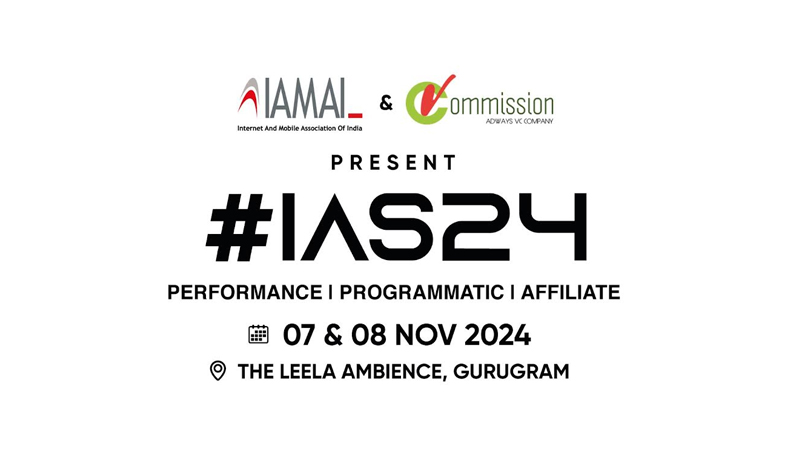
Mumbai: The tenth edition of the India Affiliate Summit (IAS), organised by the Internet and Mobile Association of India (IAMAI) was concluded on 8 November. The two-day summit brought together leading marketers, industry experts, and innovators, creating a dynamic forum to explore the latest trends and strategies in performance marketing. The conference featured an expansive expo floor, engaging agenda of keynotes, masterclasses, panel discussions, and networking sessions, providing invaluable insights into the future of the industry.
The summit commenced with an insightful keynote session by vCommission CEO Parul Bhargava, on ‘Future Trends: Shifting Paradigms of Affiliate Partnerships’. She highlighted the transformative shifts underway in affiliate marketing and the need for brands to adapt to these evolving dynamics. She stated, “Our industry is at a pivotal juncture where embracing change is not only essential but urgent. On the advertiser side, the pillars of transparency, compliance, clean media, and long-term engagement have become fundamental. For affiliates, the focus lies in achieving stability and campaign sustainability.”
A highlight of the event was the panel discussion on ‘Winning Touchpoints: Less Clicks, More Sales’, featuring insights from Adani Group joint president and chief digital officer Nitin Sethi. Sethi emphasised the importance of precision, personalization through analytics, micro-conversations, mobile voice search, and A/B testing frameworks in today’s competitive market. “In today’s landscape, out of every 100 consumers, about 90 tend to bounce back on the first page. At each stage of the funnel, drop-off rates close to 70-80 percent are common. Even with significant investment to bring in 1,000 customers, conversion rates average only 10-15 percent, which is the industry’s best,” he said.
NP Digital founder Neil Patel, in a fireside chat on AI, opined, “When you think about your KPIs and business goals, start by asking how AI can help you achieve them. Many marketers run ads, but when AI is used alongside human creativity, it creates a powerful combination. AI can analyze data in real time, helping optimize content and ad strategies on the go. Personally, AI has been instrumental in scaling my content. The next big trend I see coming to social media is live selling it’s already huge in China but hasn’t yet taken off globally. I believe it’s going to generate significant revenue in the near future.”
India Today CMO Vivek Malhotra while moderating the panel discussion on ‘The Modern Data Stack: Revolutionising Customer Insights and Marketing Agility’, remarked, “In the past 12 months alone, we have collectively gathered more customer consent than in many previous years combined. I believe the key to unlocking future opportunities lies within this consent, empowering us to build more personalized and impactful customer experiences.”
Indian Express Digital CEO Sanjay Sindhwani commented, “In the media industry, if we look back five years, data largely rested with intermediaries, and we didn’t focus on it as much. Over the last five years, however, we’ve witnessed a tremendous shift. Media now has massive reach and relevance to advertisers, who increasingly seek more definitive, targeted insights. As subscriptions grow, the intersection of technology and marketing becomes even more critical in shaping this data-driven landscape.”
HDFC Bank SVP Deepak Oram said, “The modern data stack today essentially unifies a brand’s data, encompassing behavioural insights and predictive information. What many tend to overlook, however, is the importance of third-party data and the concept of data reflexes. While it’s relatively easy to hire data engineers in the industry, what’s truly lacking are data reflexes, the ability to quickly and effectively respond to data insights for real-time decision-making.”
In a panel discussion on ‘Bridging Online and Offline: The Impact of Programmatic Advertising on Consumer Behaviour’, Uniqlo India head of marketing Nidhi Rastogi said, ‘We strategically leverage data from our e-commerce platform to gain insights on order origins, guiding our decisions on store locations and optimizing our product assortment for each market. This data-driven approach is integral to our expansion and product mix strategies. Additionally, programmatic advertising has been highly effective in precisely reaching our target audiences.
More than 50 stalwarts from the digital marketing ecosystem addressed over 15 engrossing sessions over two days. Over 6500 industry professionals and around 50 exhibitors participated in the summit. Some of the major partners supporting IAS 2024 are vCommission, Valueleaf, Flickstree, Optiminastic, and Seventynine Digital.