News Broadcasting
New Skies to re-deploy NSS-8 satellite

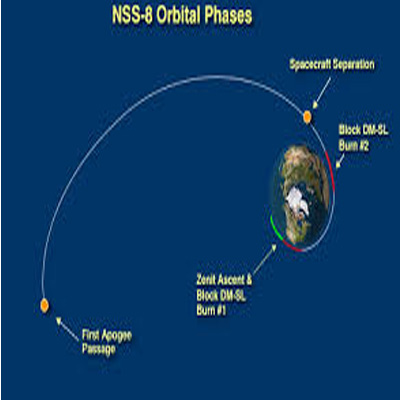
NETHERLANDS: New Skies Satellites NV will re-deploy its NSS-8 satellite, originally scheduled to be launched to 105 degrees west longitude for Americas coverage, to the company’s 57 east slot to provide expansion capacity in response to demand in the Indian Ocean region. NSS-8 is expected to commence commercial service at 57 east, where New Skies’ NSS-703 satellite is currently operating, on or around 1 January 2005.
Reports indicate that by deploying its newest, largest, and the most powerful satellite to an established orbital location in the Indian Ocean region, New Skies will be able to meet the current and future needs of its many customers throughout India, Asia, the Middle East, and Africa as well as capitalise on the region’s strong projected growth.
NSS-8 originally had been planned for launch in late 2003 to serve the Americas market from 105 degrees west longitude. NSS-703, launched in 1994, has long been one of New Skies’ most highly utilized satellites. Following its replacement by NSS-8, New Skies will re-deploy NSS-703, which is expected to continue commercial service until 2009, to another orbital location.
CEO NSS Dan Goldberg has been quoted saying, “This decision underscores New Skies’ operational agility and our commitment to make the most efficient and productive use of our satellite resources and committed capital expenditure programmes in a dynamic market environment. The geographic regions served from 57 east are among the world’s fastest growing markets.
“NSS-8 will bring our customers in the Indian Ocean region the most powerful follow-on capacity with the most comprehensive connectivities available. Further, by repositioning the NSS-8 delivery date and by obviating our need to procure a replacement for NSS-703 in the near term, this decision positions New Skies to achieve positive free cash flow in the current year and will result in approximately $250 million in additional free cash flow over the course of the next three years,” Goldberg adds.
New Skies and Boeing Satellite Systems, the spacecraft manufacturer, have worked closely together to reconfigure NSS-8 for service from 57 east longitude. NSS-8 will carry 56 C-band and 36 high-power Ku-band transponders, making it one of the largest and highest power satellites with coverage of Europe, the Middle East, India, Africa and Asia.
Although NSS-8 will not be deployed to the Americas, New Skies remains committed to developing its 105 west slot in a timely manner. This location is a valuable resource because of its unique ability to see all of North and South America.