MAM
Taylor Nelson Sofres brings operations under one brand

MUMBAI: This is a move that reflects the changes in the global market research industry and the way that businesses use market information. Global market information group Taylor Nelson Sofres, has announced that it is bringing together all of its operations in 53 countries under a single brand, with immediate effect.
As part of a major repositioning and rebranding exercise, Taylor Nelson Sofres will be renamed ‘TNS’, uniting a business which had previously supported many different corporate brands around the world.
Where there is a strong local brand, as in India, the brand name will be retained but strongly associated with TNS such as TNS Mode in India or TNS Sofres in France. It is also intended to help TNS leverage the potential of acquisitions made over the past few years and meet changing client needs. TNS India joint MD Debi Basu said: “Our new brand identity conveys the sense of freshness and continuous innovation that has been the hallmark characteristic of TNS Mode in India”.

The new brand has been developed by global brand consultancy Wolff Olins and is based on the idea of being “the sixth sense of business”. It reflects the company’s ability to provide insight, intelligence and advice and not just information, data and research. It will further unite the company and clearly differentiate TNS from its peers. The new TNS marque is simple and bold; the positioning of the letters gives a three-dimensional feel and suggests a sense of depth.
One of the areas where the company provides services is in measuring the habits of the television viewer. Its Peoplemeter technology measures viewing habits and provides accurate viewing The analysis system InfoSysTV answers a wide variety of questions relating to audience behaviour data. TNS technology is used to conduct TV audience measurement in 25 countries.
Audience estimates are used to negotiate prices for commercial airtime and plan TV advertising campaigns. Broadcasters also use the data to evaluate the success of programmes and to devise future programming schedules
In India, TNS Mode has 12 offices including Mumbai, Bangalore, Delhi, Chennai (Madras), Kolkata (Calcutta) and Hyderabad.The company conducts both quantitative and qualitative research, and has specialised divisions for social developmental projects, qualitative research, automotive research and research involving IT & Telecom sectors.
It has a face-to-face omnibus in 12 large towns of the country. It also claims to have pioneered specialised research technologies in the country such as Single Source Panel, Trade Research, application of Ethnography in consumer research and multivariate analysis such as Conjoint.


Brands
Aptronix unveils ‘Big & Beyond’ campaign, opens largest store in Hyderabad
Naga Chaitanya, Sobhita front push as retailer expands premium Apple experience
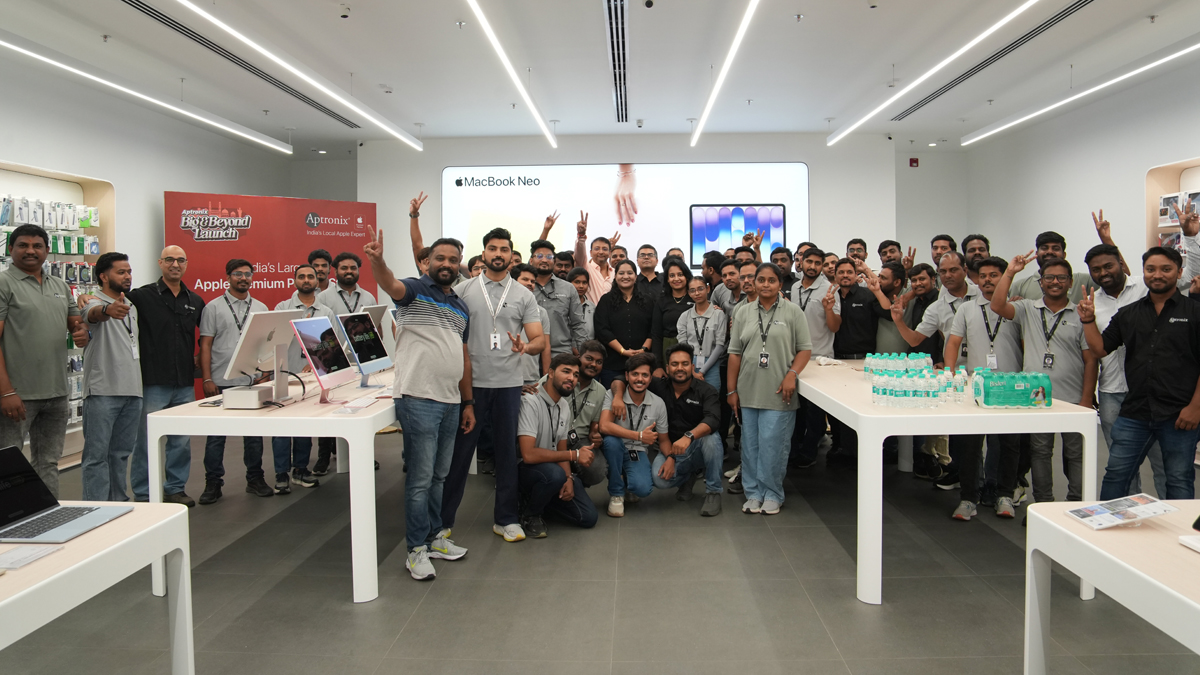
HYDERABAD: Aptronix has rolled out its most ambitious brand push yet with the launch of the ‘Big & Beyond Aptronix’ campaign, alongside the opening of its largest retail store in India.
The campaign features actors Akkineni Naga Chaitanya and Sobhita Dhulipala as brand faces, signalling a sharper focus on aspirational, experience-led retail as the company scales its presence in the premium Apple ecosystem.
At the centre of the rollout is a new 8,000 sq. ft. flagship outlet at Sarath City Capital Mall, now the largest Aptronix store in the country and among the biggest Apple Premium Reseller formats in India. The space is designed to offer immersive product discovery, personalised guidance and integrated service support, positioning the store as more than just a point of sale.
The campaign itself leans into themes of scale, ambition and accessibility, aiming to connect with a younger, increasingly design-conscious generation of Apple users. By pairing celebrity appeal with in-store experience, Aptronix is looking to deepen emotional engagement while reinforcing its premium positioning.
A key pillar remains its ‘Limitless Aptronix Exchange’ programme, which offers customers simplified upgrade paths, transparent pricing and wider access to Apple devices. The initiative has been central to driving adoption by making high-end technology more approachable for a broader audience.
Premium Lifestyle and Fashion founder & owner Sutinder Singh said the new store reflects a long-held belief that Indian consumers should have access to the best Apple retail experience without compromise. He added that the campaign’s celebrity faces mirror the brand’s core values of elegance, ambition and confidence.
Aptronix CEO Meghna Singh said the ‘Big & Beyond’ theme reflects how the company operates, with a focus on building a best-in-class retail experience. She noted that the Hyderabad launch and the campaign together signal Aptronix’s intent to set new benchmarks in the category.
With this dual push of scale and storytelling, Aptronix is not just expanding its footprint but also redefining how premium tech retail is experienced in India.