Gaming
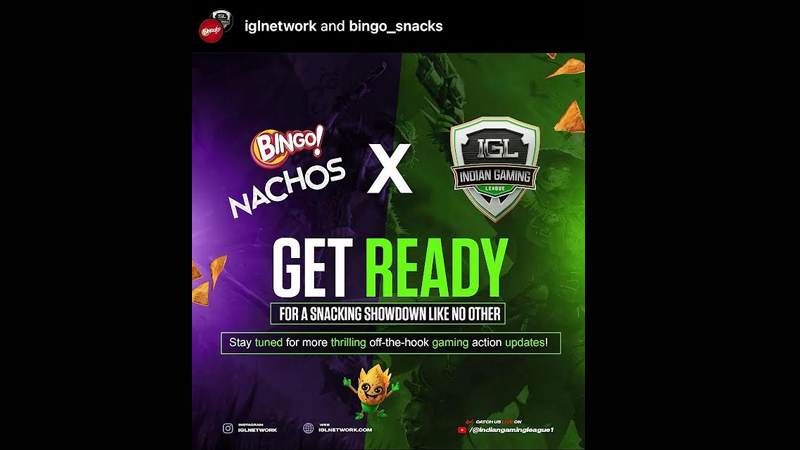
Indian Gaming League (IGL) in partnership with Bingo! Nachos announces Gameon Cup 2023
Mumbai: Indian Gaming League, one of India’s leading organizations in the gaming sector, in collaboration with ITC Bingo! Nachos, has launched Gameon Cup 2023, an exciting gaming tournament set to captivate the nation’s gaming community. This gaming extravaganza will feature a range of popular titles, including BGMI, Free Fire Max, New State, Call of Duty Mobile, and comes with an impressive prize pool of 11 lakhs (approximately $13,000).
In the last two years, esports has gained immense popularity in India. A burgeoning youth population, tech-savviness, and increasing internet accessibility have contributed to the growth of esports. Bingo!, a fun and youth-oriented brand, has always been at the forefront of promoting gaming and esports events and campaigns while providing a seamless snacking experience to its young target audience. Through Bingo Nachos! Gameon Cup, the brand aims to foster a sense of camaraderie with a dynamic and enthusiastic gaming community, reinforcing Bingo’s commitment to fun and shared experiences.
The tournament will span over 60 days and will kick off with an open format starting on 9th November providing both amateur players and teams an opportunity to display their gaming prowess and compete at a professional level. Winners from the initial stage will earn the privilege of participating in the invitational section, where they will go head-to-head with some of the top professional gamers in the country. The tournament aims to showcase not only fierce competition among players but also offers significant opportunities for recognition and advancement within the gaming fraternity.
ITC Foods, VP & head of marketing, Snacks, Noodles, and Pasta Suresh Chand said, “We are thrilled to launch the Bingo! Nachos Gameon Cup in association with IGL. This initiative will provide a platform for all e-gaming enthusiasts to showcase their skills while having a fun-filled experience with Bingo! Nachos. As a brand with a young TG, our partnership with IGL seamlessly aligns with our brand’s ethos, and we eagerly await the exciting gameplay it will bring.”
IGL Indian Gaming CEO Yash Pariani shared his thoughts on the upcoming tournament, saying, “We are delighted to partner with ITC Bingo! Nachos for this thrilling event. It is an extraordinary opportunity for amateur gamers to showcase their talents on a national stage and elevate their gaming journey. This tournament aims to unite gaming enthusiasts from all corners of the country, where participants can anticipate an unparalleled gaming experience, featuring top-notch production values and exhilarating gameplay.”
IGL Indian Gaming Chief Business Officer Nidhish Jain said, “The ITC Bingo! Nachos and IGL Indian Gaming partnership is more than just business; it is a statement of brand relevance in the modern digital age, an embrace of youthful passion, and an investment in the unity and excitement that gaming brings. Considering India is a largely youth-centric country, and gaming is expected to grow exponentially over the next few years, this partnership highlights the importance of this medium for brands to connect with the dynamic, vibrant, youth-centric community for mutual growth.”

Gaming
Dream Sports sees 100 plus exits after gaming ban forces overhaul
Company splits into eight units as real money gaming law hits revenue.
MUMBAI: For a company built on fantasy leagues, reality has suddenly rewritten the rulebook. More than 100 employees have exited Dream Sports, the parent of Dream11, after the company reorganised its operations following India’s ban on real money online gaming. The shake up came after the Promotion and Regulation of Online Gaming Act, 2025 came into force in August 2025, prohibiting games where users deposit money expecting winnings. The regulation struck at the heart of the fantasy gaming industry and dramatically affected Dream Sports’ core business, wiping out about 95 percent of its revenue and all of its profits.
In response, the Mumbai based company shifted into what chief executive officer Harsh Jain described as “startup mode”, splitting its operations into eight independent business units in December.
Around 700 employees were reassigned across these newly formed ventures based on their experience and interests. However, roughly 15 percent opted to leave the company.
A spokesperson for Dream Sports said many of those who exited were experienced professionals accustomed to running scaled businesses rather than early stage ventures.
“Since some of these employees were experienced with running high scale businesses and not startups, around 15 percent chose to leave and join other scaled companies or start ventures of their own,” the spokesperson said.
Despite the departures, the company noted that the attrition rate is only slightly higher than its earlier level of around 10 percent before the ban. Dream Sports now has close to 950 employees and is not currently hiring, choosing instead to focus on stabilising its existing workforce.
The restructuring has transformed Dream Sports from a fantasy gaming company into a broader sports entertainment platform. The eight units now operate independently, each focusing on different segments of the sports and technology ecosystem.
These include Dream11, sports streaming platform Fancode, sports travel service DreamSetGo, mobile game Dream Cricket and artificial intelligence initiative Dream Sports AI, which includes sports analytics platform Dream Play.
Other ventures include fintech product Dream Money, open source initiative Dream Horizon and the philanthropic arm Dream Sports Foundation.
As part of cost saving efforts, Dream Sports also relocated its headquarters from Bandra Kurla Complex to Worli earlier this year. The new office, called Dream Sports Stadium, brings teams from its various brands together under one roof to improve collaboration and operational efficiency.
Jain had earlier said the company removed bonus lock in timelines for employees hired in recent years, allowing those who wished to leave to exit with pro rata payouts.
“We want people who are fully into the startup mode and willing to work for it, and we will share that reward if it comes,” he said.
Founded in 2008 by Harsh Jain and Bhavit Sheth, Dream Sports was last valued at 8 billion dollars after raising 840 million dollars in 2021 from investors including Falcon Edge Capital, DST Global, D1 Capital Partners, RedBird Capital Partners, Tiger Global Management, TPG and Footpath Ventures.
The new gaming law has forced several companies in the fantasy gaming sector to either shut down or pivot their business models, signalling a significant reset for one of India’s fastest growing digital entertainment industries.