News Broadcasting
Media stocks plunge as Sensex sheds 452 points
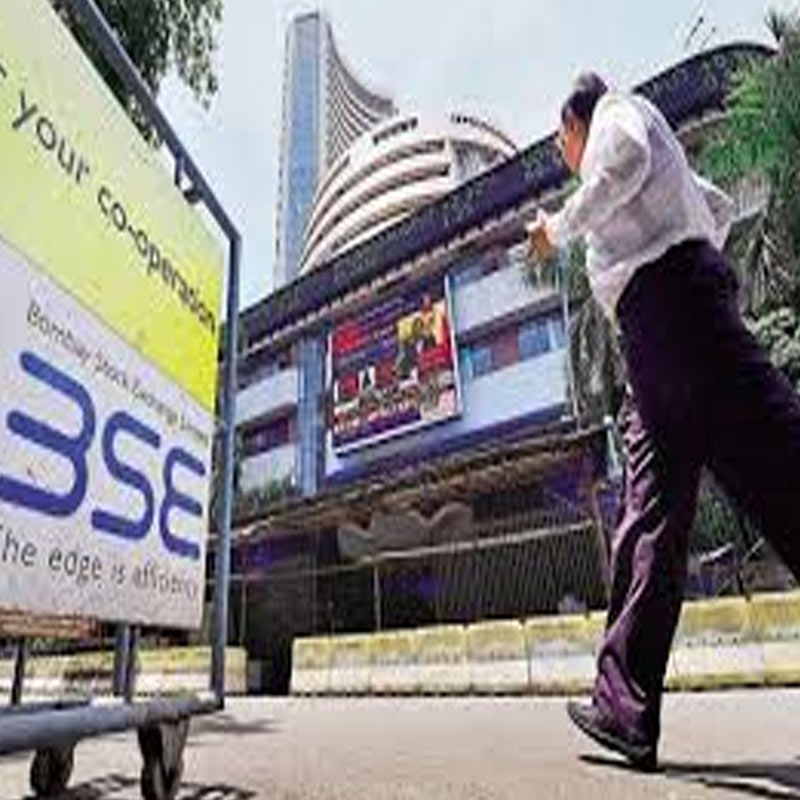
MUMBAI: Media stocks crashed along with the benchmark Sensex Index which shed 452.80 points to close the day at 10,938. Pulled down by brokers who sold heavily to cover margin requirements and foreign funds to reduce their exposure in the derivatives market, the negative sentiment was also visible in the Nifty Index which ended at 3279, down 109 to previous close.
The major media scrips which recorded a two figure drop include HTMT, Adlabs, Zee Telefilms, Sun TV Ltd, NDTV, Saregama, TV18, Galaxy Entertainment, Gemini Communications and Navneet Publications.
HTMT took the deepest plunge, going down by Rs 48.30 to close at Rs Rs.701.75 at the Bombay Stock Exchange (BSE). Sun TV also stood weaker, recording a fall of Rs 38.25 to close at Rs.1192.35. Adlabs went down by Rs 26 to close at Rs 271.45 while NDTV ended the week at Rs 220.00, falling by Rs 21.10. Gemini Communications recorded a drop of Rs 22.8 to touch Rs Rs.433.30.
TV 18 went down by Rs 19 .35 to close at Rs 636.15, while the Zee TV stock dropped by Rs 15 to end the week at Rs 229.60. Navneet Publications recorded a fall of Rs 15, to close the week at Rs 304.30. The Saregama scrip shed Rs 11.35 to touch Rs 250. Galaxy Entertainment went down by Rs 13.55 to end the week at Rs 268.
Other important media scrips which saw the red at the week’s close included UTV, BAG Films, Mid Day Multimedia, K Sera Sera, Pritish Nandy Communications and ETC Networks.
Stock analysts feel the Sensex is undergoing an overall valuation adjustment. “The correction in the valuation of media stocks is in line with the stock market crash which fell around 11 per cent in the week. There is no unusual reason to worry about the media stocks,” says ING Vysya fund manager Manish Bhandari.
So will the fall continue? “The sensex has already lost heavily. It may further dip by about 3 per cent. But a heavy fall like this is definitely ruled out,” says Bhandari.
The media scrips which bucked the trend are TV Today Ltd and Balaji Telefilms. Both recorded minimal gains of Rs 1.35 and Rs 0.75 respectively. “Balaji’s strong fourth quarter result has protected the scrip’s fall,” adds Bhandari.

News Broadcasting
Induction cooktop demand spikes 30× amid LPG supply concerns
Supply worries linked to West Asia tensions push households and restaurants to turn to electric cooking alternatives
MUMBAI: As geopolitical tensions in West Asia ripple through global energy supply chains, the familiar blue flame in Indian kitchens is facing an unexpected challenger: electricity.
What began as concerns over the availability of liquefied petroleum gas (LPG) has quickly evolved into a technology-driven shift in cooking habits. Households across India are increasingly turning to induction cooktops and other electric appliances, initially as a backup but now, for many, a necessity.
A sudden surge in demand
Recent data from quick-commerce and grocery platform BigBasket highlights the scale of the shift. According to Seshu Kumar Tirumala, the company’s chief buying and merchandising officer, demand for induction cooktops has risen dramatically.
“Induction cooktops have seen a significant surge in demand, recording a fivefold jump on 10 March and a thirtyfold spike on 11 March,” Tirumala said.
The increase stands out sharply when compared with broader kitchen appliance trends. Most appliance categories are growing within 10 per cent of their typical demand levels, while induction cooktops have witnessed explosive growth as households rush to secure an alternative cooking option.
Major e-commerce platforms including Amazon and Flipkart have reported rising searches and orders for induction stoves. Quick-commerce apps such as Blinkit and Zepto have also witnessed stock shortages in major metropolitan areas including Delhi, Mumbai and Bengaluru.
What was once considered a convenient appliance for hostels, small kitchens or occasional use has suddenly become an essential addition in many homes.
A crisis thousands of miles away
The trigger for this shift lies far beyond India’s kitchens.
Escalating conflict in the Middle East has disrupted shipping routes through the Strait of Hormuz, one of the world’s most critical energy corridors. Nearly 85 to 90 per cent of India’s LPG imports pass through this narrow waterway, making the country particularly vulnerable to supply disruptions.
The ripple effects have been swift.
India currently meets roughly 60 per cent of its LPG demand through imports, and tightening global supply has already begun to affect domestic availability and prices.
Earlier this month, the price of domestic LPG cylinders increased by Rs 60, while commercial cylinders rose by more than Rs 114.
To discourage panic buying and hoarding, the government has also extended the mandatory waiting period between domestic refill bookings from 21 days to 25 days.
Restaurants feel the pressure
The strain is not limited to households. Restaurants, hotels and roadside eateries are also grappling with supply constraints as commercial LPG availability tightens under restrictions imposed through the Essential Commodities Act.
In cities such as Bengaluru and Chennai, restaurant associations report that commercial LPG availability has dropped by as much as 75 per cent, forcing many establishments to rethink their kitchen operations.
Some restaurants have reduced menu offerings, while others are rapidly installing high-efficiency induction systems, creating hybrid kitchens where electricity now shares the workload with gas.
For smaller eateries and roadside dhabas, the shift is less about sustainability and more about survival.
A potential structural shift
The government has maintained that there is no nationwide LPG crisis and has directed refineries to increase production to stabilise supply.
Nevertheless, the developments of March 2026 may already be triggering a longer-term behavioural shift.
For decades, LPG has been the backbone of cooking in Indian households. However, recent disruptions have highlighted the risks of relying on a single fuel source.
Increasingly, households appear to be hedging against uncertainty by adopting electric cooking options to guard against price volatility and delivery delays.
If the current trend continues, the induction cooktop, once viewed as a niche appliance, could emerge as a quiet symbol of India’s evolving kitchen economy.