News Broadcasting
Govt under pressure to finalise Content Code: Sushma

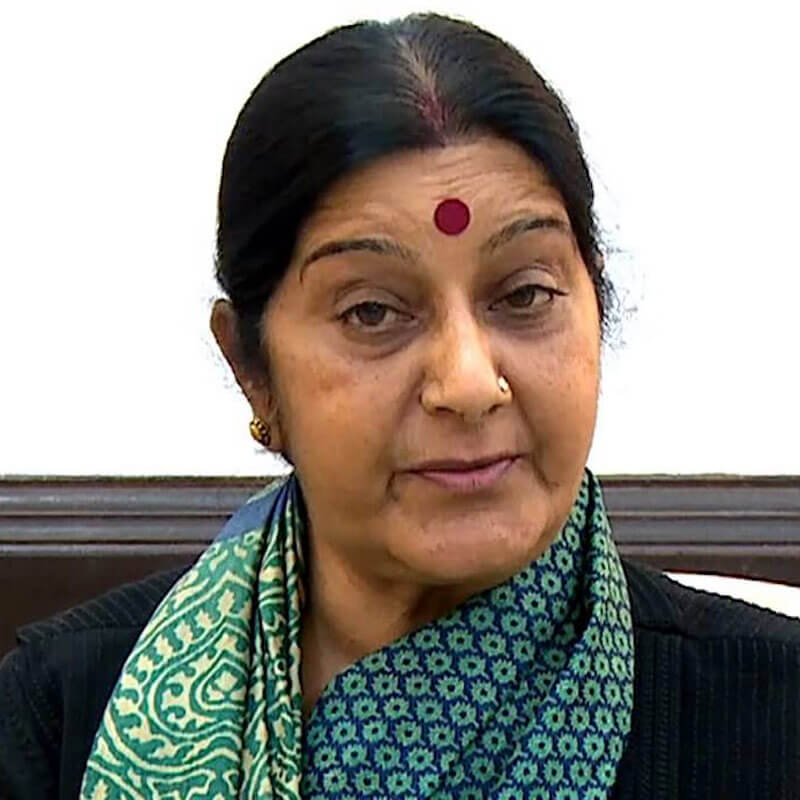
NEW DELHI: Information and Broadcasting Ministry Secretary Sushma Singh said today that while the government did not want to interfere with the freedom of the media, the latter should show a sense of responsibility and observe journalistic ethics.
Speaking at the inaugural session of the Second Indian News Television Summit organized by indiantelevision.com, she said channels should introspect as to whether what they were showing in the name of news was really news.
She noted sensationalism in the content of news channels often resulted in creating alarm and this was the reason for the government having issued as many as 241 show-cause notices to news and other channels over the past few years.
She said the Ministry was under pressure from various sources including courts to act faster on creating a suitable Content Code. The Ministry had, therefore, been working with the News Broadcasters Association and the Indian Broadcasting Foundation to finalise a Code as early as possible. She gave examples of the Andhra Pradesh and Delhi High Courts which had been demanding speedier action from the government in this regard. She said the inability of the Ministry in promulgating a Code was being looked at seriously.
She said that the government had presently given uplinking permission to as many as 191 news channels and had only recently given 33 new licences for news and current affairs channels. This showed the liberal attitude the government had towards encouraging plurality of thought and divergence of opinion. This was one of the reasons for more regional channels coming up in the recent past.
But the government had a duty to look at the content of the news channels that was being passed off as news. The news channels must also realize that the viewers included children and sensitive audiences.
Furthermore, maintenance of public order and national interest must take precedence over the content of news.
She said that technological breakthroughs were creating rapid advances and this made it more imperative that national objectives should be kept in mind. The attitude of the news channels whenever the government approached them should be one of discussion and not confrontation.
Singh also released on the occasion The NT Magazine, brought out by indiantelevision.com.
In his keynote address, India TV head Rajat Sharma made a passionate case to say that most channels worked in a very responsible manner and often helped in exposing the ills in society.
Sharma regretted that news channels were under attack when even the print media was doing the same kind of reporting.
He said that people had faith in the news channels and this was the reason why many first came to them even before approaching the police or courts of law. He said it could not be denied that news channels had empowered the people, but this responsible behaviour of the channels had gone unnoticed.
Television channels were now receiving threats from the underworld or terrorist groups for correct reporting, and this was now a major threat facing the news media.
Admitting there had been some lapses like the recent case of a false sting, he said the entire community of news broadcasters had criticized such things.
Self-introspection was being done on the Content Code and he said the News Broadcasters Association along with the Ministry was now involving judges to help in drafting the Code.
He said that it could not be denied that news channels had shown a lot of restraint in cases of violence or wherever social responsibility was required to be shown. Furthermore, he maintained that even as news channels showed astrology or other news in an interesting manner to win eyeballs, 50 per cent was hard news.
He also said that news channels had become the true ambassadors of the country by beaming overseas, and also functioned as a bridge between the government and the people.
Giving an alternative viewpoint, ICICI Bank Executive Director V Vaidyanathan said presentation of news should be treated as a corporate responsibility just as some corporate houses put aside some part of their revenues for social good.
He also said news channels had to be relevant to hold the attention of the viewers, pointing out that most viewers now kept flipping channels instead of sticking to one channel.
He said most news channels seemed to be suffering from the prisoner’s dilemma: if they did not sensationalise the news, someone else would. But this did not always mean negative news.
He urged the media to take up its social responsibility more seriously and said it could do things like exposing the parallel economy which was harming the country. At least ten per cent of the news time should be devoted to consumer education, which could be turned into a viable business. ‘So be viable and socially responsible’, he said.
arlier welcoming the delegates, indiantelevision.com founder and Editor-in-Chief Anil Wanvari said people were now spending an average of two hours and 38 minutes per day in front of their TV sets and so it was necessary for the channels to look towards finding the right balance, which is the theme of the Summit.