Executive Dossier
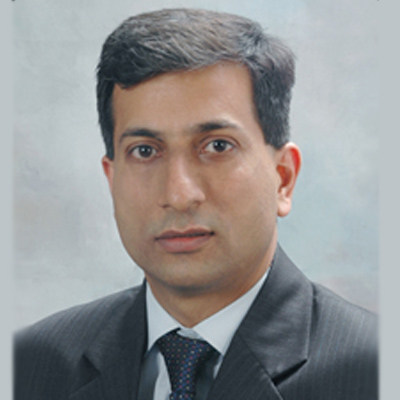
‘Indian promoters have build a scale where they can attract foreign media companies’ : Ravi Sardana – ICICI Securities Limited Vice President

Foreign media companies like Walt Disney and Turner have entered into equity deals with Indian firms to grow their business in India.
The last two years has seen a spate of equity deals, changing the media landscape in India. Indian promoters have raised money to build scale and also brought in corporate structures.

In an interview with Sibabrata Das, ICICI Securities vice president Ravi Sardana talks about the immense potential that the media sector offers to investors and the consolidation that is waiting to happen.
Excerpts:
|
Multinational media companies like Walt Disney and Turner had come to India on their own. Why are they now entering into JVs with local partners? |
|
|
Why are the Indian media companies becoming attractive to financial and private equity investors as well? |
|
|
Which are the segments in the media sector that are proving lucrative?
Distribution is also becoming a big value driver and a new segment that investors have started looking into as the revenue leakages are getting plugged with digitalisation. The regional space is another interesting segment and will see higher growth compared to Hindi and English media. Regional TV has not build scale like print has, but there is a serious interest. Growth is faster in tier-II and tier-III towns. |
|
|
But aren’t DTH companies saddled with losses? |
|
|
Aren’t investors shying away from cable companies as digitalisation is slow? |
|
|
|
|
Only one media company raised money through an initial public offering in 2007. Why are IPOs drying up in the media sector? |
|
|
The economy is slowing down and interest rates are hardening. Do you see media organisations being cash strapped to fund their growth? |
|
|
Is the broadcasting space heading for consolidation? |
|
|
Are news channels getting bogged down by a steep rise in operational costs? |
|
|
Is the news channel space getting too cluttered with companies from all sectors wanting to rush into it? |
|
|
Will there be room for so many regional news channels? |
|
|
Do you see the other revenue streams growing for news broadcasters? |
|
| How are the movie companies shaping up in India and what are the challenges they face? In the movie business, there are already the four tigers – UTV, Adlabs, Eros and Studio18. Multiplex operator PVR is also into movie production. For a pure film exhibition company, profitability could be range bound. So there is need to enter into other streams like film production and distribution. |
|
| What are the new financing options available for companies? For the film business, Indian companies have tapped the Alternative Investment Market (AIM) of the London Stock Exchange. Since the size and scale of the business has shot up, there is a need for capital. While good financing sources for debt are being made available, there is a requirement of providing risk capital for this business. |






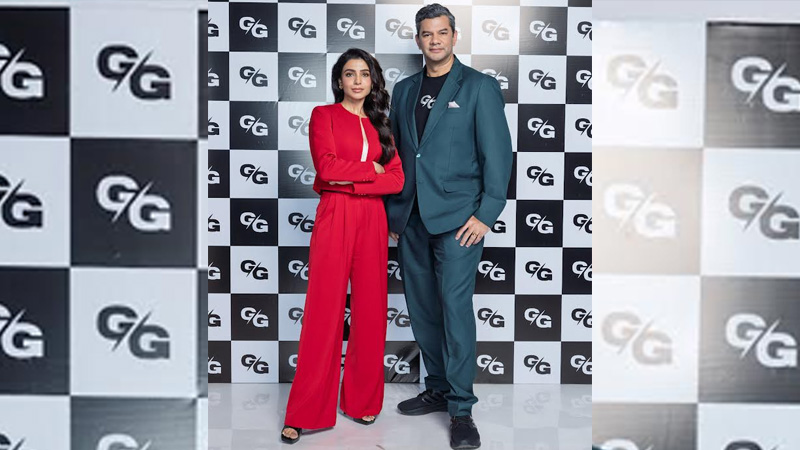
MUMBAI: Game faces on, pressure high India’s gaming ambitions are levelling up. Good Game, billed as the world’s first as-live global gaming reality show, has officially launched in India with a bold mission: to crown the country’s first Global Gaming Superstar.
Blending esports with mainstream entertainment, the show brings together competitive gaming, creativity and on-camera performance in a format that tests more than just joystick skills. Contestants will be judged on gameplay, screen presence and their ability to perform under pressure, reflecting how gaming has evolved from pastime to profession and pop culture currency.
Fronting the show are three high-profile ambassadors: actor and entrepreneur Samantha Ruth Prabhu, Indian cricket star Rishabh Pant, and gaming creator Ujjwal Chaurasia. The winner will take home Rs 1 crore ($100,000) among the largest prize pools for any Indian reality show along with the chance to represent India on a global stage.
Backed by a planned annual investment of up to Rs 100 crore, Good Game is also courting brand partners, promising a minimum reach of 500 million among India’s core youth audience. The creators position the show as a bridge between entertainment and interactive culture, offering long-format content, community engagement and commercial scale.
Auditions are now open to Indian citizens aged 18 and above, inviting amateur and professional gamers, creators and performers alike. Shortlisted candidates will be called for in-person auditions in Mumbai on 14 and 15 February, and in Delhi on 28 February and 1 March 2026.
With big money, big names and even bigger ambition, Good Game signals a shift in how India views gaming not just as play, but as performance, profession and prime-time spectacle.