MAM
Govt for self-regulation and legal controls to check misleading ads

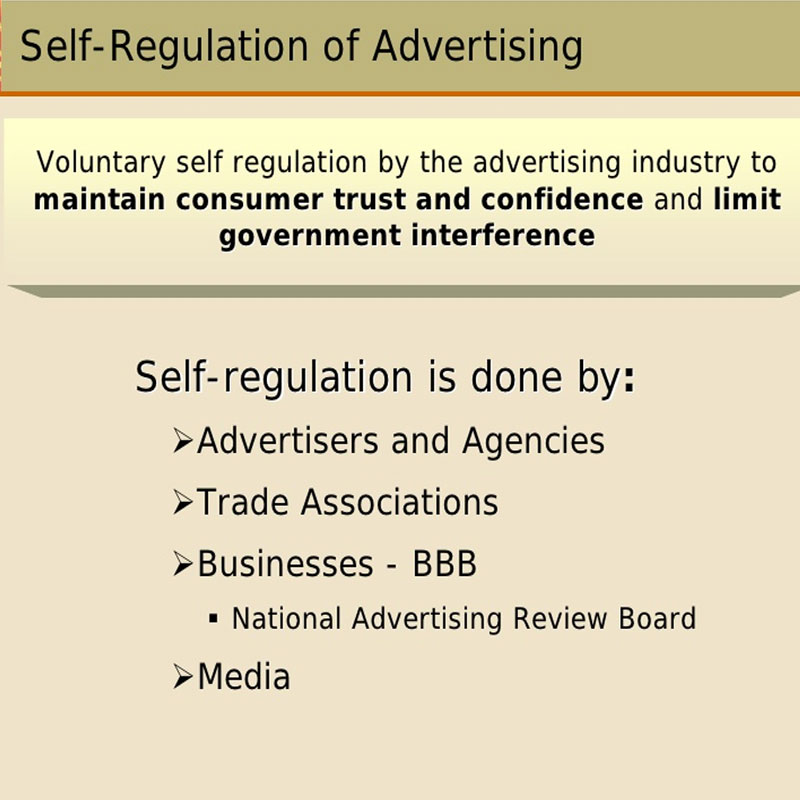
NEW DELHI: The government is in favour of a process that would involve self-regulation and legal controls to check misleading ads.
Consumer Affairs Minister K V Thomas today underlined the urgent need to update laws and improve enforcement to protect consumers from false and misleading advertisements which had continued despite several provisions.
Thomas said the widely accepted opinion was that both self-regulation and legal controls should work in synergy. “I feel that both types of regulation should be applied with the ultimate aim of reaching balance between the sacred right of freedom of choice and information and minimising possible widespread offence,” he said.
Despite the freedom of expression guaranteed by the Constitution, he said the government is authorised to regulate commercial advertisements, and can restrict deceptive, unfair, false and misleading advertisements.
Prof Thomas was addressing a national Seminar on misleading claims in advertisements organised by the Department of Consumer Affairs with a view to protect the consumers from exploitation.
He pointed out that his Department had started countrywide consultations with all stakeholders to elicit their views in order to come to a consensus on what suitable measures could be put in place to regulate such misleading advertisements.
Advertisements had become a part and parcel of lives today, but it was necessary to use advertisements with caution to avoid a vicious effect on social values, he said, adding that advertisements are a crucial aspect of any type of business because they promote products. The problem arose when this was exploited by unscrupulous businesses persons to mislead the public as it may then destroy the very image of advertising.
Though advertising is a useful tool to give information that is factual and accurate, questions are frequently raised whether this can create class consciousness, materialism, conspicuous consumption and other values which are not universally accepted, he said, adding that to reach the target markets, advertisers sometimes overstep the legal and social norms.
An advertisement is termed deceptive when it misleads people and affects the purchasing behaviour of the consumer. In India, advertisements for cigarettes, liquor, pan masala (chewed tobacco), and products that are harmful to the public continue to find a place in the TV channels, despite the ban imposed by the Government.
Unfortunately, despite several laws meant to protect consumers against such unfair trade practices, false and misleading advertisements continue to exploit the consumer. In fact such advertisements now have a wider canvas. While earlier one saw them only in the print media, today they can be seen on television, influencing a larger number of people and impacting even the illiterate.
Proliferation of advertisements through television marketing networks promoting health cures, slimming and beauty gadgets of unproven value is a cause of great concern, because today the reach of television channels is phenomenal. Undoubtedly, the impact of the visuals on the television screen is far greater than the newspapers, he added.
Outdated laws and poor enforcement of laws are the main reasons for the prevalence of any social malady and mal-advertising is no exception. There is need for better laws, their regular updation, improved enforcement, and regular surveillance by the authorities.
He said social acceptability varies from one culture/country to another. At the end of the day “good taste or bad is largely a matter of the time, the place, and the individual”. It would be also probably impossible to set clear-cut and detailed rules in the era of Internet and interactive TV.
The most controversial issue in the field of marketing communications is probably the content of advertisements. Three areas of interest in terms of ethical judgment of advertisements are “individual autonomy, consumer sovereignty, and the nature of the product”.
The individual autonomy is concerned with advertising to children. Consumer sovereignty deals with the level of knowledge and sophistication of the target audience whereas the ads for harmful products are in the centre of public opinion for a long time. Advertising of hazardous products is even more harshly criticised when it is aimed at audiences with low individual autonomy, that is, children. Children are not only customers, but also consumers, influencers and users in the family Decision-Making Unit, though they are too impressionable to be deciders, he said. It was not a surprise then that “spending on advertising for children has increased five-fold in the last ten years and two thirds of commercials during child television programs are for food products”.
Advertising standards and self-regulation by the advertising industry is an important issue, particularly so in a country such as India where a majority of the consumers are in rural areas.
However, he said going by the number of ads for which the Advertising Standards Council of India receives complaints, Indian advertising is of exceptionally high standards, since more complaints are received by similar bodies in the United Kingdom. But the number of complaints does not always give a true picture of the standards of advertising nor does it say anything about the level of consumer dissatisfaction. The reasons are low awareness level and apathy.
Section 2 (r) of the Consumer Protection Act gives a comprehensive definition of unfair trade practice and Section 14 deals with the directions that the court can give to deal with such practices. The consumer courts have given some excellent orders in this area, but they cannot deal with misleading advertisements like the MRTPC. For one, the consumer courts neither have the power nor the infrastructure to investigate, suo motto into misleading advertisement nor take up such cases on their own, as done by the MRTP Commission. Nor do they have an investigative wing like the office of the DG (Investigation and Registration) under the MRTP Act.
The consumer courts can only adjudicate over complaints filed before them. However, the consumer courts can issue interim orders stopping such advertisements pending disposal of the case. They can give directions to the advertiser to discontinue such advertisements and not to repeat it. They can award compensation for any loss or suffering caused on account of such unfair trade practices, they can also award punitive damages and costs of litigation. Section 14 h (c) of the Act, describing the powers of the court, says that the court can order “corrective advertisement to neutralize the effect of misleading advertisement at the cost of the opposite party responsible for issuing such misleading advertisement’’.
In so far as misleading advertisements are caused, this is the most important provision and can really have a deterrent effect, if used effectively. Unfortunately, this provision has hardly or perhaps never been used.
The Minister expressed the hope that the meeting with the stakeholders – in this case the consumer bodies – would produce a consensual document delineating the steps leading to affirmative action, including legislative efforts if found necessary, without impeding the freedom of responsible speech.
The day long seminar was attended by representative of the State Governments, various Central Ministries, Advertising Council of India and Consumer bodies.
In a parallel but related development a couple of days back, the Advertising Standards Council of India announced it was partnering with TAM Media Research to monitor misleading ads, a move aimed at improving the self-regulatory mechanism by speeding up the processes and compliance of its codes for advertising content.
Under the pact, TAM‘s division, AdEx, would check around 350 TV and 10860 newspaper ads per week.