Hindi
Tezz is a poor film with disaster written all over it

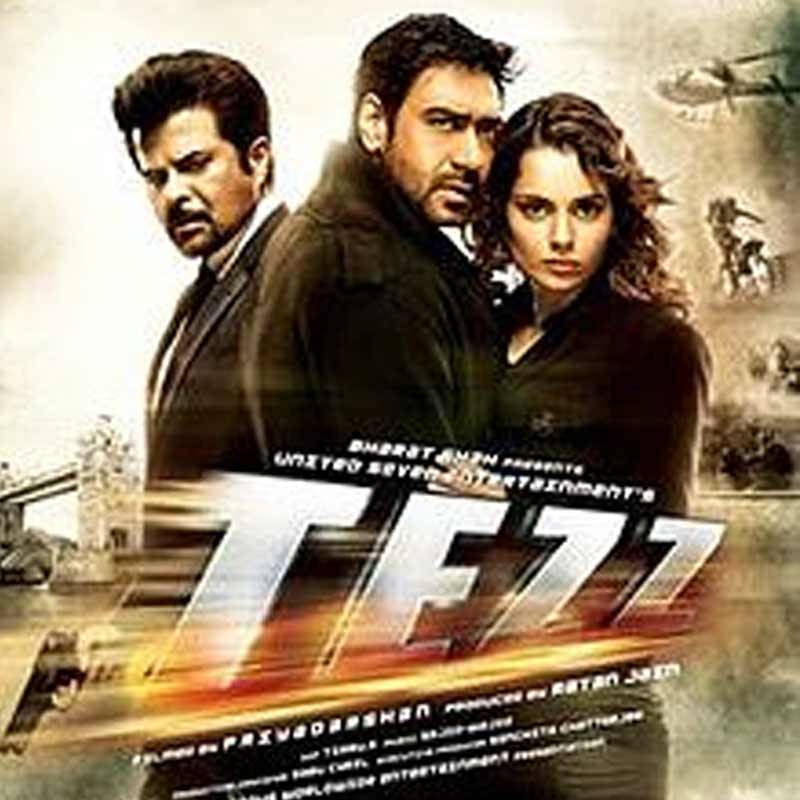
MUMBAI: As the title suggests, Tezz is inspired by the Hollywood film Speed, which in turn was inspired by Hollywood film Runaway Train and the Japanese film, The Bullet Train. Some inspiration is also taken from popular American TV series 24, but that is where the comparison ends.
 |
|
Producer: Ratan Jain. |
The theme was picked up by BR Films to make The Burning Train which, though being a novel idea for the Indian audience at that time and boasting of a mammoth star cast, bombed badly.

Tezz comes at a time when English movies are dubbed in various Indian languages and the subject offers no novelty. What is more, the story is based on a faulty premise.
Ajay Devgn is an illegal immigrant in London but having married a UK citizen, Kangna Ranaut, he is expecting legal status soon. He is also a crusader for other illegal immigrants who he feels have come to UK seeking a brighter future and should not be sent back as the local authorities have been doing after raiding their hideouts.
In one such raid, Ajay Devgn manages to help Sameera Reddy and Zayed Khan escape but he is taken away and despite his explanation that he was married to a citizen and was awaiting his papers, he is packed off to India. With a feeling that he has been denied an opportunity to make a life for himself, he decides to plant bombs on a passenger train and extort a huge ransom from the UK authorities! Now this is not the kind of story heroes are made of – or films.
It is not only the East India Company that an Indian has taken over; they also are the main thrust behind its police and railways. Once Devgn plants the bombs on the train with 500 passengers on board, London police needs to recall a just-retired cop, Anil Kapoor, to handle the case. The head of signal system on the railway is also an Indian, Boman Irani, and his pre-teen daughter is on the same train too (that is the emotion quotient in the film).
As the ransom demand is being complied with, Kapoor is busy chasing Devgn and his accomplices- Khan and Reddy- and Boman Irani negotiates with Ajay Devgn. When Kapoor is asked to come alone and deliver the ransom amount, he goes with a fleet of police cars with sirens blaring and cops in fluorescent jackets. Is he the best London police have? As the alternative ways to save the passengers are used, there is nothing that you have not seen in a number of films. As Zayed Khan and Sameera Reddy have been martyred in the cause of illegal Indian immigrants in UK and having got his ransom amount, Devgn decides to call off his threat and get back to his wife and the child she gave birth to in his absence. But Anil Kapoor has still to fulfil his obligation, which is to apprehend Ajay Devgn and send the message that crime may get you 10 million Euros but won‘t let you live to enjoy it!
The script is full of loop holes, lacks logic and is treated equally shoddily by Priyadarshan. Initially, exchanges between Indians and their British counterparts are in English which later turn to Hindi and those uncomfortable with English miss the very purpose behind the events to follow.
Music is out of sync and a Mallika Sherawat item number has been forced in as if censors wouldn‘t pass a film without one. If at all the film offers anything worth watching, it is two chase scenes, one with Sameera Reddy and the other with Zayed Khan. The cinematography is good. Boman Irani, Sameera Reddy and Zayed Khan are passable; Anil Kapoor and Ajay Devgn disappoint. Kangana Ranaut has nothing much to do. Mohanlal playing a cameo as a cop escorting a criminal on the targeted train is wasted.
Tezz is a poor film with disaster written all over it.
Life Ki Toh Lag Gayi is one boring charade
 |
|
Producers: VM Final Vut Entertainments, K Sera Sera. |
Life Ki Toh Lag Gayi is an attempted comedy bringing together four characters, Kay Kay Menon, Ranvir Shorey, Pradhuman Singh and Manu Rishi with Neha Bhasin adding the glamour angle.
These four characters converge in Mumbai on their own agenda. Kay Kay Menon wants to avenge the murders of his parents. Manu Rishi is here to apprehend some Nigerian drug peddlers. Ranvir Shorey, a chef in UK, has returned to be with his lady love. Ajoy Ghosh is a wannabe rock star.
The four are expected to create laughter and regale the viewer; they do nothing of the sort and come up with one boring charade. Mumbai background is not exploited well.
The film has opened to a ‘no audience no show‘ welcome.