Hindi
PVR Director’s Rare to re-release Mira Nair’s Salaam Bombay on 22 March
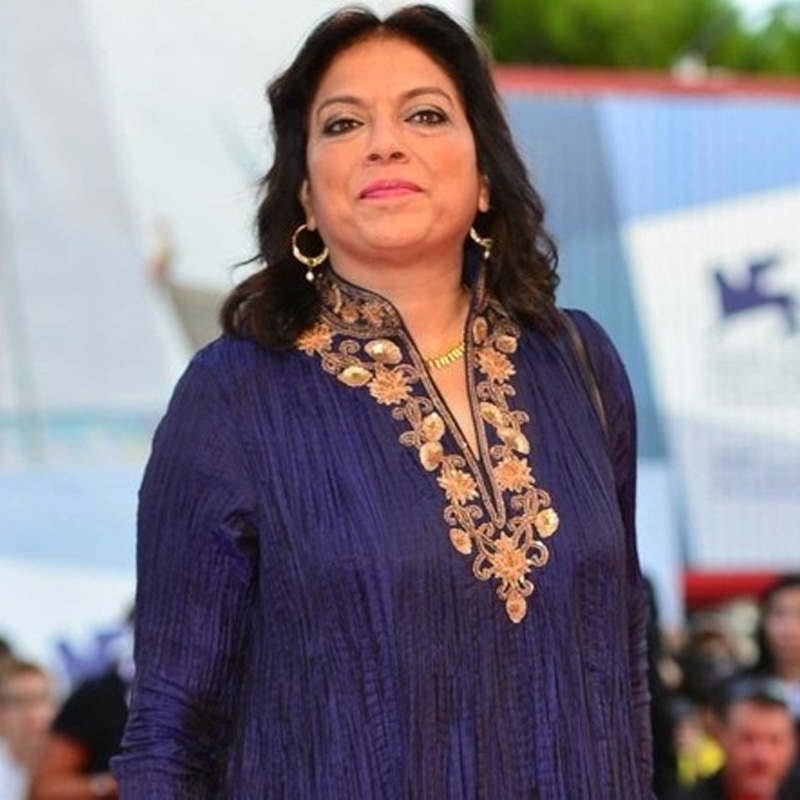
MUMBAI: PVR Director‘s Rare is all set to re-release Mira Nair‘s multiple awards winning film, Salaam Bombay on 22 March in its zest to commemorate twenty five years of the film that brought innumerable accolades to India.
Speaking on the re-release, PVR Ltd JMD Sanjeev Kumar Bijli said, "I am immensely pleased to announce the re-release of Salaam Bombay through PVR Director‘s Rare. The movie is a stunning chronicle that opened doors for Indian cinema globally. Through our platform PVR Director‘s Rare, it is an excellent opportunity to revive Salaam Bombay for today‘s audiences. Mira Nair has effectively captured the struggle of the street children and the true essence of a city like Mumbai. We hope to continue bringing such meaningful cinema to our patrons in the future too."
Salaam Bombay is a gritty tale set in the red light district in Mumbai and chronicles the day-to-day life of street children, drug-pushers, pimps & prostitutes. It follows the life of a young kid Krishna who has come to the big city to earn Rs. 500 and is nurturing the dream of going back to his mother someday. The actors in the movie were real prostitutes and the street kids of the city.
It won the National Award for Best Film and 25 international awards, including two at Cannes- the Camera D‘Or and the Prix Publique (the most popular film in the festival). It was selected as one of the best 1,000 movies ever made by a leading publication in New York. It was also nominated for the Academy Award for best foreign language film.
The film will release on 22 March in PVR Cinemas and Cinemax at Delhi, Mumbai, Kolkata, Chennai, Ahmedabad, Bangalore, Pune and Gurgaon through the PVR Director‘s Rare banner.

Hindi
Remembering Gyan Sahay, the lens behind film, television and advertising
From a puppet rabbit selling poppadums to Hindi cinema, he framed it all.
MUMBAI: There are careers, and then there are canvases. Gyan Sahay, the veteran cinematographer, director, and producer who passed away on 10 March 2026 in Mumbai, had one of the latter. Over several decades in the Indian film and television industry, he turned lenses, lights, and the occasional puppet rabbit into something approaching art.
A graduate of the Film and Television Institute of India (FTII) in Pune, Sahay built his reputation as a director of photography across a career that stretched from the early 1970s all the way to the digital age. He was the kind of craftsman who understood that a well-composed shot is not merely a technical achievement but a quiet act of storytelling.
For most Indians of a certain age, however, Sahay will forever be the man behind the rabbit. His direction of the iconic long-running television commercial for Lijjat Papad, featuring its now-legendary puppet bunny, gave the country one of its most cheerfully persistent advertising images. It was the sort of work that sneaks into the national subconscious and takes up permanent residence.
His big-screen credits as cinematographer include Anokhi Pehchan (1972), Pagli (1974), Pas de Deux (1981), and Hum Farishte Nahin (1988). In 1999, he stepped behind a different kind of camera altogether, making his directorial debut with Sar Ankhon Par, a drama that featured Vikas Bhalla and Shruti Ulfat, with a cameo by Shah Rukh Khan for good measure.
On television, Sahay was particularly prized for his command of multi-camera production setups, a skill that made him a go-to technician for large-scale shows and reality programmes. In an industry that has never been especially patient with complexity, he was the calm hand on the rig.
In later life, Sahay turned teacher. He participated regularly in masterclasses and Digi-Talks, often hosted by organisations such as Bharatiya Chitra Sadhna, sharing hard-won wisdom on cinematography, the comedy of timing in a shot, and the sweeping changes brought by the shift from celluloid to digital. He was also said to have been involved in a project concerning a biographical film on Infosys co-founder N.R. Narayana Murthy.
Tributes from the film industry poured in following the news of his passing, with colleagues remembering him as a senior cameraman who served as a rare bridge between two entirely different eras of Indian cinema. That is, perhaps, the finest thing one can say of any craftsman: he kept up, and he brought others along with him.