Applications
Supreme court gives entertainment tax relief to DTH operators

NEW DELHI: In a major relief to direct-to-home operators in the state, the Supreme Court last week held that the Madhya Pradesh government cannot demand entertainment tax on DTH services under the Madhya Pradesh Entertainment Duty and Advertisements Tax Act, 1936.
Justice Aftab Alam and Justice R M Lodha said in a judgment that Act ‘cannot be extended to cover DTH operations.’
Accepting appeals by Tata Sky against a judgment of the Madhya Pradesh High Court of August 2010, the apex court said: ‘Neither the provision of section 4(1) nor any of the modes provided under section 4(2) of the Act can be made applicable for collection of duty on DTH operations. Further, it is noted above that section 8 provides rule making powers. In exercise of the powers under that provision, the Madhya Pradesh Entertainment Duty and Advertisement Tax Rules 1942 were framed. A perusal of the Rules makes it absolutely clear that the collection mechanism under the 1936 Act is based on revenue stamps stuck to the tickets issued by the proprietor for entry to the specified place where entertainment is held.’

The Court added: ‘Under section 3 read with section 2(d) and section 2(a), the charge or levy of tax is attracted only if an entertainment takes place in a specified place or locations and persons are admitted to the place on payment of a charge to the proprietor providing the entertainment. In the present case, as DTH operation is not a place-related entertainment, it is not covered by the charging section 3 read with section 2(a) and 2(b) of the 1936 Act. Consequently, the question of going to section 2(d)(iv) does not arise.’
The revenue department had demanded 20 per cent entertainment duty on subscription payment from the DTH operator, which had commenced services in August 2006 all over the country including Madhya Pradesh.
Tata Sky in their appeals had contended that DTH broadcast is a notified service under the Finance Act and it is chargeable to service tax. For the purpose of levy of service tax, “broadcasting” has been defined specifically under section 65(15) of the Finance Act. The broadcasting services were brought within the purview of the service tax under section 65(105)(zk) of the Finance Act 1994 as amended with effect from 16 July 2001. Later on, DTH service was brought within the purview of the service tax with effect from 16 June 2006.
Tata Sky contended that it does not use any infrastructure from the State for its DTH broadcasts.
On 5 May 2008, the State Government issued a gazette notification fixing 20 per cent entertainment duty in respect of every payment made for admission to an entertainment other than cinemas, videos cassette recorders and cable service.
The State on 1 August 2009 passed the Madhya Pradesh Entertainment Duty and Advertisements Tax (Amendment) Act, 2009. By the Amendment Act, the failure to produce accounts and documents as required by the Excise Commissioner or any officer authorized by the State Government was made a penal offence.
However, the apex court noted that this amendment ‘did not introduce any provision in the Parent Act with respect to levy of entertainment duty on DTH broadcasting.’
Referring to the notification of 5 May 2008, the apex court said ‘it is elementary that a notification issued in exercise of powers under the Act cannot amend the Act. Moreover, the notification merely prescribes the rate of entertainment duty at 20 per cent in respect of every payment for admission to an entertainment other than cinema, video cassette recorder and cable service. The notification cannot enlarge either the charging section or amend the provision of collection under section 4 of the Act read with the 1942 Rules. It is therefore clear that the notification in no way improves the case of the State.’
The Court also said that the controversy in all the three appeals relates to the demand and realization of entertainment tax under the 1936 Act, which means for the period between the commencement of operation by the appellant in the year 2006 and 31 March 2011, the day prior to the coming into force of the new Act, called the Madhya Pradesh Vilasita, Manoranjan, Amod Evam Vigyapan Kar Adiniyam 2011.




Applications
Inshorts Group chief Deepit Purkayastha joins IAB video council for Southeast Asia and India
The co-founder and chief executive of the short-form content platform has been inducted into the IAB SEA+India Video Council, giving India a stronger voice in shaping digital video frameworks
NOIDA: India has long been the world’s most chaotic, multilingual and mobile-first digital market. Now, one of its most prominent short-video executives is getting a seat at the table where the rules are written.
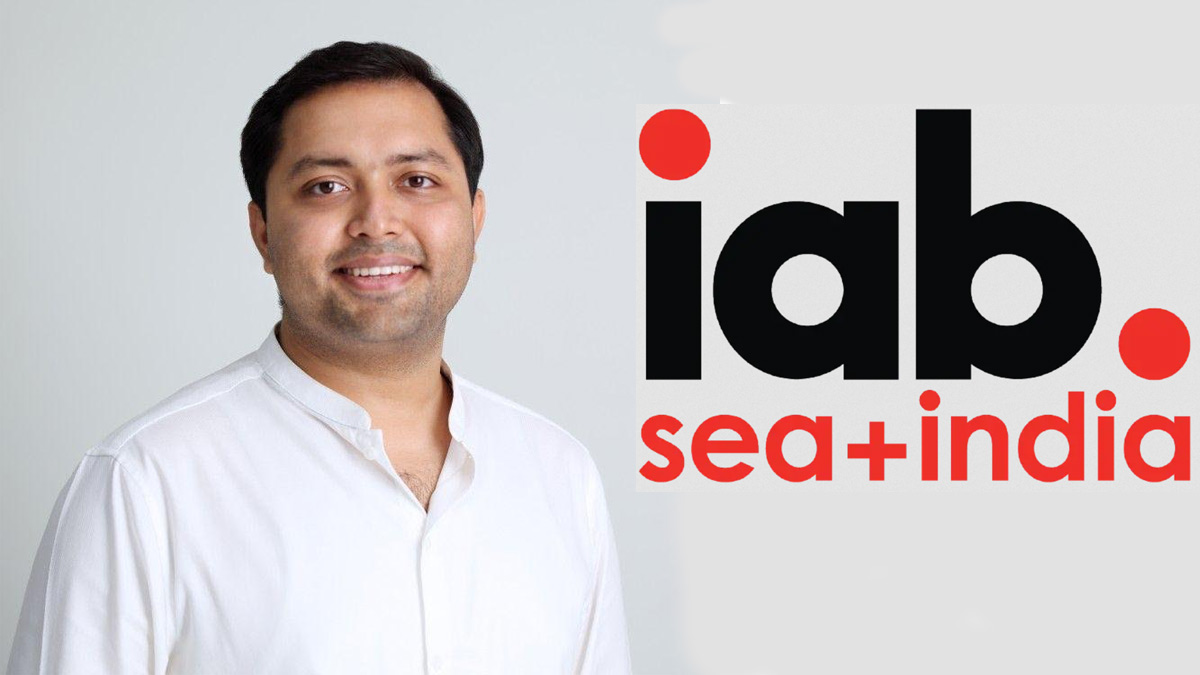
Deepit Purkayastha, co-founder and chief executive of Inshorts Group, has been selected as a member of the IAB SEA+India Video Council for 2026. Run by the Interactive Advertising Bureau, the council brings together senior leaders from Southeast Asia and India to shape standards, best practices and measurement frameworks for the fast-evolving video and digital advertising ecosystem.
The timing is pointed. According to the IAMAI-Kantar Internet in India Report 2025, over 588 million Indians are now consuming short-video content, with growth increasingly driven by rural and non-metro audiences. India’s active internet user base has crossed 950 million, with 57 per cent of users now coming from rural markets. Yet the frameworks that govern how video consumption is measured and monetised were largely designed for single-language, Western markets and have struggled to keep pace with the scale, diversity and complexity of India’s digital landscape.
Purkayastha is no stranger to these debates. He already serves on the AI Council at Marketing and Media Alliance India and as co-chair of the Digital Entertainment Committee at the Internet and Mobile Association of India. His induction into the IAB SEA+India Video Council extends that influence into the global video standards arena.
Inshorts Group sits squarely at the intersection of these forces. Its flagship product, Inshorts, India’s highest-rated short news app, reaches 12 million active users with 60-word news summaries. Its sister platform, Public App, reaches 80 million monthly active users across more than 700 districts and 12 languages, serving communities that most global platforms barely register.
Purkayastha said the opportunity was about building something more representative. “India today sits at the centre of the global video ecosystem, but the frameworks that define how value is created and measured have not always kept pace with the realities of our market,” he said. “Being part of the IAB SEA+India Video Council is an opportunity to contribute to a more representative and future-ready approach, one that accounts for diversity in language, context, and user intent.”
As a council member, Purkayastha will contribute to shaping regional standards across video advertising, measurement and platform governance, with a focus on frameworks that are native to India’s multilingual, mobile-first ecosystem rather than imported from global benchmarks designed elsewhere.
For years, India has been content to play by rules written for other markets. Purkayastha’s induction is a signal that it is done waiting to be consulted and ready to start writing them.