Connect with us

Hindi

Largest number of shorts in Film Southasia from India

Published

on

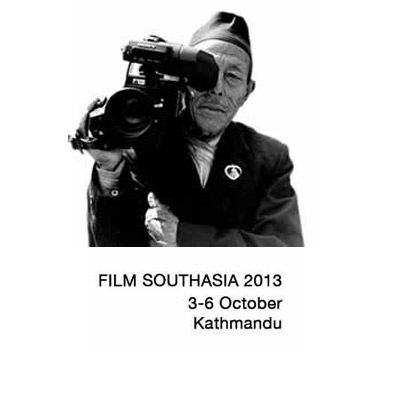
NEW DELHI: A total of 15 shorts from India – the highest – are to be screened at the Film Southasia 2013 Festival of South Asian Documentaries.

The festival will be held from 3 to 6 October in Kathmandu and will feature 34 shorts in all.

 Film Southasia (FSA) is a biennial festival that was set up in 1997 with the goal of popularising the documentary.

Advertisement

The Indian films contain Celluloid Man, a bio-documentary by Shivendra Singh Dungarpur about the veteran P K Nair who set up the first film archives in South Asia – the National Film Archives in Pune.

The other Indian films are: A Prayer For Aliyah (by Zorawar Shukla); Algorithms (Ian McDonald); Big in Bollywood(Kenny Meehan and Bill Bowles); CHAR…No Man’s Island (Sourav Sarangi); Elemental Gayatri Roshan, Emmanuel Vaughn Lee); Fire In The Blood (Dylan Mohan Gray); Gaur in My Garden (Rita Banerji); Give Us This Day Our Daily Bread (Satchith Paulose); Immoral Daughters (Nakul Singh Sawhney); Voice of God (Bernd Lützeler); Invoking Justice (Deepa Dhanraj); Salma (Kim Longinotto); Sama (Shazia Khan);  and The Human Factor (Rudradeep Bhattacharjee).

There are three films from Afghanistan: Expecting; How To Build an Afghan Box Camera; and No Burqas Behind Bars.

Advertisement

Pakistan has sent My Punjabi Love For You; Transgender – Pakistan’s Open Secret; and Saving Face.

The films from Bangladesh are:  Hombre Maquina; Life Begins with Tears; Shunte Ki Pao; and The Strike.

The Sri Lankan films are: Broken; No Fire Zone – The Killing Fields of Sri Lanka, and The Story of One.

Advertisement

The films from Myanmar (Burma) are: Miss Nikki and the Tiger Girls; No. 62, Pansodan Street, and The Old Photographer.

The three shorts from the host country are: Playing with Nan; Who Will Be a Gurkha; and Yomari Ya Bakhan.

Advertisement
Click to comment

Leave a Reply

Your email address will not be published. Required fields are marked *

Hindi

Remembering Gyan Sahay, the lens behind film, television and advertising

From a puppet rabbit selling poppadums to Hindi cinema, he framed it all.

Published

on

MUMBAI: There are careers, and then there are canvases. Gyan Sahay, the veteran cinematographer, director, and producer who passed away on 10 March 2026 in Mumbai, had one of the latter. Over several decades in the Indian film and television industry, he turned lenses, lights, and the occasional puppet rabbit into something approaching art.

A graduate of the Film and Television Institute of India (FTII) in Pune, Sahay built his reputation as a director of photography across a career that stretched from the early 1970s all the way to the digital age. He was the kind of craftsman who understood that a well-composed shot is not merely a technical achievement but a quiet act of storytelling.

For most Indians of a certain age, however, Sahay will forever be the man behind the rabbit. His direction of the iconic long-running television commercial for Lijjat Papad, featuring its now-legendary puppet bunny, gave the country one of its most cheerfully persistent advertising images. It was the sort of work that sneaks into the national subconscious and takes up permanent residence.

Advertisement

His big-screen credits as cinematographer include Anokhi Pehchan (1972), Pagli (1974), Pas de Deux (1981), and Hum Farishte Nahin (1988). In 1999, he stepped behind a different kind of camera altogether, making his directorial debut with Sar Ankhon Par, a drama that featured Vikas Bhalla and Shruti Ulfat, with a cameo by Shah Rukh Khan for good measure.

On television, Sahay was particularly prized for his command of multi-camera production setups, a skill that made him a go-to technician for large-scale shows and reality programmes. In an industry that has never been especially patient with complexity, he was the calm hand on the rig.

In later life, Sahay turned teacher. He participated regularly in masterclasses and Digi-Talks, often hosted by organisations such as Bharatiya Chitra Sadhna, sharing hard-won wisdom on cinematography, the comedy of timing in a shot, and the sweeping changes brought by the shift from celluloid to digital. He was also said to have been involved in a project concerning a biographical film on Infosys co-founder N.R. Narayana Murthy.

Advertisement

Tributes from the film industry poured in following the news of his passing, with colleagues remembering him as a senior cameraman who served as a rare bridge between two entirely different eras of Indian cinema. That is, perhaps, the finest thing one can say of any craftsman: he kept up, and he brought others along with him.

Continue Reading

Advertisement News18
Advertisement All three Media
Advertisement Whtasapp
Advertisement Year Enders

Copyright © 2026 Indian Television Dot Com PVT LTD

This will close in 10 seconds

×