Connect with us

Hollywood

Scott Cooper replacing Ben Affleck as director of Stephen King’s ‘The Stand’

Published

on

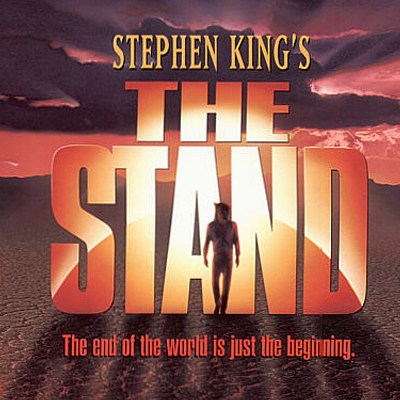
MUMBAI: Warner Bros has set Scott Cooper to re-write and direct The Stand, the seminal post-apocalyptic Stephen King novel. That means that while the studio has roped in Ben Affleck as its new Caped Crusader for Batman vs Superman, Affleck has withdrawn from The Stand. He had been set in late 2011 to write the script and helm the project. Affleck is busy directing and starring in his scripted adaptation of Dennis Lehane’s Live By Night for Warner Bros.

Warner Bros is teamed on the project with CBS Films, which is co-producing and co-presenting and possibly financing the project together. Dave Kajganich scribed the first draft. Published in 1978, the mammoth novel covered a biological apocalyptic disaster that decimated the population. The survivors then had to try and piece together a new form of humanity and it became a good vs evil struggle, with elements of the supernatural thrown in for good measure. King was at his best, both in creating depictions of the demise of civilization and in the arcs of characters good and bad who became important in a new order.

Roy Lee and Mosaic are producing for Warners and Jon Berg is the studio exec. Cooper is currently developing Creek with Leonardo DiCaprio, and his next film, Out Of The Furnace, is set to release 6 December. That one was produced by Appian Way and Scott Free. Cooper, the actor-turned-filmmaker who made his breakthrough with the Jeff Bridges-starrer Crazy Heart, is represented by CAA and attorney Darren Trattner.


Advertisement
Click to comment

Leave a Reply

Your email address will not be published. Required fields are marked *

Hollywood

Did the ballet and opera controversy cost Timothée Chalamet his Oscar?  

The actor’s ‘dying art forms’ comments may have danced away his Oscar chances.

Published

on

LOS ANGELES: Last night, the 98th Academy Awards delivered a performance that wasn’t in the script, as Michael B. Jordan clinched the Best Actor statue, leaving Timothée Chalamet’s widely predicted win to pirouette away into the night. While Chalamet was long considered the frontrunner for his starring turn in Marty Supreme, many are whispering that a singular, ill-timed performance, not on screen but on the campaign trail, may have rewritten the finale.

For months, the narrative surrounding the race had a singular star, Chalamet, the critics’ darling and the bookies’ bet. However, the closing numbers saw a dramatic plot twist. Chalamet found himself upstaged not just by his fellow nominees but by the ghost of public opinion, following remarks he made during a Variety and CNN actor-on-actor conversation in February.

What started as a breezy discussion turned distinctly frosty when Chalamet, the conversation’s designated trendsetter, took aim at some classical institutions. “I don’t want to be working in ballet or opera, where no one is interested anymore,” he said, before branding them “dying art forms.”

Advertisement

The backlash was swift and, unfortunately for Chalamet’s campaign, star-studded. For the film industry, an establishment that often fancies itself as the glamorous custodian of the high arts, the actor’s comments didn’t just strike a bum note. They sounded like a discordant symphony. Academy heavyweights, including Jamie Lee Curtis, Whoopi Goldberg and Steven Spielberg, publicly voiced their disapproval. Spielberg himself countered that the “cinematic experience” and classical performance are bound by a similar dedication to audience engagement, effectively suggesting that Chalamet’s view was perhaps a bit too modern for its own good.

The conversation quickly became a media maelstrom. In a masterstroke of high-culture clapback, renowned ballerina Misty Copeland didn’t just issue a statement. The Academy even choreographed a surprise performance by her for the ceremony itself, a powerful, wordless rebuttal that many saw as a direct riposte to Chalamet’s dismissive claims. Even regional arts institutions joined the choreography. The Seattle Opera offered a cheeky “TIMOTHEE” discount, granting a 14 percent markdown to prove that people do, in fact, care.

Did this cultural counterpoint truly cost Chalamet his win? While some industry insiders argue that Michael B. Jordan’s complex dual performance in Sinners, a performance that also swept the SAG Awards, had simply built up too much momentum, the timing of Chalamet’s comments was undeniably poor. Coming as final Oscar voting began, they arguably soured his narrative and made a vote for him feel, to some, like a vote against artistic unity.

Advertisement

Even the ceremony itself wasn’t finished with the narrative. Host Conan O’Brien, whose sharp tongue is a celebrated feature of these galas, didn’t miss a beat. “Security is extremely tight tonight,” O’Brien jibed during his opening monologue, glancing toward the front row. “I’m told there are concerns about attacks from both the opera and ballet communities. They’re just mad you left out jazz!”

The laughter that followed was pointed, a final public curtain call for a controversy that Chalamet likely wished had closed weeks ago. Whether it was a case of genuine peer disapproval, a sudden surge in support for Jordan’s powerhouse performance, or simply a case of poor footwork on the campaign stage, the ballet and opera debacle has now cemented its place in Oscar history. Chalamet’s experience serves as a clear memo to future contenders. Even when you are the headline act, a solo performance can still fall flat if you forget to play to the entire house.

Advertisement
Continue Reading

Advertisement News18
Advertisement All three Media
Advertisement Whtasapp
Advertisement Year Enders

Copyright © 2026 Indian Television Dot Com PVT LTD

This will close in 10 seconds

×