MAM
Will Kolkata go the Mumbai way?

KOLKATA: Digital marketing may have caught on in a big way in metros like Mumbai and Delhi but in Kolkata, it is struggling to play catch-up, largely due to skepticism around its success as a promotional strategy.
This, despite the recent example of Bengali film Aborto garnering over 30,000 Facebook likes, not to mention huge pre-release awareness simply by paying Facebook Rs 832 per day for a period of 25 days before the movie hit theatres.
 City-based digital advertising agencies are positive that all businesses stand to benefit by deploying new methods of advertising, moreso those related to travel, real estate and e-commerce.
In fact, with the number of internet users having multiplied, most businesses that have been following traditional advertising methods (TV, radio and newspaper ads) are expected to divert some portion of their ad budget to digital platforms.

And yet, there’s agreement on the fact that it would take some more convincing before the City of Joy gets into serious digital space.
In a bid to understand the situation at ground zero, this correspondent spoke to a cross-section of industry.
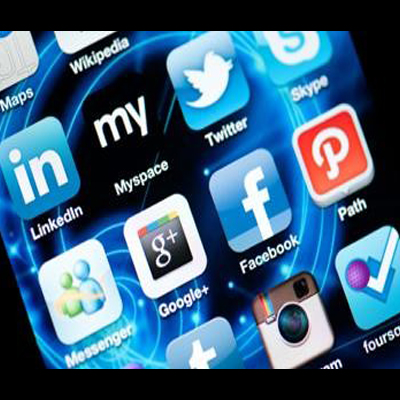
Inter Action owner Prantar Chaudhuri said: “Apart from Facebook and Twitter, the next most used digital platforms are Instagram and LinkedIn. But FB and Twitter are priority.” However, he did say they had done a short-term Facebook plan for a client called Call Buddy, which is into customised gifts and novelties.
While Let’s Assist Digital Services CEO Prasit Bhattacharya opined that digital marketing is being adopted by both small and medium sized businesses. “The growth rate of digital advertising is almost 50 per cent and it will keep growing as the number of internet users increases. While social media marketing (SMM) finds a niche market here, we are seeing more activity in this space than before,” he said.
Bhattacharya said that with people searching for more and more information online, sites such as Tumblr and SlideShare were now featuring in people’s priority lists and companies were targeting applications advertising to reach out to more clients on their phones and tablets. “We are also developing a website with iOS and Android Apps, where people can create landing pages and websites by themselves, do A/B spilt testing and get detailed analytics reports on their digital marketing efforts in real time,” he added.
However, The Webspidy MD Avishek Tarafdar said that around 80 per cent of the people in Kolkata use facebook and the remaining 20 per cent use Google ppc. Going by 2013-14 social media trends, mobile/video ads on YouTube/Vimeo were the main platforms. The size of the advertising industry is $7.3 billion in India, of which, digital ad spend is only around six per cent, Tarafdar pointed out.
Even Bhattacharya was quick to point out the challenges associated with digital advertising. “Making clients understand the lifespan and reach of each campaign and ad can be challenging. While newspaper ads have a lifespan of one day, online ads can be strictly ROI focused if measured properly,” he said.
A media planner said: “Clients only want to spend on print media now. They like TT (The Telegraph) for space in Sunday magazine and pay for three months. But they are not sure what they want to put in that space.”
 Another player said on condition of anonymity: “In Kolkata, mid-segment clients do not differentiate between advertising, brand building and propaganda. What most clients do is propaganda and not brand building.”
A third player rued: “To the Kolkata client, it will start only when some Mumbai agency comes and tells them.” A Delhi-based agency felt most Kolkata brands go digital because everyone else is going that way. Yet another source opined that Kolkata clients do not want to take a risk with new methodology until and unless they’re sure about its acceptability even among competitors.
The source added: “Moreover, ad budgets in east Indian cities like Kolkata are less than in Mumbai or Delhi. Besides, Kolkata-based clients are not very clear about SMM marketing. They think they can simply open a FB page and voila… they are doing SMM.”
Worth mentioning here is the initiative by Advertising Standards Council of India (ASCI) chairman Partha Rakshit, who is working to liaison with Google and Twitter for a tighter monitoring of digital ads. Ads that are in serious breach of the ASCI’s code, and that includes digital ads, will be withdrawn immediately.
So, given this scenario, will digital advertising take flight in Kolkata? It’s something only time will tell…






MAM
Publicis Groupe India launches data-led influencer platform ‘Influential’
A new platform, a seasoned hire and an ambitious plan to bring discipline to India’s booming but chaotic creator economy.
MUMBAI: Influencer marketing in India is big, messy and, for most brands, maddeningly hard to measure. Publicis Groupe India has decided it has had enough of that and is moving to fix it.
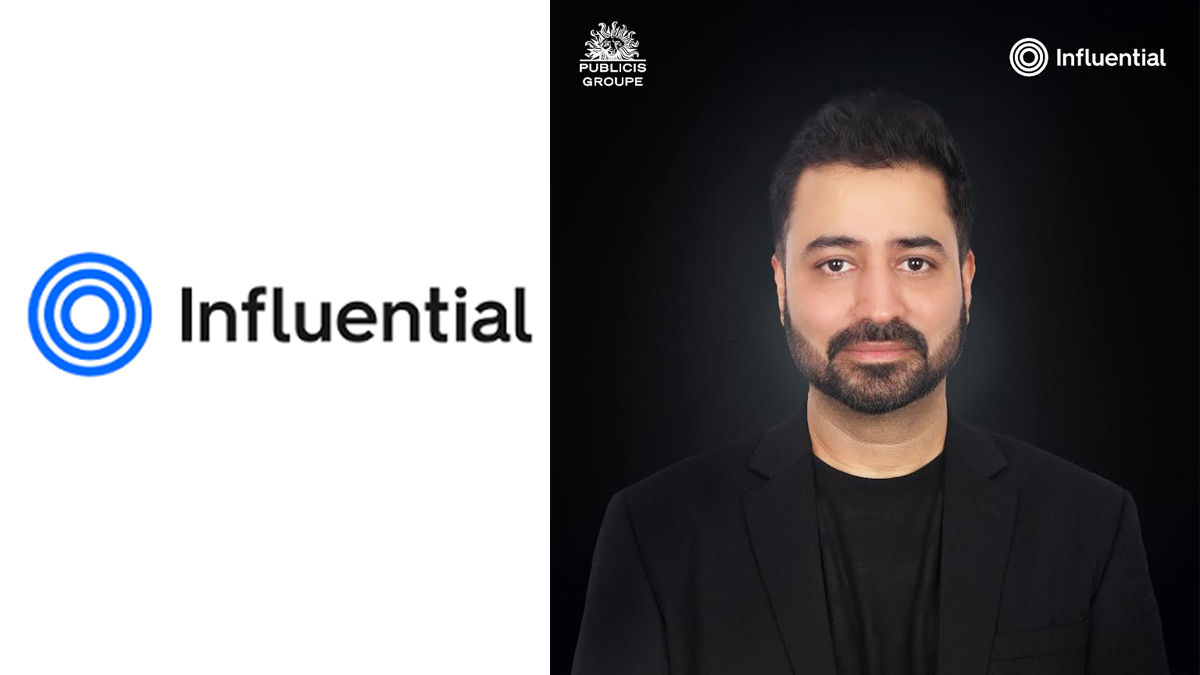
The advertising giant has launched Influential, its global creator marketing solution, in India, pairing the rollout with the appointment of Diwaker Chandani as managing partner for Influential India. The brief is blunt: drag influencer marketing out of the spray-and-pray era and into one defined by data, accountability and results that actually show up on a balance sheet.
A fragmented market ripe for disruption
India’s influencer ecosystem has scale in abundance. What it lacks is maturity. Measurement standards are inconsistent, creator databases are riddled with duplication, and brands remain dangerously hooked on organic reach, a strategy that flatters vanity metrics while delivering uncertain commercial returns. Chandani, who brings nearly two decades of experience across digital platforms and media, puts it plainly. “The ecosystem has scale, but not maturity,” he says. “By combining data-led audience intelligence with creator ecosystems and media amplification, we aim to build a model that delivers measurable and repeatable outcomes.”
It is a diagnosis that Publicis Groupe is staking serious infrastructure on. Influential is anchored in the group’s Connected Identity system, which maps consumer profiles to enable more precise audience targeting and creator selection. Layered on top are the Captiv8 platform and Influential’s global creator network, giving brands the tools to plan, activate and measure campaigns across the full funnel, from awareness down to commerce, rather than treating each influencer post as a standalone act of faith.
The hire
Chandani is not an unfamiliar face in the industry. He has held senior roles at Meta, Zee Entertainment and the Network18 Group, working across creator partnerships and content-led media strategies. His mandate at Influential India is to integrate data, creators, media and commerce into a unified framework and to build the team and client roster to scale it.
Anupriya Acharya, chief executive of Publicis Groupe South Asia, frames the launch as a response to a market that has grown faster than its own infrastructure. “The channel has reached scale, but lacks a unified, data-led foundation,” she says. “With Influential, we are moving from a creator-first approach to a cohort-first, identity-led model powered by Connected Identity.” The integration of creators, media and commerce, she adds, will enable more precise and scalable outcomes for brands.
Why now
The timing is deliberate. Influencer marketing in India is expanding rapidly, fuelled by cheap data, a vast and young social-media audience, and brands increasingly willing to redirect budgets away from traditional media. But growth without governance has created a market where consistent returns remain elusive and accountability is largely aspirational. Publicis Groupe is betting that the industry’s next phase belongs not to whoever has the biggest roster of creators, but to whoever can prove, with hard numbers, that those creators are actually shifting product.
The old model of picking a popular face, posting a reel and hoping for the best is running out of road. Influential is Publicis Groupe India’s wager that the future belongs to the spreadsheet as much as the selfie.