Connect with us

I&B Ministry

Implementation of first two phases of cable TV digitisation has taught valuable lessons: Tewari

Published

on

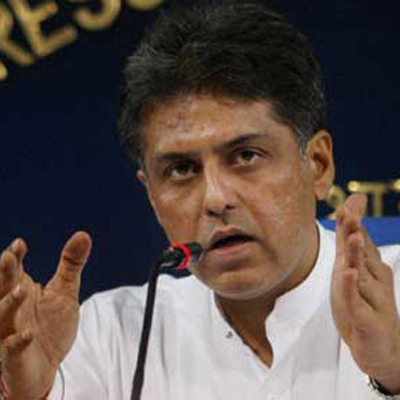
NEW DELHI: Information and Broadcasting Minister Manish Tewari has said the first two phases of digitisation of cable television provided a learning experience as far as implementation of the process was concerned.


Speaking at the 8th Indian Magazine Congress in the capital on the theme “Winning through Innovation”, he said these lessons would be incorporated while implementing the remaining two phases. The Minister reiterated that Digitisation was bound to be a game changer for the sector and would define contours of orderly growth.

Advertisement


While providing qualitative choices to the consumer, digitisation would also ensure that the subscription revenues and skewed business models are rectified. The Government has already decided to merge phases III and IV and complete the entire process by December this year.


Advertisement

While the first phase of digitisation covering the four metros had come into effect from November 2012 (though it was stayed in Chennai following a court order and was implemented marginally in Kolkata after initial reluctance), the second phase covering 39 cities was implemented by 31 March 2013.


The Government is still considering the proposal to merge Phase III covering all urban areas (Municipal Corporations/Municipalities) and Phase IV covering rest of India to 31 December 2014. The present dates for these two phases are 30 September 2014 and 31 December 2014 respectively.

Advertisement


Ministry sources told indiantelevision.com that if the government achieves its target, it will overtake countries like the United States and the United Kingdom which set long deadlines.

Advertisement
Click to comment

Leave a Reply

Your email address will not be published. Required fields are marked *

I&B Ministry

AIDCF moves TDSAT over Waves plan to stream linear TV channels

Industry body flags regulatory gap as OTT push sparks broadcast turf war

Published

on

NEW DELHI: The battle between traditional television distributors and digital platforms has found its way to the courts, with the All India Digital Cable Federation (AIDCF) moving the Telecom Disputes Settlement and Appellate Tribunal (TDSAT) against Prasar Bharati’s latest OTT play.

At the heart of the dispute is Waves, Prasar Bharati’s OTT platform, which has invited applications to onboard linear satellite TV channels. Aidcf, which represents multi-system operators (msos), argues that this move sidesteps existing broadcasting rules and risks tilting the playing field in favour of digital platforms.

The federation’s petition hinges on a key provision in the Uplinking and Downlinking Guidelines, 2022. Clause 11(3)(f) allows broadcasters to downlink channels only if they provide signal decoders to recognised distribution platforms such as MSOS, DTH operators, hits operators and iptv platforms. OTT platforms, aidcf points out, do not feature on that list.

Advertisement

In simple terms, AIDCF’s argument is this: if OTT platforms are not officially recognised distributors, they should not be receiving broadcast signals in the first place. By inviting channels onto Waves, the federation claims, Prasar Bharati is opening a backdoor that lets broadcasters bypass long-standing rules.

The concern goes beyond legal interpretation. Aidcf says OTT platforms currently operate without a clear regulatory framework, allowing them to expand into traditional broadcasting territory without the compliance burden that cable and satellite operators must carry. That, it argues, creates an uneven contest.

There is also a warning for broadcasters. If they provide signal decoders to an OTT platform like Waves, they could risk breaching the very conditions under which their downlinking permissions were granted.

Advertisement

For its part, Prasar Bharati’s Waves initiative is positioned as a step towards wider access and digital reach, bringing linear television into the streaming era. But critics say the move blurs the line between regulated broadcasting and largely unregulated streaming.

The matter is expected to come up before tdsat next week. The outcome could do more than settle a single dispute. It may help define how India regulates the fast-merging worlds of television and OTT, where the lines are getting fuzzier by the day and the stakes, sharper than ever.

Advertisement
Continue Reading

Advertisement News18
Advertisement All three Media
Advertisement Whtasapp
Advertisement Year Enders

Indian Television Dot Com Pvt Ltd

Signup for news and special offers!

Copyright © 2026 Indian Television Dot Com PVT LTD

This will close in 10 seconds