MAM
Supreme Court sets panel on government advertisements

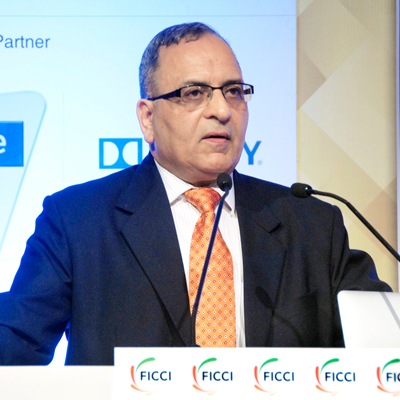
NEW DELHI: Pursuant to the Supreme Court order for forming panel to frame guidelines to regulate publicly funded government advertisements, the Information and Broadcasting Ministry has formally notified the names of Bangalore’s National Law University director Prof NR Madhav Menon, former Lok Sabha secretary general T K Vishwanathan and senior advocate Ranjit Kumar.
I&B Ministry secretary Bimal Julka will be the member secretary of the committee, which held its first meeting on 5 May.

The Ministry said the report will be given preferably within three months of the date of the judgment, 23 April, by the panel after an intricate study of all the best practices in public advertisements in different jurisdictions.
The apex court bench headed by chief justice P Sathasivam with justice Ranjan Gogoi and N V Ramana had said that the existing guidelines of the Directorate of Advertising and Visual Publicity (DAVP) do not cover such advertisements. There was therefore a need for substantive guidelines to be issued by the Court until the legislature enacts a law in this regard.
The court passed the order on a public interest litigation (PIL) filed by the NGOs Common Cause and the Centre for Public Interest Litigation (CPIL) pleading it to frame guidelines. The petition sought issuance of guidelines for curbing ruling parties from taking political mileage by projecting their leaders in official advertisements.
It was, the Court said, ‘vividly clear’ that the DAVP guidelines, which are available in the public domain, only deal with the eligibility and empanelment of the newspapers/journals or other media, their rates of payment, and such like matters. Besides, it only specifies that in releasing advertisement to newspapers/journals, the DAVP would not take into account the political affiliation or editorial policies of newspapers/journals.
“Hence, it is evident that there is no policy or guideline to regulate the content of government advertisements and to exclude the possibility of any mala fide use or misuse of public funds on advertisements in order to gain political mileage by the political establishment.”
The Government in its counter affidavit claimed that 60 per cent of the advertisements released by the DAVP on behalf of various Ministries/Departments/Public Sector Undertakings of the Central Government relate to classified or display/classified category such as UPSC/SSC or recruitment, tender and public notices, etc. The respondents asserted that government advertisements sometime carry messages from national leaders, ministers and dignitaries accompanied with their photographs.
However, government counsel K Radhakrishnan said the purpose of such advertisements is not to give personal publicity to the leaders or to the political parties they belong to rather the objective is to let the people know and have authentic information about the progress of the programmes/performance of the government they elected and form informed opinions, which is one of the fundamental rights of the citizens in our democracy as enshrined in the Constitution.
The apex court noted in its judgment that the immediate cause of filing these writ petitions in 2003 and 2004 respectively was stated to be the numerous full page advertisements in the print media and repeated advertisements in the electronic media by the Central Government, State Governments and its agencies, instrumentalities including public sector undertakings which project political personalities and proclaim the achievements of particular political governments and parties at the expense of the public exchequer.
It was also the assertion of the petitioners – Common Cause represented by Meera Bhatia and the Centre for Public Interest Litigation (CPIL) represented by Prashant Bhushan – that such advertisements become more blatant and assumes alarming proportions just before the announcement of the general elections. Accordingly, it was the stand of the petitioners that such deliberate misuse of public funds by the Central Government, State Governments, their departments and instrumentalities of the state is destructive to the rule of law.
It was also alleged that it allows the parties in power to patronize publications and media organizations affiliated to the parties in power and also to get favourable media coverage by selective dispersal of the advertising bonanza. It was projected that the use of public funds for advertising by public authorities to project particular personalities, parties or governments without any attendant public interest is mala fide and arbitrary and amounted to violation of Article 14 of the Constitution. It was also argued that use and wastage of public funds in political motivated advertisements designed to project particular personality, party or government by wasting public money is also in violation of the fundamental rights under Article 21 because of diversion of resources by the governments for partisan interests. Such violation, therefore, attracts the remedy under Article 32 for the enforcement of fundamental rights of the citizens.







MAM
Sameer Nair shares heartfelt note as he exits Applause Entertainment
After nine years building the streamer’s content engine, one of India’s best-known TV men is moving on
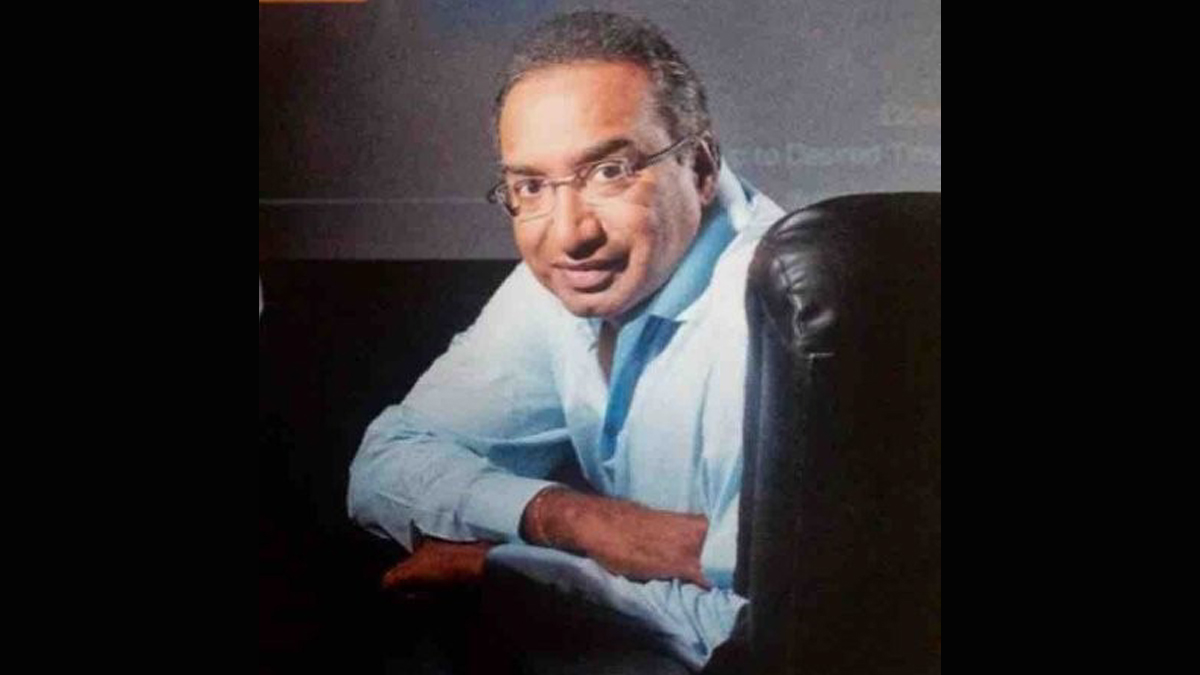
MUMBAI: Sameer Nair is out. The chief executive of Applause Entertainment, the content studio backed by Kumar Mangalam Birla’s media empire, has announced his departure after nearly nine years at the helm, closing the chapter on one of Indian entertainment’s more quietly consequential careers.
Nair, who built Applause from the ground up in its current avatar, oversaw a slate that spanned Indian originals and international adaptations, threading together a hub-and-spoke business model that partnered with streaming platforms, broadcasters and production houses alike. The results were uneven, as they always are in content, but the ambition was not.
In a post on LinkedIn, Nair was generous to his outgoing patron. He thanked Birla for being an “inspirational boss and a great patron of the arts,” and signed off with a cheerful “Au Revoir” and a promise to remain Applause’s biggest cheerleader. Whether that sentiment survives the next chapter remains to be seen.
No successor has been named. Applause Entertainment did not immediately comment.
Nair built the machine. Now someone else has to run it — and in a streaming market that is simultaneously consolidating and convulsing, that is no small ask.