DTH
How DTH got digitisation right

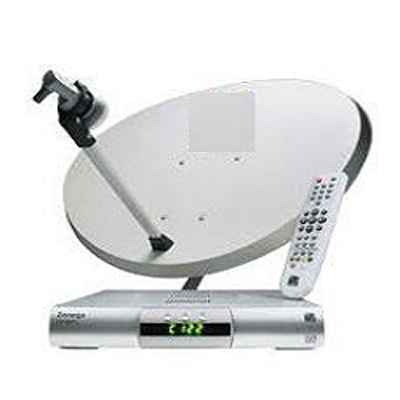
MUMBAI: Two years gone, two more in hand. But the cable TV industry is still grappling with getting its act right for digitisation. It was 10 years ago when the direct to home (DTH) players entered the Indian market with huge tasks in hand: introduce and convert people from the analogue regime into the digital ecosystem.
Currently, the DTH sector commands about 36 million active subscribers (as per the recent TRAI report). While Dish TV was first to enter, it was soon followed by Tata Sky, Sun Direct, Airtel Digital TV, Videocon d2h and Reliance Digital. Not to forget, Prasar Bharati’s DD Freedish.
How did the DTH industry manage to cultivate the business model which the MSOs are still finding cumbersome? Ask the DTH players and they say, it is because of their direct contact with the customer. “We were able to deal directly with the customer and provide a business model the way we wanted to. There isn’t any intermediary,” says Dish TV CEO RC Venkateish.

Agrees Sun Direct CEO Mahesh Kumar, “DTH adopted the retail distribution model akin to aggressive FMCG/ telecom companies which is purely B2C. Majority of the employees at the senior and middle level are from the retail background.”
The MSOs on the other hand had been running the analogue business, handled mostly by the local cable operators (LCOs). It was only after being pressurized by the government and regulator that they finally took up digitisation and started work on creating a proper business model. Tata Sky CEO Harit Nagpal feels that MSOs are working like puppets. “Cable operators are looking at digitisation as forced upon them. Digitisation is not about putting a box; this is inconvenient for the customer. It has to be sold to the customer as empowerment and not as a curse. DTH has done that.”
While initially convincing the customer to switch from analogue to digital DTH wasn’t easy, what went in their favour was superior product offering with better quality sound and picture and selection of channels and packaging. “When DTH first came, it was the only digital offering. The country was largely analogue. That was the big advantage we had. We started from zero and had the opportunity to build the billing system and packaging,” says Venkateish.
The claims made by DTH ops were supported by setting up call centres, backend and investment in brand building. However, what all executives agree as the best tool is the prepaid mode of payment. “The biggest success factor of the DTH model is the prepaid model which is a very transparent business model,” says Kumar.
Nagpal feels that the crux of their model is the consumer centric approach, which MSOs don’t have. “You can activate and deactivate channels and packages whenever you want. Go on a holiday and don’t recharge. This is not yet possible in cable. The benefits of flexibility and empowerment in the case of DTH are in the customers’ hands,” he says.
The only difference in the two is the pricing models for packages. While DTH starts its base pack at around Rs 200 to Rs 220, cable gives the entire channel list for approximately Rs 250. But Nagpal disagrees, stating that MSOs are not subject to taxes and also gets carriage fees from broadcasters. Whereas DTH, despite paying taxes and also paying for content, gives channels at a decently low cost with options of adding more.
Kumar points out that DTH community has been able to segment the market and the customer which has helped the industry to do up-selling and consistently improve average revenue per user. Though the initial uptake of dishes was slow, over the years it has picked up speed. The choice of packages, HD channels, addition of newer channels and easy payment methods have put them on the better side of digitisation.
While DTH did have the upper hand in entering the market with a fixed plan of action, it is about time the MSOs come to terms with getting addressable digitisation done rather than just fixing boxes in homes. “DTH got digitisation right because we looked at it from what benefits it has to customer and not what the regulator is asking me to do,” points out Nagpal.






DTH
Den Networks reports Rs 1,227 million FY26 profit growth
Revenue crosses Rs 10,009 million as margins improve and costs ease
MUMBAI: Not all signals are on screen some are buried in the balance sheet. Den Networks has reported a steady financial performance for FY26, with profit after tax rising to Rs 1,227.53 million, reflecting improved operational discipline despite a relatively flat top line. For the year ended March 31, 2026, the company posted revenue from operations of Rs 10,009.17 million, marginally higher than Rs 9,891.45 million in FY25. Total income stood almost unchanged at Rs 12,282.10 million compared to Rs 12,279.77 million a year earlier, signalling stability rather than aggressive expansion.
The real story, however, lies beneath the surface. Total expenses declined to Rs 10,648.32 million from Rs 10,691.30 million, driven by tighter cost controls across key heads. Employee benefit expenses dropped to Rs 548.64 million from Rs 651.52 million, while depreciation and amortisation expenses also eased to Rs 652.01 million from Rs 723.06 million, indicating a leaner operational structure.
As a result, profit before tax rose to Rs 1,633.78 million from Rs 1,588.47 million, while profit after tax improved to Rs 1,227.53 million, up from Rs 1,173.96 million in the previous year. Earnings per share stood at Rs 2.57, compared to Rs 2.46 in FY25, underlining incremental shareholder value creation.
On the balance sheet front, the company’s total assets expanded to Rs 43,416.76 million from Rs 42,496.64 million, supported by a sharp rise in bank balances to Rs 30,628.71 million. Equity also strengthened to Rs 38,532.74 million, reflecting accumulated profits and a growing financial cushion.
Cash flow dynamics, however, present a more nuanced picture. While investing activities generated a net inflow of Rs 632.80 million, operating activities saw an outflow of Rs 553.50 million, largely due to tax payments and working capital adjustments. The company ended the year with cash and cash equivalents of Rs 151.70 million, up from Rs 106.11 million.
Taken together, the numbers suggest a business that is prioritising efficiency over expansion holding revenue steady while tightening costs and strengthening its balance sheet. In an industry where growth often grabs headlines, Den Networks appears to be making a quieter statement: sometimes, resilience is the real signal.







