iWorld
AIB roast controversy exposes holes in Indian democracy

W H Davis started his poem ‘Leisure’ by saying, “What is life if full of care, we have no time to stand and stare.” Is India today becoming too careful? Is satire losing its relevance in the nuclear dominated world? A caricature of a religious figure results in brutal decimation of creative journalists and an innocuous comical piece gets scrutinized by the entire law making fraternity. What’s next?
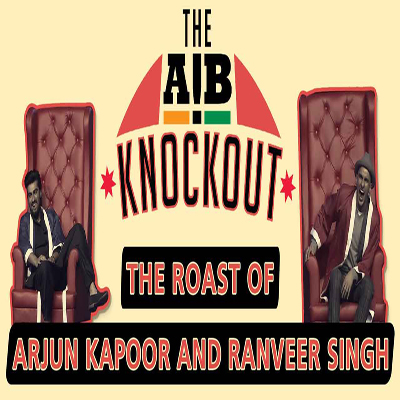
All India Bakchod (AIB), India’s online comedy producers’ recent piece called ‘Knockout’ has irked the sentiments of many lawmakers and resulted in legal investigations. The entire performance was staged for a gathering of 4000 people in Mumbai, which included Bollywood celebrities like Soni Razdan, Deepika Padukone, Alia Bhatt, Sonakshi Sinha and Anurag Kashyap amongst others. All was well till the group uploaded the video on YouTube. In a span of hours the video went viral garnering millions of hits and started trending on social media.
The video starts with a statutory warning, where it clearly defines itself to be an adult product, Karan Johar starts the video by saying, “It is going to be filthier and if you get easily offended or even hardly offended you should leave right now.” The content of the comedy orchestrated by the group was indeed derogatory; they were making fun of whoever they wanted to, irrespective of their status and position, cast and creed.
Soon after the video went viral an unusual scenario developed on Twitter, wherein two hash tags started trending – ‘We stand for AIB’ and ‘AIB National Shame.’ Various dignitaries from different profession started tweeting their opinion.
Maharashtra Chief Minister Devendra Fadnavis ensured an enquiry into the same even as series of FIRs were filed against filmmaker Karan Johar, actors Arjun Kapoor and Ranveer Singh, who participated in the show. Eventually the video was taken off YouTube by AIB. “Have taken down AIB Knockout for now. We will speak soon” is what AIB uploaded on its Twitter handle.
Tweets and opinions from respectable public voices made the issue a substantial debate, supportive gesture came from journalist Barkha Dutt as she tweeted, “Show of AIB Roast (I am yet to see) pulled down. Shireen Dalvi hounded. Perumal silenced. Wah India. World’s largest democracy.”
Film maker Pritish Nandy was also supportive of the comical presentation as he tweeted, “I support the AllIndiaBakchod roast. We need more such. Those who disapprove need not watch them.”
Balaji creative director Nivedita Basu threw light on the issue of freedom crisis of a writer. Speaking to Indiantelevision.com, Basu said, “The freedom of a writer has gone for a toss in India. It was very sporting of Ranveer and Arjun to volunteer in something like this and also whoever they were digging at and making fun of were present in the audience. We keep comparing Indian comedy with the western roast where they make fun of one and all and at the end of the day, it’s all satire. Though I think a few extra abusive words could have been avoided, the fact that legal investigation has been called for even though the show was not aired on television where one has to practise censorship, is a bit of an exaggeration.”
If we have freedom of expression, can we express whatever we want, if not, then who draws the line? Are we getting overdriven by the thrive for popularity? Is YouTube safe to be left uncensored? Is India ready for toilet humour? These are the relevant counter questions that made the debate interesting.
Among the flurry of tweets, prominent filmmaker and Censor Board of Film Certification (CBFC) member Ashoke Pandit’s tweet got a lot of brick backs. He tweeted saying, “Karan Johar could have easily shown his position while performing sex to his mom at home instead of making it public.#AIB Porn Show.” The tweet resulted in huge controversy and was criticized by all throughout.
When questioned about his tweet, Pandit didn’t deny his words. Justifying his tweet he told Indiantelevision.com, “Insulting or hurting someone’s emotion cannot be a freedom of expression. We have huge admirers of Karan Johar and I am among them. He is someone who has always portrayed family unity and family drama on the big screen and people love him for that. How can he show his sex position in public? What if tomorrow all his followers start doing that on the middle of the road? I would have been least bothered if Karan, Ranveer or Arjun were not there, the fact that they were present the episode became a matter of public discussion.”
He added, “I am against banning of things but abusing Farida Jalal or Reema Lagoo is not satire… satire is R K Laxman, satire is Sharad Joshi. And Maharashtra Government is equally responsible for what has happened. Before giving the auditorium they should have enquired what is going to happen there. Why are they proposing a probe now, when they didn’t do anything while it was happening?”
Award winning writer Gajra Kottary opined, “We as a country are still not ready for such content. During award shows, we see hosts making fun of the audience present in the auditorium, they are humorous and they are understandable. But involving veterans like Farida Jalal, who gave a huge part of her life to the industry is highly derogatory and cannot be tolerated. And frankly speaking I am not a very big fan of toilet humour and we need to understand there is a big world beyond sex.”
When raised the point of the content being available only on internet, she stated, “That’s the worst part, it’s not censorable and easily accessible. Youth admire Karan as a film maker and many idolize Ranveer and Arjun, hence the youth will repeat what they are doing.”
“I won’t be surprised if actions are taken against them, they must not be jailed but a lesson needs to be taught, and intervention to the freedom of expression in these circumstances cannot be termed as a violation to Article 19 of Indian Constitution,” added Kottary.
Celebrity writer Chetan Bhagat was found on a contradictory ground. While his first tweet read, “Frankly the potholes on Mumbai roads offend me more than the AIB roast.” This was followed by, “I don’t support hounding of people who make dirty jokes. But that doesn’t mean I find making dirty jokes cool. Clean humour is always greater than dirty humour.”
Others on social media, came out in full support of AIB. Ship of Theseus director Anand Gandhi tweeted, “I hope our humour gets sharper, our dissent more rigorous, our satire more offensive — and till we arrive there, we stand by AIB Knockout!”
Alia Bhatt, who was the butt of some of the jokes on the AIB Knockout roast, tweeted, “Some ‘not taking life so seriously’ lessons are needed. DESPERATELY!!!!”
There were speculations if AIB removed the video by getting scared of the situation and if they did they should not have uploaded it on a public platform in the first place. But AIB in one of its official statement denied the speculation of being pressured. The statement read, “First things first; no one person or force forced us to take this video down. This is not something that’s happened because of a 3 am phone call or a morcha at our front door or a gunman on a grassy knoll. Under the circumstances, this is us being pragmatic.”
AIB went on to say that their attempt to push the envelop of comedy in India backfired. “Things got to a point where people who have supported us, people who work hard to make what we do come to life, were put in a position where things could get deeply unpleasant for them. And that’s a problem. We can live with abuse, hate, anger, fury, rage, ignorance, bigotry and perhaps even bullying. But we don’t want anybody to get hurt because of us. And we do mean anybody,” AIB said.
While one can understand these sentiments, the removal of the videos, however does announce the defeat of ‘We Stand by AIB Knockout’ supporters. Also a point to be noted here is that AIB’s decision to remove the videos came without any verdict or pressure from the judiciary. It seems as if moral policing has once again reared its ugly head in the country and this time round a bunch of celebrities and comedians have been the targets. In a way, it does mark the defeat of democracy and the victory of gunda raaj.
Responding to the outrage over the AIB roast, Karan Johar tweeted, “Not your cup of tea…don’t drink it!!!” And that just about sums it all up.