Connect with us

I&B Ministry

FCC proposes rules for satellite TV market modification

Published

on

MUMBAI: The Federal Communications Commission (FCC) has proposed modifying satellite television market rules to enable satellite subscribers to gain access to in-state news and other programming that they currently are unable to receive. The Notice of Proposed Rulemaking implements Section 102 of the STELA Reauthorization Act of 2014 (STELAR). 


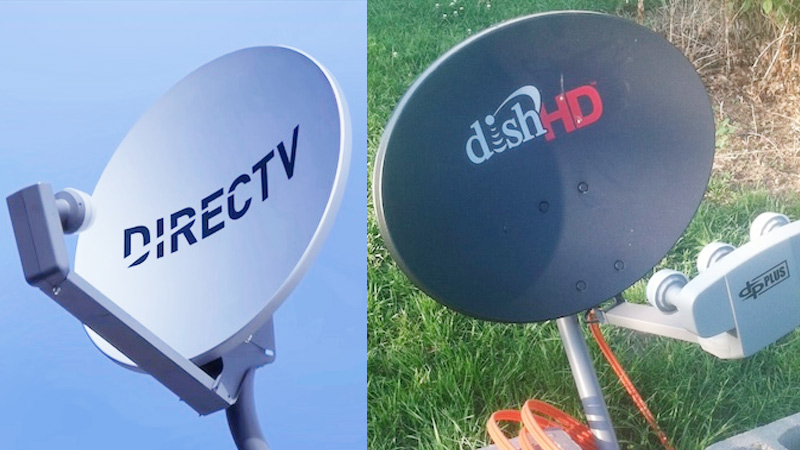
The proposal would, as Congress directed, create regulatory parity between satellite and cable television providers. Federal law requires satellite television carriers, such as DIRECTV and DISH Network, to use the Nielsen Company’s Designated Market Area (DMA) assignments to determine, which TV broadcast stations to carry and include in their local programming packages to subscribers. DMAs describe a station’s local television market in terms of a unique group of counties and are defined by Nielsen based on measured viewing patterns. DMAs frequently cross state lines and thus may include counties from multiple states.

Advertisement


Where these multistate DMAs exist, satellite subscribers located in certain out-of-state counties within a DMA (so-called “orphan counties”) are sometimes unable to receive in-state broadcast television stations. This means that some satellite subscribers may lack access to in-state news, sports, public affairs, political information and emergency information, such as severe weather alerts, school closings, road closures and other breaking news. In addition, some of these subscribers may be located in rural areas which are unable to receive in-state stations by means of over-the-air reception and which may have limited, if any, broadband service.


Advertisement

Congress, through Section 102 of the STELAR, gave the Commission authority to modify a commercial television station’s local television market for purposes of satellite carriage rights. Prior to the STELAR, the Commission had authority to modify markets only in the cable carriage context. The Commission proposes to apply the existing cable rule to the satellite carriage context, while adding rules to address the unique nature of satellite television service, such as giving carriers an exception if the resulting carriage is “not technically and economically feasible.” Market modification allows the Commission, on request from a broadcaster or cable operator, to add or delete communities from a particular commercial TV broadcast station’s local television market to better reflect market realities.


The STELAR requires the Commission to issue final rules for satellite television market modification on or before 4 September, 2015.

Advertisement
Click to comment

Leave a Reply

Your email address will not be published. Required fields are marked *

I&B Ministry

Press Sewa Portal digitises 1.5 lakh records, streamlines periodical registrations: MIB

Online system spans 780 districts; Rs 5.6 crore penalties, 88,315 titles cancelled

Published

on

NEW DELHI: India’s print media registry has quietly moved from dusty files to digital dashboards. The government has digitised more than 1.5 lakh historical records of newspapers and periodicals and shifted registrations fully online through the Press Sewa Portal.

Introduced under the Press and Registration of Periodicals (PRP) Act, 2023, the portal now handles all applications for registering periodicals, replacing the earlier paper-heavy system created under the Press and Registration of Books Act, 1867, which has since been repealed.

The digital shift brings a wide range of services onto a single platform. Publishers can now register new periodicals, revise registrations, transfer ownership, file annual statements, pay penalties online and apply for circulation verification without navigating government offices.

Advertisement

As part of the rollout, specified authorities in 780 districts across India have been onboarded onto the platform. Since 1 March 2024, the portal has processed 11,081 applications and issued certificates across different categories.

The transition has also brought stronger compliance. According to government data, Rs 5.63 crore in penalties has been collected through the portal so far. States such as Maharashtra, Karnataka, Tamil Nadu, Uttar Pradesh and Madhya Pradesh account for some of the largest penalty collections.

At the same time, the authorities have carried out a major clean-up of inactive or non-compliant publications. A total of 88,315 periodicals have been cancelled nationwide, with Maharashtra, Uttar Pradesh and Delhi among the states reporting the highest number of cancellations.

Advertisement

The government says the system will continue to evolve based on feedback from users. The Press Registrar General of India (PRGI) regularly reviews suggestions to improve services and make compliance easier for publishers.

The full list of registered newspapers and periodicals is available on the PRGI website under the Registered Titles section.

The information was shared in a written reply in the Lok Sabha by minister of state for information and broadcasting and parliamentary affairs L Murugan, responding to a question from Damodar Agrawal.

Advertisement
Continue Reading

Advertisement News18
Advertisement All three Media
Advertisement Whtasapp
Advertisement Year Enders

Copyright © 2026 Indian Television Dot Com PVT LTD

This will close in 20 seconds

×