Hindi
“CBFC should examine a film’s message & not ban it due to some scenes”: Paresh Rawal

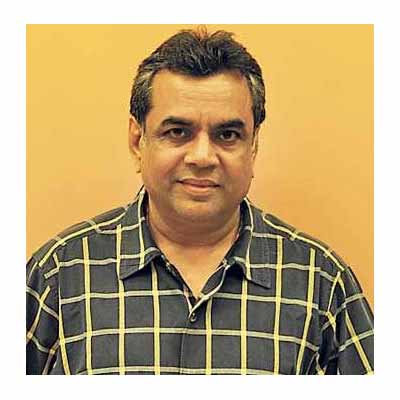
NEW DELHI: In the wake of fingers being pointed at the current Central Board of Film Certification (CBFC) chairman Pahlaj Nahalani’s questionable decisions regarding many a films that have come up for release recently, veteran actor Paresh Rawal has said that the message of a film and not some shots here or there should come in for scrutiny before the CBFC.
Rawal said that every film may contain one or two scenes that may hurt someone, but what has to be seen is whether the message sought to be conveyed by the film is meaningful. He felt that the work of the CBFC was a thankless job.
Referring to protests held outside film theatres, often by persons who had not even bothered to see the concerned film, Rawal said this was sad. He added that even the communal divides in the country often occurred because of misinformation.
Denying reports that his latest film Dharam Sankat Mein had been shown to some religious leaders to get their approval, he said it would be a “dangerous trend if a film is shown to extra-constitutional authorities.”
Rawal, who was in the Capital for promoting the film along with actor Annu Kapoor, said: “Even a serious message if conveyed lightly manages to make an impact.”
Replying to a question posed by Indiantelevision.com about the run-of-the-mill comedies that he acts in along with some meaningful cinema, he said that it should not be forgotten that it was the money made from those so-called trashy comedies, which helped him take serious cinema even at fees far lower than he would otherwise get.
Rawal revealed that he was making the biopic on Narendra Modi under his own banner. He said that films on Modi had been made in Gujarati, but never in Hindi. The movie is slated to go on floors in August.
He also said a sequel to OMG was underway with him, Akshay Kumar and Mithun Chakraborty.
Rawal informed that he loved serious cinema and therefore his most memorable films were Sardar, which was a biopic on Sardar Vallabhbhai Patel, Road to Sangam, and OMG – Oh my God.
Hailing from the theatre background, Rawal had never planned his career in cinema when he came on the big screen in 1984.
Answering a question, he said that he had cut down the number of films he would do to three or four a year, after become a Member of Parliament. However, he said he was an actor first, then an MP. Rawal also informed that his perspective about Parliament had changed since he became an MP.
Stressing that the country faced problems because there was no ‘Manav Dharam’ or ‘Rashtra Dharam,’ Rawal said that if people loved their country, there would have been no need for the Government to announce programmes on Swachh Bharat or sanitation.
Agreeing to his point of view, Kapoor said that problems like rape etc. were not confined to India, but Indians themselves often talked about them as if they were ashamed of being Indian but did little to stop these crimes. He said Manav Dharam should be uppermost. He added that while there was freedom of speech, why did people resort to freedom of action.
When asked about simultaneously acting in comedy and serious films, he said that every theatre person learnt to have a ‘switch on, switch off’ quality and therefore he has no problem going from the set of light film to that of a serious one.
Speaking about the message that their latest film conveys, Kapoor said, “We are sure that you’ll learn something from this film and the message it gives is of ‘humanity’ and that of all religions, humanity is the biggest religion.”
Directed by Fuwad Khan and produced by Sajjad Chunawala, Dharam Sankat Meinis a remake of the 2010 British comedy film The Infidel and also stars Naseeruddin Shah.
The story revolves around a character named Dharam Pal, played by Rawal, who faces the dilemma of choosing between two religions and goes through identity crises when he discovers that what he believed himself to be was actually born to a Muslim family.
The film is slated for release on 10 April.