iWorld
COAI reaffirms support for net neutrality; industry speaks in favour too

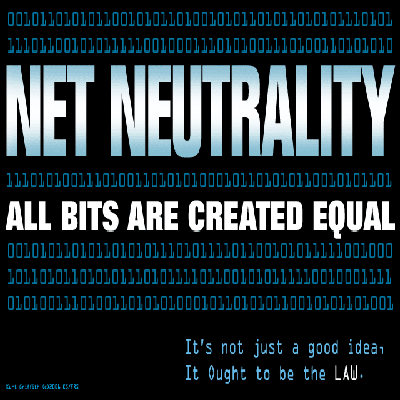
MUMBAI: While the Cellular Operators Association of India (COAI) has reaffirmed its support to net neutrality, the body has also made a strong pitch for ‘Net Equality’ that will enable access to Internet for a billion Indians as part of the Government’s Digital India vision.
The Association has urged all stakeholders to have a comprehensive and informed debate on the subject of net neutrality keeping in mind the requirements of India and its citizens. “An important and complex subject such as this, which is still being debated in many countries, and has taken years to conclude in many other countries, is the subject of litigation in some, should not be left to the opinion of a few,” COAI says in an official statement.
Clearing misconceptions that have arisen from the recent public debate over net neutrality and concerns over operators who are trying to control the consumers’ access to the Internet, COAI said, “We support an open Internet and believe that consumers should decide what to do online. Our job is to enable consumers to benefit from that freedom. We offer choice and do not block or provide any preferential access to any web site or app.”
COAI also underlined its commitment to the ‘Digital India’ story and has called for an open, inclusive and affordable Internet access for every Indian. The industry association added that India’s telecom revolution has empowered over 950 million citizens through affordable services and the Internet revolution must now touch every citizen of the country.
The Association has said that its members are fully committed to investing in the Government of India’s ‘Digital India’ vision and need an enabling environment that promotes the growth of the entire Internet ecosystem.
Create an enabling and equal environment
COAI has pointed out that without infrastructure and investment, there will be no Internet access. “The operators have invested billions of dollars in license and spectrum fees as well as network roll-outs. Yet the industry still makes negative return on the capital employed,” read the statement.
The industry estimates that the country would need an additional capital outlay of Rs 300,000 – Rs 500,000 crore over the next 10 years in spectrum, new technology, equipment, towers, optical fibre backbone, etc., to meet Prime Minister Narendra Modi’s vision of ‘Digital India’, and connect one billion Indians to the world of Internet. The need of the hour, therefore, is to have a sustainable industry that has the ability to invest in growth of data services and connectivity to all.
Promote innovation to enable Internet for all
India has over 950 million mobile subscribers, which is the second largest in the world. This growth was enabled by innovation across the ecosystem – in the ever expanding complex networks, outsourcing models, infrastructure sharing, innovative pricing structures – that allowed operators to offer customers some of the most innovative and affordable call rates in the world.
“We need the same spirit to connect a billion Indians to the Internet. This means innovations across the ecosystem – affordable smartphones, more efficient networks, even more broad ranging applications (especially in areas such as education, health, governance) and pricing flexibility – that promotes greater digital inclusion. Only then can our citizens in rural India, or from a lower economic strata, be empowered through Internet access,” said COAI.
Industry Speak
Earlier last week, Times Group committed to withdraw from Internet.org and appealed fellow publishers to follow suit and support net neutrality.
The Times of India and its language websites like Navbharat Times, Maharashtra Times, Ei Samay and Nav Gujarat Samay, who have together been spearheading the movement for net-neutrality in India, appealed to all publishers to jointly withdraw from Internet.org.
The group’s properties such as TimesJobs and Maharashtra Times, where its competitors are not on zero-rate platforms, will also pull out of Internet.org. As forThe Times of India itself, the group has committed to withdraw from Internet.org if its direct competitors – India Today, NDTV, IBNLive, NewsHunt, and BBC – also pull out.
The group, through a letter, also encouraged its fellow language and English news publishers like Dainik Jagran, Aaj Tak, Amar Ujala, Maalai Malar, Reuters, and Cricinfo to join the campaign for net neutrality and withdraw from zero rate schemes.
“We support net neutrality because it creates a fair, level playing field for all companies – big and small – to produce the best service and offer it to consumers. We will lead the drive towards a neutral Internet, but we need our fellow publishers and content providers to do so as well, so that the playing field continues to be level,” said a Times official.
Meanwhile, Airtel has come out in open to explain Airtel Zero. Through a statement, Airtel said, “Airtel Zero is a technology platform that connects application providers to their customers for free. The platform allows any content or application provider to enroll on it so that their customers can visit these sites for free. Instead of charging customers we charge the providers who choose to get on to the platform.”
“Our platform is open to all application developers, content providers and Internet sites on an equal basis. The same rate card is offered to all these providers on a totally non discriminatory basis,” it further said.
Airtel said that it stands fully committed to net neutrality to ensure the goals of the Prime Minister’s vision of digital India are met.
On 22 April, the Indian telecom regulators are preparing to recommend changes that are required in the current telecom regulatory framework. Telecom operators are concerned primarily because of the excessive use of Internet leading to congestion and bandwidth difficulties. About 10 per cent of mobile users consume 90 per cent of operators’ bandwidth. Internet companies are not in favour of regulation that could tilt the balance in favour of telecom operators, but are advocating legislation to keep the Internet open.
Expressing his views on net neutrality, TRA CEO N Chandramouli said, “The crux of the situation is simple – the idea that Internet service providers give their customers equal access to all lawful websites and services on the Internet, without giving priority to any website over another. At one level, it is being linked to the right to freedom of expression and the right to information and correctly so. From a brand point of view we can already see it is impacting and hampering the equation with telecom brands such as Airtel, which decided in December 2014 to charge more for calls made through services like Skype and Viber, but had to roll back the decision after outrage on social networks.”
Shoptimize & Cooliyo co-founder & CEO Mangesh Panditrao believes that it is important to not let differential pricing and performance creep into the Internet. “Budding online brands in India are already struggling to reach the target audience due to the huge marketing and advertising barriers created by large players. It will become even more difficult for them if they have to pay to maintain a level playing field in terms of bandwidth. One of the things that has really worked well for our app Cooliyo is the fact that we show products purely on the basis of their merit and popularity thus keeping away any bias. It would be quite ironic if we now suddenly have to face a bias while we try to reach our own community. It would be a massive setback for several startups such as ours.”
Internet is an essential service and should be provided without any discrimination, feels Askme group CMO Manav Sethi. “Zero rating platforms can seriously affect the freedom and growth of the billions of entrepreneurs, quite against the ‘Make in India’ and ‘Digital India’ vision of our government. Any violation of Internet neutrality can have a serious bearing on effective and fair competition in the market place. We feel it’s the government’s responsibility to ensure a level playing field for home grown entrepreneurs and at the same time protect the interests of netizens,” he opined.
Speaking in support of net neutrality, OYO Rooms CEO Ritesh Agarwal said, “Net neutrality is absolutely essential for a free and competitive market especially now since there is a start- up boom in the country particularly in the online sector. Most importantly Internet was created to break boundaries and as concerned industry players, we should maintain that. We support net neutrality and will do all needed to build this further.”