Hindi
63rd National Film Awards: ‘Baahubali’ is best film;’Bajirao Mastani’ bags largest number of awards for 2015

New Delhi, 28 March: ‘Baahubali – The Beginning’ by S S Rajamouli, arguably the most expensive film ever made in India, today bagged the Best Film award for 2015, while megastar Amitabh Bachchan and Kangana Ranaut won awards for best artistes for ‘Piku’ and ‘Tanu weds Manu Returns’.‘Bajirao Mastani; bagged the largest number of awards with Sanjay Leela Bhansali getting the best director for the film at the 63rd National Film Awards for 2015, which will be presented on 3 May. ‘Baahubali – The Beginning’ also got the special effects award for V Srinivas Mohan.
The Feature Film Central panel was headed by Ramesh Sippy, and comprised of 11 members including the chairman. The-Non Feature jury was headed by Vinod Ganatra and comprised seven members including the chairman. The jury on Best Writing on Cinema was headed by Advaita Kala and comprised three members including the chairperson.
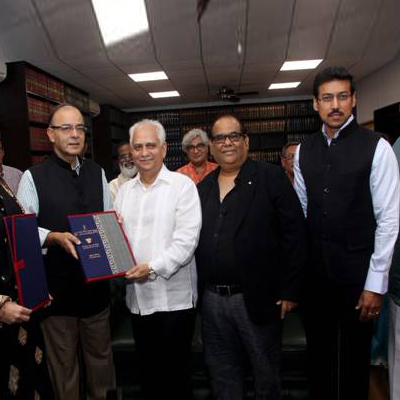
Prior to the announcement of the awards, the chairpersons of the three juries and members of the jury presented their reports to Information and Broadcasting Minister Arun Jaitley. MoS Rajyavardhan Rathore and secretary Sunil Arora were also present. Jaitley appreciated the efforts put in by the jury members in deciding the awards in various categories which reflected the diversity of India’s cinematic brilliance and diversity.
Awards list in brief
Interestingly, the highly acclaimed and internationally applauded film ‘Masaan’ only received theIndira Gandhi Award for Best Debut Film of a Director for Neeraj Ghaywan.
Contrary to expectations, Tanvi Azmi bagged the supporting actress award for ‘Bajirao Mastani’ (as the names Deepika Padukone and Priyanka Chopra were also doing the rounds), while Samuthirakani got this award for the film ‘Visaaranai’, which also received the best Tamil Film and Best Editing awards (late Kishore T.E). Gaurav Menon was named best child artiste for ‘Ben’. Kalki Koelchin got a Special Jury Award for ‘Margarita with a straw’.
‘Bajirao Rao Mastani’ also won awards for Best choreography by Remo D’Souza for the song ‘Deewani Mastani’, Best Cinematography Sudeep Chaterjee, best sound design by Biswajit Chatterjee, re-recording of final mixed track by Justin Ghose, and best production design by Shriram Iyengar, Saloni Dhatrak and Sujeet Sawant.
The Salman Khan-starrer ‘Bajrangi Bhaijaan’ by Kabir Khan was named for Best Popular Film Providing Wholesome Entertainment, while the best Hindi Film award was given to ‘Dum Laga Ke Haisha.’
Also interestingly, apart from the top actor awards, ‘Piku’ and ‘Tanu Weds Manu Returns’ also bagged awards for both original screenplay and dialogues for Juhi Chaturvedi (Piku) and Himanshu Sharma (Tanu Weds Manu Returns) respectively. The renowned director Vishal Bhardwaj received the best adapted screenplay accolades for the crime drama ‘Talvar’ inspired by a real-life case.
This is the fourth time that Bachchan, who entered the film industry in the late sixties, has won a national award. He had earlier bagged the award for ‘Agneepath’ in 1990, ‘Black’ in 2005 and ‘Paa’ in 2009.
Ranaut earlier won the best actress award for ‘Queen’ and a supporting actor award for ‘Fashion’.
The Nargis Dutt Award for Best Feature Film on National Integration went to ‘Nanak Shah Fakir’ which also bagged the awards for Best Costume Designer for Payal Sajula and Best Make-up Artist to Preetisheel G Singh and Clover Wootton for film ‘Nanak Shah Fakir’ by Gurbani Media Pvt. Ltd.
The award for best film on Social Issues went to ‘Niranayakam’ by V K Prakash, the Environment Conservation/Preservation award went to ‘Valiya Chirakulla Pakshikal’ by Dr Biju, and ‘Duronto’ Soumendra Padhi got the best Children’s Film. There was a special mention for Ritika Singh for the film ‘Irudhi Suttru’.
The award for best female playback went to Monali Thakur for the song ‘Moh Moh Ke Dhaage’ in ‘Dum Lagaa ke Haisha’ and Mahesh Kale won the male playback for ‘Katyar Kalijat Ghusli’.
The veteran Ilaiyaraaja got the Direction – Background Score award for ‘Thaarai Thappattai’ while M Jayachandran won the best Music Direction award for the song ‘Kaathirunnu Kaathirunnu’ in the film ‘Ennu Ninte Moideen’.
The best non-feature award went to Amdavad Ma Famous by Hardik Mehta. The best book on cinema book award went to Dr. Rajakumar Samagra Charithre by Doddahulluru Rukkoji and the best film critic award to Meghachandra Kongbam of Manipur.