People
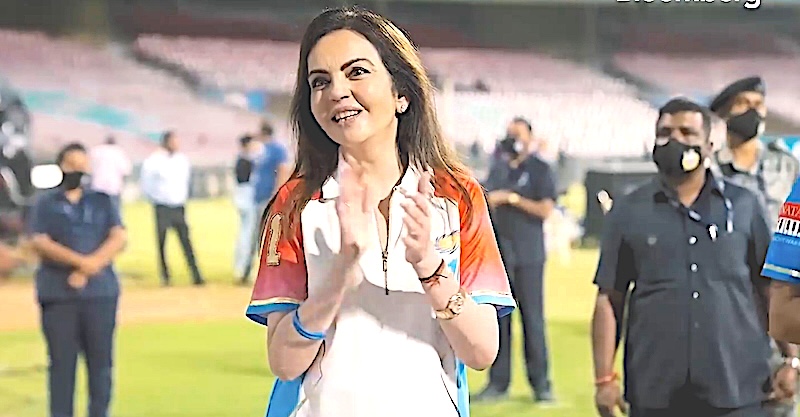
Nita Ambani gets elected at Rio and becomes the first Indian woman in the International Olympic Committee (IOC)
MUMBAI: International Olympic Committee (IOC) today announced that leading Indian philanthropist and the Founder chairperson of the Reliance Foundation, Nita Ambani, has been elected as an individual member of the IOC, and will become India’s first woman to join the prestigious body.
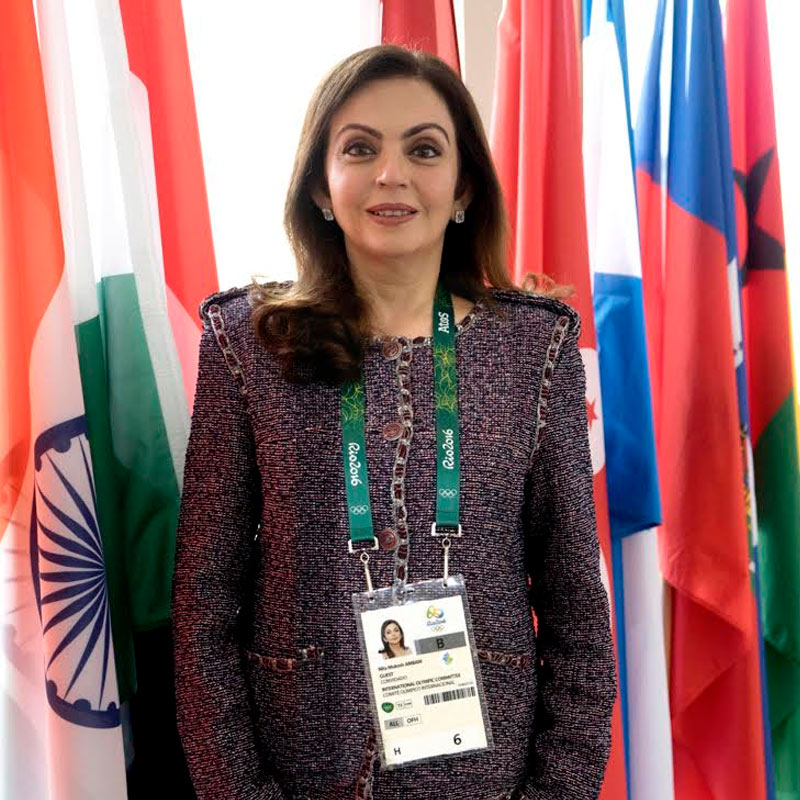
Nita Ambani is the only individual member from India and her appointment at the world body is until she attains the age of 70.
After being nominated in June 2016 by the IOC Executive Board, Nita Ambani was elected by IOC members in Rio de Janeiro today at the 129th IOC Session.
The independent selection process follows a new procedure for the recruitment of IOC members based on the Olympic Agenda 2020 recommendations; those nominated are done so wholly on merit and then elected by existing IOC members.
As Founder and Chairperson of the Reliance Foundation, Nita Ambani has been steering initiatives in the area of education, sports, health and art and culture. Nita Ambani is involved in promoting multiple sports in the country with focus on developing talent through a number of large-scale grassroots initiatives. The grassroots programmes that she has initiated have reached out to over 3 million children in multiple sports. She is the architect of the Indian Super League which is galvanising Indian football.
“I am truly humbled and overwhelmed to be elected by the IOC. This is a recognition of the growing importance of India in the world stage and a recognition for Indian women.” comments Nita Ambani. “I have always believed in the power of sport to shape our youth. I believe that sports brings together communities, cultures, and generations has the power to unify and unite people. I look forward to spreading the spirit of Olympics and sports across our nation.”

People
Senior exec Madhu Soman reflects on stepping away from Indian TV news
Sometimes the toughest story in a newsroom is the one about the newsroom itself.
MUMBAI: For Madhu Soman, a media executive whose career spans more than two decades at global news organisations including Reuters and Bloomberg, the decision to step away from India’s television news industry followed conversations with several leading networks.
Soman returned to India in 2022 to take up a senior leadership role in television news.
He transitioned to the business side of the industry in 2014, joining Bloomberg in Hong Kong to lead broadcast sales, news syndication and strategic partnerships across Asia-Pacific. He held the role for nearly eight years before returning to India.
“WION and Zee Business were the reason I chose to return to India after long years with Reuters and Bloomberg, transitioning from telling stories to selling them,” Soman said.
“The landing strip back home was always narrow, but it was one I was happy to take.”
The stint at Zee Media Corporation Ltd., however, proved shorter than expected.
“It didn’t take very long to realise that my runway within Zee (Media) was going to be rather short,” Soman said.
“Let’s just say I was a cultural misfit.”
Even so, he says the experience had its rewards, including exceptional colleagues and a few good friends.
After stepping away from the organisation, Soman was in discussions about potential roles.
“I spent the better part of the last two years in conversations with a few leading networks, long enough to realise the difference between being unemployed and being unemployable.”
Some of the feedback, he says, was unusually candid.
“Two of them informally told me I’m perhaps one of the best media executives in the television news business. But someone like me fronting a television news network would be considered a business risk,” Soman said in conversation with IndianTelevision.com.
For Soman, the implication was clear.
“A news network fronted by someone whose instincts were formed in journalism rooted in independence, accuracy and editorial distance from power was unlikely to find much favour with the powers that be.”
Beyond the personal dimension of his decision, Soman says the experience reflects broader pressures shaping the news industry today.
“Journalism’s job is simple: ask hard questions and hold power accountable. Keep it honest,” he said.
Quoting former Washington Post editor Marty Baron, he added: “We’re not at war with the government. We’re at work.”
“That principle applies to anyone in a position of influence, whether in government, business, sport or entertainment.”
At the same time, he says the industry faces growing pressures.
“Authoritarian regimes that resist scrutiny, along with rapid technological change including AI, are reshaping and often undermining journalism’s traditional business model.”
“There’s also a growing credibility deficit, as the race for eyeballs rewards whoever delivers the news first rather than whoever confirms it best.”
Having worked on both the editorial and commercial sides of the industry, Soman says he is acutely aware of the economic realities media organisations face.
“Running a media organisation today means being a pragmatic P&L owner. The challenge is to keep investing in strong journalism while making the economics work at a time when a growing share of the industry’s revenue is increasingly being captured by technology platforms.”
“If we drop the ball on accuracy and trust, we do a grave disservice to the democracy we’re meant to serve.”
His experience straddling both content and commerce has shaped his view of how the industry must evolve.
“Good journalism and good business strategy are not opposites,” he said.
“The best media businesses are built when editorial integrity, audience trust and sustainable economics reinforce each other.”
“And ultimately, none of it works without strong teams. Leadership in media is as much about building people and institutions as it is about building products.”
Soman is now preparing to return to his hometown of Trivandrum, barely four years after returning to India.
“Delhi NCR has a way of testing your patience, your stamina and occasionally your sanity,” he says. “But it also leaves you with stories that will last a lifetime.”
“So as I pack up and head home to Trivandrum, I do so with no complaints and no regrets.”
“I didn’t sell my soul. Some things, after all, aren’t for sale.”
Soman’s reflections underscore the tensions between editorial independence, commercial realities and political pressures shaping television news today. His experience offers a window into the challenges facing media leaders navigating a rapidly changing industry. For him, the decision marks a moment to step back after decades spent across global newsrooms and media businesses.