Connect with us

MAM

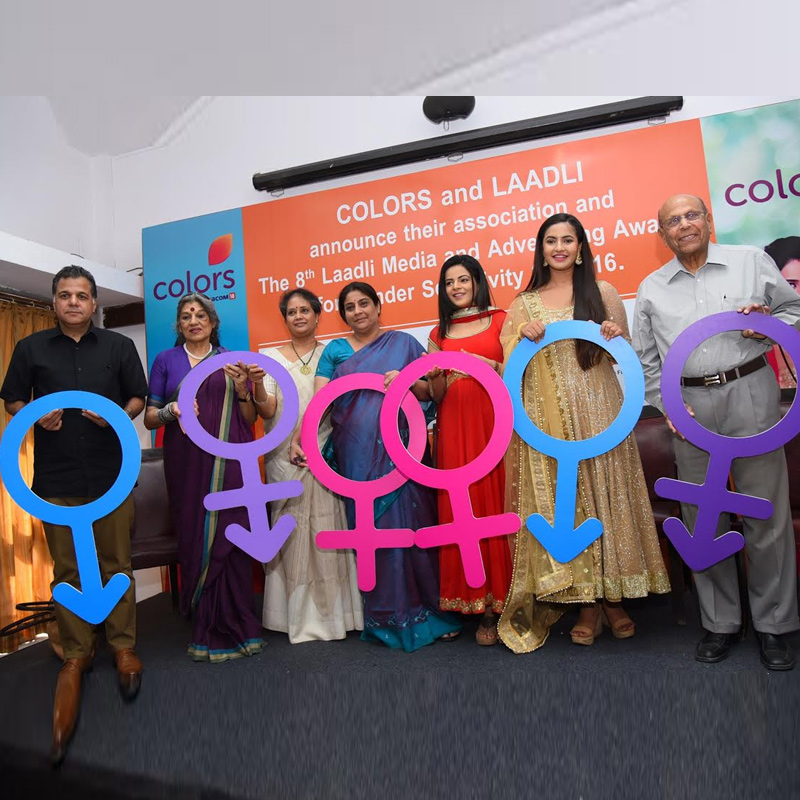
Population First launches Awards for Gender Sensitivity; signs MoU with Colors

Published

on

MUMBAI: Population First, the communication and advocacy initiative working towards gender sensitivity, today launched the 8th edition of the Laadli Media and Advertising Awards for Gender Sensitivity (LMAAGS) 2015-16 in partnership with Colors These awards recognize and celebrate the efforts of the media and advertising community to promote gender sensitivity in India.

The MoU signed with Colors as the exclusive Cause Partners is in keeping with the channel’s vision to highlight a woman’s strength and gumption in the society-at-large. The last date for receiving entries is 15th December 2016, and the awards will be announced soon thereafter.

Colors CEO Raj Nayak said, “Gender equality and empowerment are tangible issues faced by the Indian population today. As we steadily move towards adopting Western cultural themes, there is a section of the media and advertising industry that is working diligently towards rehabilitation of various strata in our society.”

Advertisement

According to Population First director Dr. A. L.Sharada, “From a mere 100 entries in 2007 to more than 1500 entries in 2015, Laadli Media Awards have come a long way in acknowledging the media’s contribution in women empowerment and gender issues. The increasing volume of discussion in public domain on gender issues is an indication that we are witnessing the beginnings of change.”

The Laadli Media and Advertising Awards for Gender Sensitivity have been instituted to acknowledge, highlight and celebrate the commendable efforts undertaken by Print and Electronic media (TV, Radio and Web) and Advertising Agencies, to promote gender sensitivity as an integral part of their work.

Criteria for Eligibility:

Advertisement

An entry to the Laadli Media and Advertising Awards for Gender Sensitivity should emphasize or highlight one or more of the following:

• Analyze policies, programs and laws from a gender perspective

• Highlight influence of gender perceptions on the functioning of police, judiciary, administrators and other service providers in the implementation of laws and programs

Advertisement

• Challenge gender stereo-types by focusing on men and women who are redefining their gender equations e.g. changing work participation patterns of men and women, changing work distribution at home between men and women, etc.

• Analyze the social, religious and economic factors that promote gender inequality and gender violence

• Report on current events from a gender perspective e.g.: disasters, communal riots, elections, sports events, etc.

Advertisement

• Create awareness about pre-birth sex selection and other acts of gender discrimination and violence

• Interpret research and other reports/documents from a gender perspective e.g. census, economic survey, budgets etc.

• Voice the experiences of survivors of gender violence

Advertisement

Entries Are Invited from:

1) Advertising: Single Advertisements and Campaigns for Print/ TV /Radio /OOH/ Digital/ Direct Mail under the categories of Services, Products and Public Services
Categories:

Single Advertisements and Campaigns (Though entries are invited at Regional level the Awards are given at National level)

Advertisement

2) Print Media:From journalists writing for Newspapers and Periodicals in the individual category and Media Houses undertaking media campaigns on gender issues in the group category
Categories:

• Journalism – Print– News Reports, Features, Investigative Stories, Editorials, Op-Eds, Columns and Campaigns

• Journalism – Electronic– News Reports, Features, Investigative Reporting, Documentaries, Topical or Issue Based Programs and Campaigns

Advertisement

3) Electronic Media:

TV and Radio: From TV Channels and Radio Stations (including Community and University Radio, Radio Plays, etc.)

Web: E-Magazines, Blogs, Features, Social Media Campaigns

Advertisement

Entry Requirements:

• All entries should have been published/ displayed/ broadcast or telecast between July 1, 2015 to June 30, 2016

• All entries (except from freelancers and from those applying under the web category) must include a declaration from the Editor/ Direct Supervisor or commissioning organization

Advertisement

• Multiple entries in more than one category are allowed

• All entries to be sent on laadlimediaawards@gmail.com

Languages and States:

Advertisement

Northern Region: English, Hindi, Urdu & Punjabi (Chandigarh, Chhattisgarh, Delhi, Haryana, Himachal Pradesh, Jammu & Kashmir, Madhya Pradesh, Punjab, Uttar Pradesh and Uttarakhand)

Southern Region: English, Hindi, Urdu, Tamil, Telugu, Kannada and Malayalam (Andaman & Nicobar, Andhra Pradesh, Karnataka, Kerala, Lakshadweep, Puducherry, Tamil Nadu and Telangana)

Eastern Region: English, Hindi, Urdu, Bengali, Assamese and Oriya (Arunachal Pradesh, Assam,Bihar, Jharkhand, Manipur, Meghalaya, Mizoram, Nagaland, Odisha, Sikkim, Tripura and West Bengal)

Advertisement

Western Region: English, Hindi, Urdu, Gujarati and Marathi. (Daman and Diu, Goa, Gujarat, Maharashtra and Rajasthan)

The winners will be chosen by a jury comprising of eminent personalities both from the media and social sector. All the entries should be original and comply with copyright requirements and have been published/ displayed/ broadcast or telecast between July 1, 2015 to June 30, 2016. The last date for receipt of entries is 15thDecember 2016.

The Laadli Media Awards were instituted in March 2007 as a Mumbai centric event and were subsequently taken to the National level with the support of the UNFPA.

Advertisement

Laadli,a term of endearment meaning ‘cherished daughter’ in Hindi, is a campaign by Population First, a Mumbai-based NGO is a communications and advocacy initiative for a balanced, planned and stable population. Laadli is a comprehensive communication campaign aiming to promote a positive image of women and girls in society by changing the stereotypical mindsets that undervalue women. Laadli Campaign works with communities, colleges and media towards breaking gender barriers and bringing about gender equality in society. Laadli media advocacy includes a number of activities viz., Media fellowships, gender sensitization workshops for working and student journalists, interactive sessions with Creative Directors of TV Channels, Ad analysis with advertising professionals.

For detailed Guidelines and Entry Form please log on to www.populationfirst.org

Advertisement
Click to comment

Leave a Reply

Your email address will not be published. Required fields are marked *

MAM

Brands push beyond compliance as trust takes centre stage

ASCI AdTrust Summit 2026 spotlights shift from legal checks to credibility.

Published

on

MUMBAI: In a world where a disclaimer can be legally sound yet socially suspect, brands are learning that compliance may tick boxes but trust wins markets. At the inaugural ASCI AdTrust Summit 2026, a panel on “Beyond Compliance: The New Currency of Trust” unpacked a growing industry reality: the gap between what the law permits and what consumers accept is widening and fast.

Moderated by Meenakshi Ramkumar of National Law School of India University, the discussion brought together leaders across law, marketing and academia to examine how brands must evolve in a digital ecosystem increasingly shaped by scrutiny, scepticism and speed.

Ramkumar set the tone by highlighting a critical shift, advertising today operates in the same digital space that fuels misinformation, scams and fake news, making credibility harder to establish. “The challenge is not just about what brands do, but the broader context of low institutional trust,” she noted, adding that when violations go unchecked, trust erodes not just in brands but in the regulatory system itself.

Advertisement

This vacuum, she said, has given rise to consumer activism from boycotts to social media backlash as a parallel accountability mechanism.

For Amit Bhasin, Chief Legal Officer at Marico, the distinction was clear, legal compliance is non negotiable, but insufficient. “Compliance is the minimum threshold. The real challenge is staying aligned with changing consumer expectations,” he said.

He pointed to how advertising narratives have evolved from traditional depictions of gender roles to more shared responsibilities reflecting a broader societal shift. “Earlier, it was fine to show one person doing the household work. Today, that may not land well. Consumers expect brands to reflect reality,” Bhasin observed.

Advertisement

He also highlighted internal debates where campaigns that may be legally permissible are still rejected for being culturally insensitive, noting that responsible advertising often requires asking uncomfortable questions before the public does.

If compliance is the baseline, reputation is the battlefield.

Bhasin noted that reputational risk has become a far greater concern than legal exposure, particularly in an era where campaigns can be dissected within hours online. “Earlier, a controversial ad might invite a newspaper editorial. Today, within hours, you’re at the centre of a storm,” he said.

Advertisement

Brands, he added, now evaluate campaigns through a dual lens legal viability and reputational vulnerability with the latter often proving more decisive.

From a healthcare perspective, Satish Sahoo of Cipla Health underscored the complexity of operating within fragmented yet stringent regulatory frameworks, spanning drugs, food, cosmetics and Ayush. “Anything under a drug licence is the most tightly regulated,” he said, adding that this necessitates proactive, not reactive, compliance.

He shared an example from the oral rehydration salts (ORS) category, where Cipla resisted the temptation to position products aggressively despite competitive pressure. “Our product is WHO compliant, and our communication reflects that. We chose not to blur the lines, even if others did,” he noted.

Advertisement

The long term payoff, he suggested, lies in credibility built over consistency, not quick wins.

Yet, as Harsha N of National Law School of India University pointed out, even perfect compliance does not guarantee trust. Drawing from historical and modern examples from exaggerated product claims in the 1800s to contemporary environmental and health advertising, he argued that legal frameworks often lag behind consumer expectations. “A brand can be fully compliant and still be perceived as misleading,” he said, citing instances where fine print disclosures fail to reach or convince the average consumer. He added that larger companies carry a disproportionate responsibility to set ethical benchmarks, even in areas where the law remains silent.

The conversation also turned to digital advertising, where the challenge extends beyond content to how ads are experienced. From algorithmic targeting to personalised messaging, brands now operate in an environment where regulation struggles to keep pace with technology.

Advertisement

Sahoo noted that social media has amplified awareness, with influencers and consumers increasingly scrutinising product claims and calling out inconsistencies. “Awareness has gone up dramatically. People are questioning what goes into products and what brands are saying,” he said.

The role of self regulatory bodies such as Advertising Standards Council of India also came under the spotlight.

Harsha acknowledged that while SROs play a crucial role, they are not immune to criticism, particularly around perceived conflicts of interest and enforcement gaps. “SROs have a higher threshold of responsibility not just to interpret the law, but to anticipate societal expectations,” he said.

Advertisement

He added that failures in self regulation often push the burden back onto government intervention, underscoring the need for stronger, more proactive oversight.

One of the more nuanced debates centred on whether building trust comes at a cost. While Sahoo acknowledged that quality and compliance can increase costs, he argued that companies must absorb them as part of their long term strategy.

Bhasin, however, framed the challenge differently not as cost, but as competitiveness in a market where not all players play by the same rules. “The real tension is when others cut corners and you choose not to,” he said.

Advertisement

The panel concluded with a call to embed trust into business metrics.

Sahoo suggested that organisations must go beyond revenue targets to include consumer equity and trust based KPIs, ensuring that ethical considerations are not sidelined in the pursuit of growth. “Trust sounds abstract, but it can translate into measurable consumer equity,” he said.

As the discussion wrapped up, one message stood out: the rules of advertising are being rewritten not just by regulators, but by consumers themselves. In an ecosystem where attention is fleeting and scepticism is high, brands that merely comply may survive, but those that build trust are the ones that endure.

Advertisement
Continue Reading

Advertisement News18
Advertisement All three Media
Advertisement Whtasapp
Advertisement Year Enders

Copyright © 2026 Indian Television Dot Com PVT LTD

This will close in 10 seconds