Digital
Lets get comfortable with the ‘Grey’: an invitation to marketers in the age of AI – Inspire, innovate, integrate with MMA Impact’ 2024

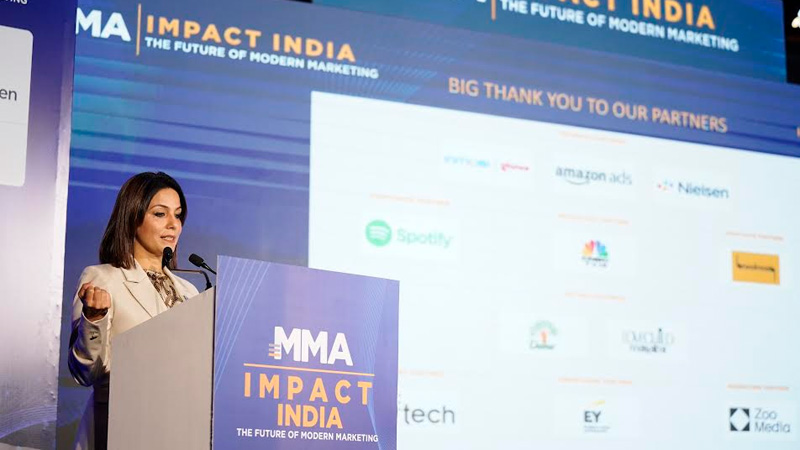
Mumbai – MMA Global India’s IMPACT Mumbai event concluded recently, and it was a huge success. The event took place on 24 April in Mumbai and focused on the impact of AI on marketing. It delivered a series of groundbreaking insights that redefined AI-driven marketing strategies and expanded the horizons of traditional marketing frameworks through new partnerships and insightful discussions. The event received industry-wide accolades for the cutting-edge quality of content and the stellar line-up of speakers who provided valuable insights to the attendees.
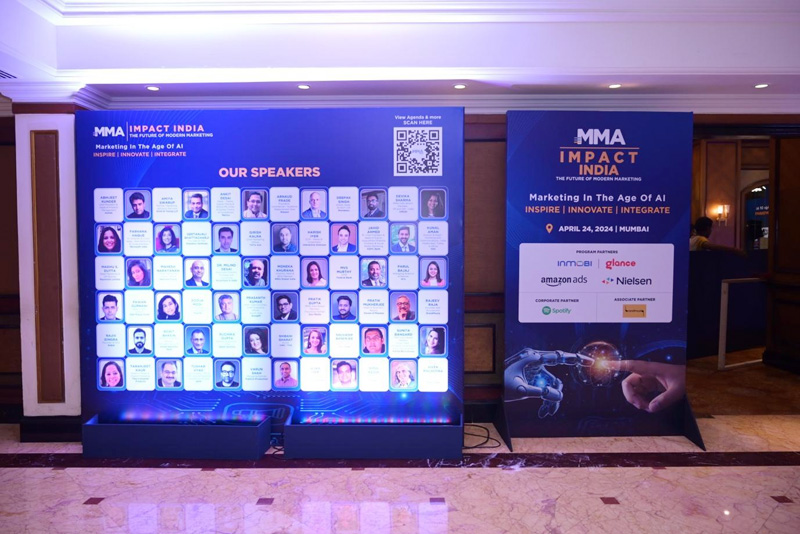
Key Highlights from MMA IMPACT Mumbai:
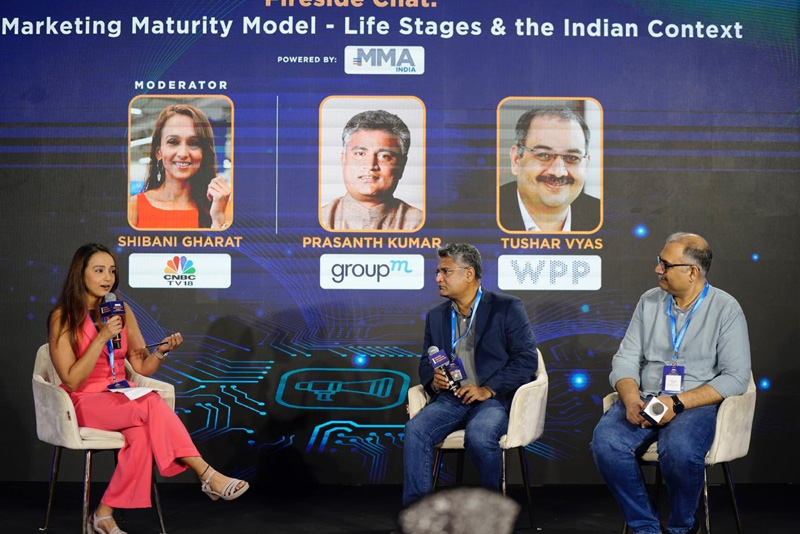
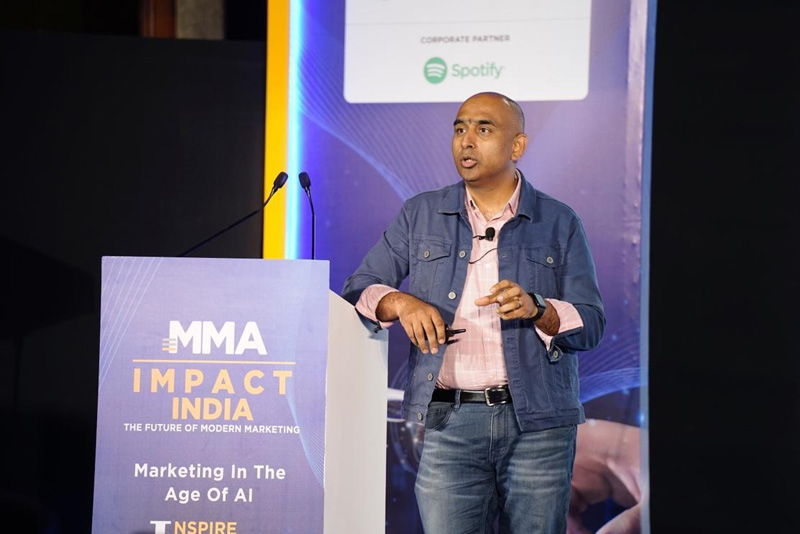
. Kickstarting with an inspiring address by Prasanth Kumar, MMA India Co-Chair & CEO, South Asia, GroupM, this session also featured Tushar Vyas, Chief Strategy Officer, WPP India & President, GroupM South Asia, moderated by Shibani Gharat, Anchor, CNBC – TV18. They dissected the AI adoption lifecycle, providing a clear pathway for marketers to evolve with AI-driven capabilities.
. Parul Bajaj, Managing Director & Partner, Boston Consulting Group, delivered a compelling keynote session on AI-Powered Marketing and Commerce. The session dove deep into how CMOs are thinking about AI, the highest impact AI-led use cases and the most critical factors that will be needed to succeed in this journey.
. A panel featuring Senior Marketers from HDFC Bank, Marico, DSP Mutual Fund, moderated by Devika Sharma, MMA India Board Member; VP and GM – India, InMobi, explored beyond conventional AI applications, showcasing how AI fosters deeper consumer connections and smarter experiences.
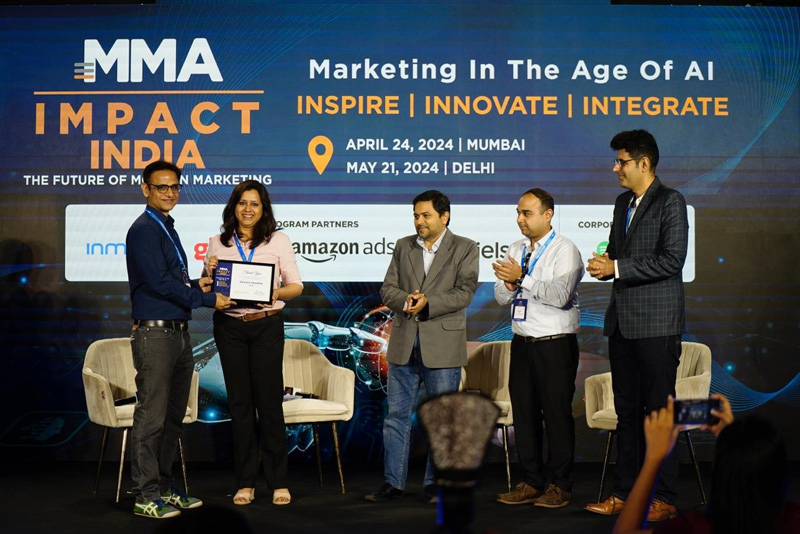
. Vijay Iyer, MMA India Board Member; Director, Amazon Ads India, illuminated the shift to Retail Media 2.0, emphasizing its transformative impact on marketing funnels and consumer interaction.
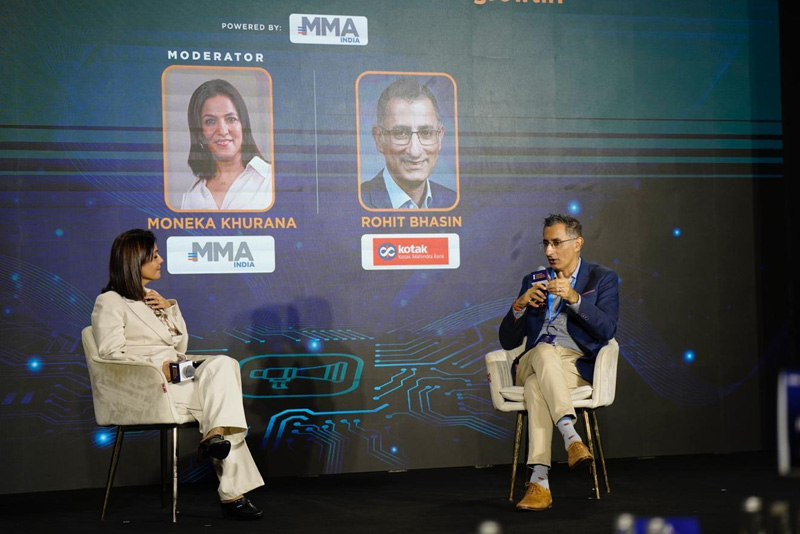
. Rohit Bhasin, MMA India Board Member; President and CMO, Kotak Mahindra Bank, articulated the strategic integration of AI in business practices. “AI is not just a technological upgrade; it is a paradigm shift in understanding customer intricacies and delivering on their expectations with unprecedented precision,” commented Bhasin.
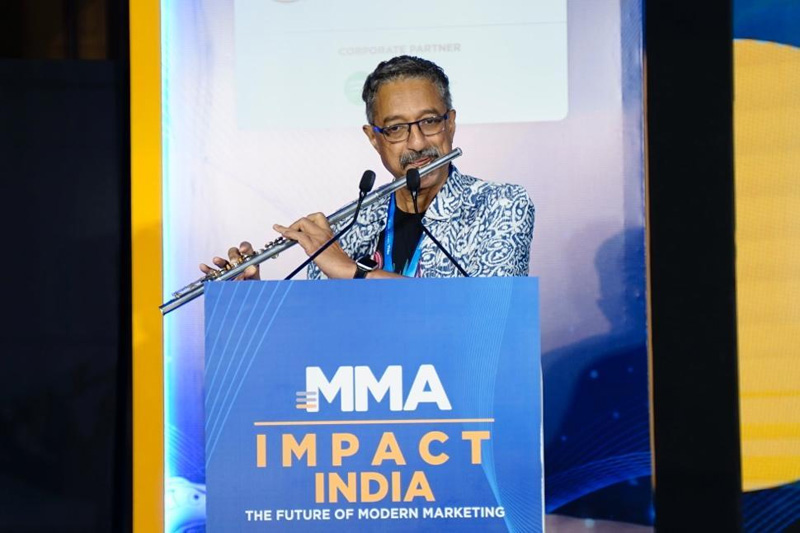
. Rajeev Raja, Founder and Soundsmith, BrandMusiq, began his address with enchanting tunes, going on to then delve into the emotional dimensions of AI in sonic branding and highlighting its profound impact on digital consumer engagements.
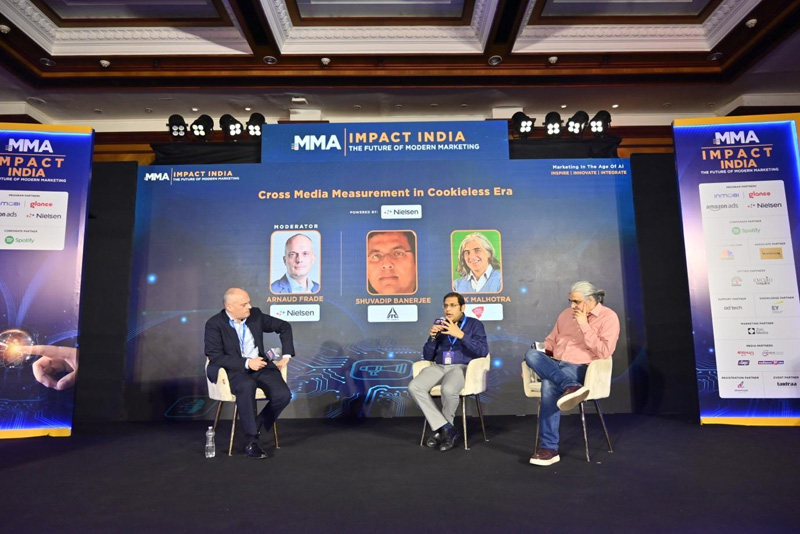
. Experts from Nielsen, ITC, and India Today tackled the evolving metrics of media measurement in a ‘crumbling’ cookieless world, outlining the next steps for data privacy and accuracy with a tinge of humor.
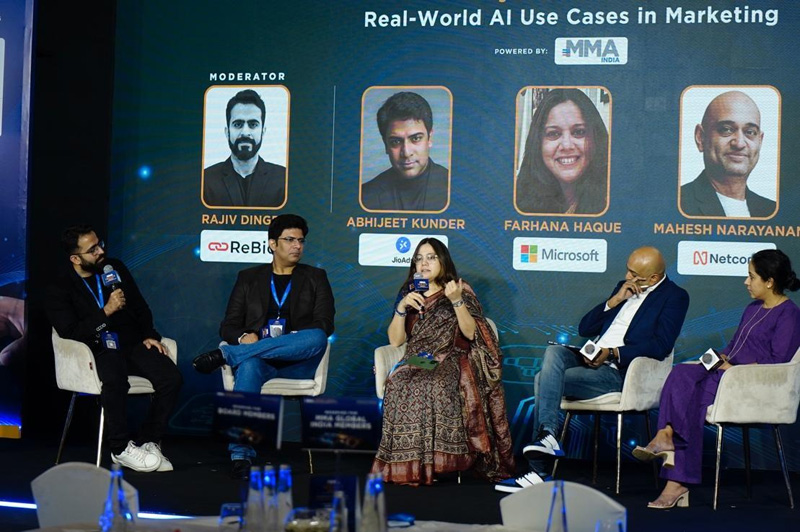
. The session with AI Advisory members from Netcore Cloud, Tata Consumer Products, Microsoft, and JioAds and ReBid broke down real-world AI applications, offering tangible examples that underscore AI’s versatility across market sectors.
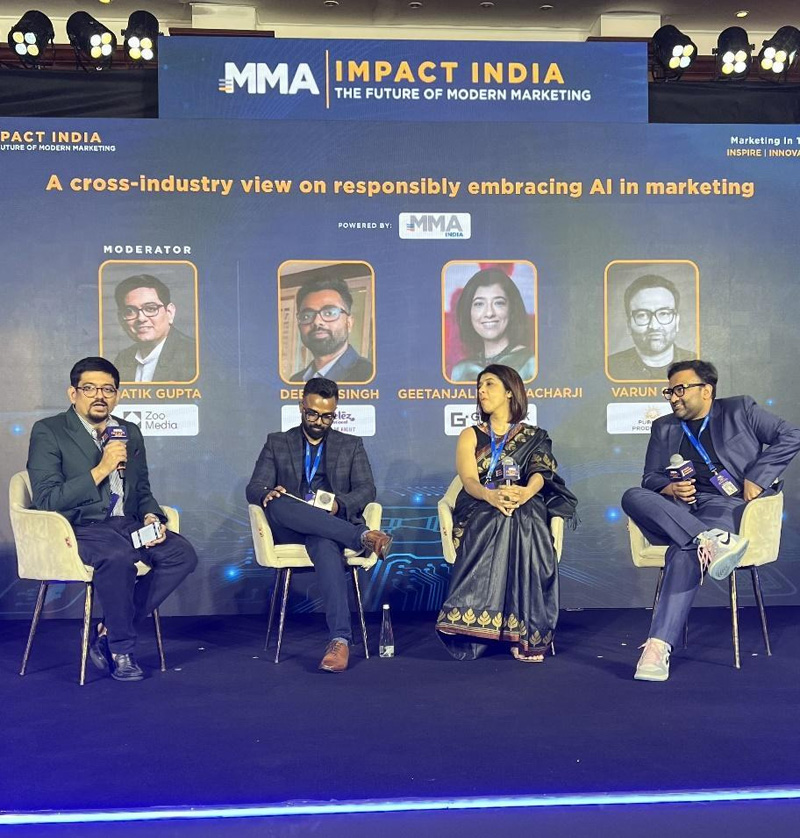
. A pivotal discussion on ethical AI deployment featured Marketing Leaders from Glassbox Ventures, Mondelez, House of Masaba, and Publicis Production, moderated by Pratik Gupta, MMA India Board Member; Founding Partner, Zoo Media, emphasizing the much-debated responsible AI use within marketing frameworks.
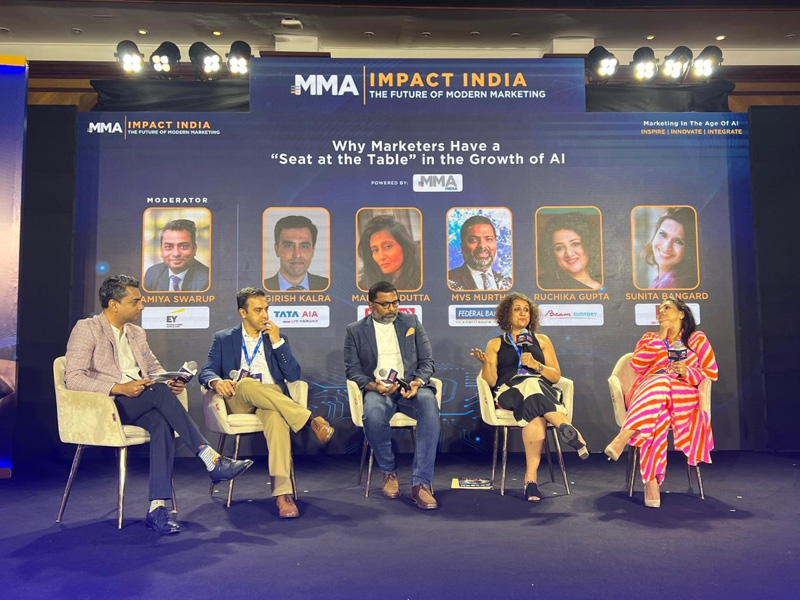
. Sunita Bangard, MMA India Board Member; Group Head – Consumer Insights and Brand Development, Aditya Birla Group, and leaders from Federal Bank, TATA AIA, Beam Suntory, Raymond, and EY outlined why marketers have a “seat at the table” in the growth of AI. This session have a cutting-edge perspective on the AI-marketer relationship in India – shedding light on how “marketers are evolving to media companies”.
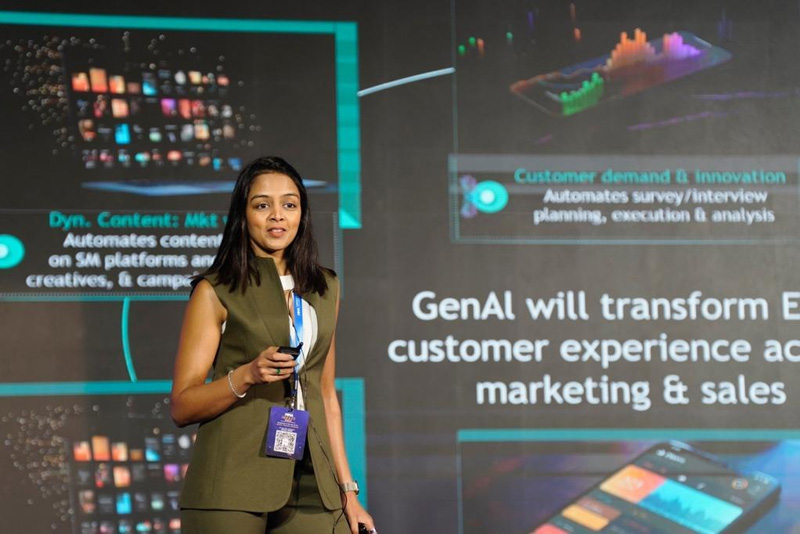
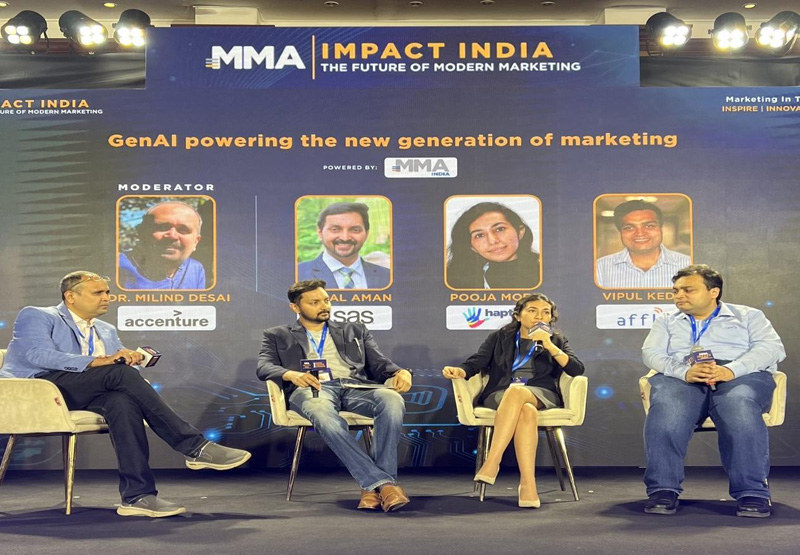
. Leading practitioners of Generative AI from Affle, SAS, Haptik, and Accenture tackled frequently asked questions about GenAI. They provided clarity and actionable insights for marketers looking to adopt these tools, showcasing how AI will augment marketers rather than replace them.
Moneka Khurana, Country Head & BOD Member, MMA Global India, set a transformative agenda, encouraging the industry to get comfortable with the ‘grey’ .As she said in her opening remarks, “Let’s embrace the grey areas and ambiguity, as it is in these spaces where true innovation and wisdom lie. It might not be easy to do this alone, so the best way is to join hands and walk the path together, enabled through MMA communities and platforms like Impact. As we know, AI will continue to permeate our lives and be our co-pilot, with you being on the driver’s seat. At Impact, we debunk numerous myths, decode hard questions, and bolster confidence to navigate through uncertainties with collective intelligence. This allows us to see ambiguity as a growth opportunity, backed by a curated agenda to address deep-rooted aspects of how marketers can walk the talk and leverage it for business outcomes.”
AI is fundamentally reshaping the way we approach business. It’s not just enhancing our existing processes; it’s revolutionizing how we envision growth and success. With AI, we can make informed decisions that minimize costs and maximize efficiency. By integrating AI into our core strategies, we unlock unprecedented growth opportunities and move beyond traditional boundaries to discover new potentials in marketing and customer engagement.
As IMPACT Mumbai 2024 drew to a close, participants left not just with enhanced knowledge but with actionable strategies to harness AI within their marketing frameworks. The day-long conference cooled off with a lavish soiree with drinks, snacks and networking – an exclusive marketer-only gathering of C-suite execs.