Special Report
Zee Sports – getting a move on

Earlier this year in May, Zee Sports became the third private player to enter the Indian sports broadcasting arena.
A year behind schedule and with little to show in terms of sporting properties (particularly of the cricketing kind), there was many a doubt surrounding the future prospects of the channel.
Still, Zee Sports business head Himanshu Mody exudes confidence when he says that the channel is looking at a two-year time frame to break even. There is no gainsaying though that with (due to prohibitive acquisition costs) or without India cricket, Zee Sports has a tough challenge before it.

The following report looks at the channel‘s strategy, the progress it has made and what one can expect from it.
|
Localisation a key driver: At the outset it is worth noting that Zee Sports seeks to differentiate itself as being the first private sports channel by, for and of the Indians. As Mody says, “We started out with a promise that we would develop sports in India.” What the channel is basically looking to do is push sports that the Indian viewer can relate to including but not only cricket. The channel has set aside a budget of Rs 1,500 million (excluding any India cricket acquisitions) which will be spent over three years. Zee Sports is looking at working “as an incubator” and, in the long run, help in the development of various Indian sports.
It is with this goal in mind that it signed a ten-year deal with the All India Football Federation (AIFF) earlier this year. The aim is to give Indian football a much needed push through sleek coverage and innovative marketing. Industry observers spoken to feel that when Zee Sports launched it did the right thing by associating itself with a local sport. As Starcom MD Manish Porwal says, “This way they have kept themselves in the public eye. This ensures that they are present at least to a degree. It is important that Zee Sports ensures that it does not disappear completely from the viewers‘ sphere.” Observers though feel that football compared with hockey has a disadvantage in that its appeal is limited to three states – West Bengal, Goa and Kerala. That is because only those three states have a passion for the game. By that yardstick ESPN Star Sports (ESS) Premier Hockey League (PHL) will have a more geographically spread out appeal. Zee Sports VP marketing Gaurav Seth says that a lot of on ground activity will have to be conducted particularly in the metros of Delhi and Mumbai if football viewership is to grow. Towards this end, it is looking to organise inter-school and inter-collegiate football tournaments next year. When the National Football League (NFL) season starts, some matches will be played in Mumbai and Delhi. As Mody says, “Football is the biggest sport in the world. There is no reason why it should lag in India. Football players globally like Beckham, Ronaldo are larger than life images. Football is a sport that is easily understood and our aim is to build the profile of Indian players. I am not saying that this will happen overnight.” As far as other local sports are concerned, the channel aired the Indian Oil Asian Badminton that was played in Hyderabad. Observers point out that tennis should be the next sport that Zee Sports ought to look at in terms of localisation. Seth says that the channel is talking with agencies like Globosport to organise a tennis tournament in India. Mody concedes that tennis has potential with a couple of Indian players doing well on the international circuit. However, he says that at the same time tennis is fragmented in that quite a few bodies control it. India cricket is an absolute must have: While all this is well and good, there is no escaping the fact that if the channel is to be pushed and taken seriously on the three fronts- advertising, viewing and distribution – then it needs India cricket. Industry observers point out that with the channel getting the rights to the ongoing Sri Lanka series the channel can at least start making attempts to really kick in. In fact the series is already serving as an effective marketing platform for the channel to be noticed by the public. Mody claims that distribution has already picked up. It can now be seen in around 25-30 million homes. At the time of launch he says that meetings were organised with the cable fraternity to educate them about what the channel offered. “The Afro Asia Cup was the first tournament that gave us visibility. The Challenger Trophy gave a further boost. If English county cricket is watched in India there is no reason why the viewer will not watch Indian domestic cricket,” Mody adds. Zee Sports is priced as a standalone channel at Rs 10 a month per subscriber, forming the fourth pack in the Zee-Turner distribution bouquet. IF it gets the four year India cricket rights from 2006 it will be able to look at doing innovations around cricket. India cricket will allow Zee Sports to create platforms that involve the viewers in unique ways. ESS for example has done this successfully in the past with Super Selector. Zee Sports can also use cricket as a way to push its other properties. Mody points that spots to push its other properties are airing during the India Sri Lanka test series. Observers also feel that there is potential for Zee Sports to use its relationship with the BCCI to develop cricket on the domestic front. 20:20 format which has so far not been done in India holds a lot of scope.
Mody says that this option can be explored in-depth once the decision about the four-year cricket rights has been taken next year. The fact that it is demonstrating commitment to domestic sports including cricket no doubt is going to be a major pitch for Zee Sports. Asked what he feels about the possibility of getting the rights Mody cautiously says, “We will have to wait and see what happens.” Presentation is key: While on the subject of cricket though the question remains – Even if Zee Sports does get cricket what distribution push will it manage given the mandatory content sharing with DD? To this Mody points out that India cricket on DD is mainly for those far flung rural areas that do not get cable and satellite. Mindshare‘s Amin Lakhani echoes Mody‘s view. He is not too concerned about distribution hassles. He points out that if Zee Sports‘ packaging is up to the mark in terms of graphics, commentators then in C&S homes the viewer would rather tune in to it instead of DD. “This will put pressure on cable operators to carry the channel. I do not think that DD is positioned well in terms of the look of the channel. “The quality of the graphics, analysis, commentary – the whole presentation that you get on private sports channels (Max, ESS, Ten Sports) is at a far higher premium. This is something that Zee Sports will need to keep in mind. It will need to at least match how private broadcasters cover cricket matches. It would be great though if it could go beyond through innovations.” Zee COO Gary Lovejoy points out that during the Federation Cup in Goa and Santosh Trophy in Kerala there were 12 cameras and the events were covered the way it is done in Europe. “We started with a blank sheet of paper. It was up to us to innovate around the game. In the past on DD the traditional two-camera set up was used. Given the short time frame we had available we did a good job. The things is that if you have good technology and good people at your disposal the ideas will come in about how you can be creative. An example of creativity was talking to the two captains just before the kick off. This is something that is usually not done.
“We also showed football under floodlights. Our aim is to show the games at a time when people can watch them. With DD in the past I think that the games were held too early in the day. With European football it is held too late at night. Neither of those timings is condusive to building up viewership. Also some of the camera positions that we used were new in India. We also used a higher grade of graphics.” Lovejoy adds that to cover the football Fed Cup Zee Sports signed one of England‘s top football voices John Helm and former England international football player Russell Osman as commentator and co-commentator respectively. “Of course the fact that we are covering football in a way that has not been done in the past in India means that our production costs are going up. While production costs to cover an event do go up after a point they stabilise. “Just to give you an example of new technologies coming in Fifa is looking to introduce a technology that shows whether or not the ball has crossed the line and gone into the goal. This will be introduced next year at the World Cup. While we will be looking to introduce new technologies like that in India it is important not to do so simply for the sake of it.” In addition for the cricket series besides English it is offering commentary in Tamil and Hindi for its Dish TV DTH service. This, Mody points out, is the first time that cricket commentary is being offered in languages besides English and Hindi. Showing the lighter side of Sport: Mody says that an attraction on the channel are its home grown shows, some of which show the lighter side of sport. “We have introduced the concept of sports jockeys. These are presenters in our Delhi studio who present the sport, what is the past record, what can we expect as well as post match analysis. The presenters know the sport inside out. On air we have SMS contests and viewers can call in to the studio and ask questions.”
“By this what we mean is that we will not only show sport, our aim is to package sports in an entertaining manner which is what is done in the US. I would like to add that we are able to prepare local shows in a much more cost effective manner compared to the competition because we have our studio in India.” As far as other cricket events are concerned, the channel aired the Afro Asian Cup courtesy a three-year deal done by Nimbus. Lovejoy says that while there was skepticism about the merits of the event the response from the viewers was encouraging. However the channel‘s performance at least in the near term will rest an enormous deal on the cricket it is able to get. The other sports like football are more a long term proposition in that it may well take around three years to turn into something serious. As far as other cricket properties up for grabs go Mody points out that the rights to South Africa, England and the ICC cricket i.e. World Cup and Champions Trophy will open in the next 12-18 months. Lovejoy adds that most sports rights are on a three year cycle. With the exception of F1 which is with ESS a lot of things will come up in a variety of sports. This includes the rights to the 2010 football World Cup the tender process for which is currently on. The rights for the tennis Grand Slams will also open up in the near future says Lovejoy. The other properties: Zee Sports‘ present programming line-up has a fairly decent mix. It has Nascar in motor sports, Davis Cup, Fed Cup, tennis Masters among other properties in tennis, German Bundesliga, Italian Serie A in football. It also has shows like Adventure Sports, live derby, beach volleyball, World Snooker Championship, English premier league classic, Inside Grand Prix and Motor Trials. Looking to score goals with the ZeeBras: The fact that the channel is serious about Indian football can be gauged from the fact that it is spending Rs 70 million this year on marketing. Each year the channel is looking to spend Rs 70-100 million marketing its different properties.
In a unique move Zee Sports created a cheerleading team called the ZeeBras. The whole point is to associate football with glamour. The channel realised that football needs a facelift in India. For this purpose the ZeeBras were created. This squad of eight girls was featured in an extensive outdoor campaign and also in print ads. They were also featured during the half time breaks in the football matches. Explaining how the ZeeBras were conceptualised, Seth says that the ZeeBras are a take of from how sport is pushed in America. Cheerleading squads play a major role in motivating fans interest in local teams. That is something Seth says will work in India as well although nobody has tried it in the past. Industry observers spoken to say that it is very important that Zee Sports is seen as pushing the game in a big way. Therefore the more unique ways found the better. In order to try and promote football outside the earlier mentioned three key zones the channel organised screenings in pubs in Mumbai, Delhi and Bangalore. Needless to say the channel pushed the football in Goa in a huge way. Mobile vans visited youth hangouts like nightclubs, malls and cineplexes. The aim was to spread the message about the Federation Cup and get people to come to the stadiums. Football players and the ZeeBras squad were taken to these spots to build up interest. Seth says that as a result the two tournaments managed to get an average attendance of 50 per cent. The semi finals and finals were full. A similar promotional tactic will be used in Mumbai and Delhi when NFL matches are played next year. Seth also says that there will be be contests around player profiles when the NFL season kicks off. Basically a brief profile of a player will be given and contestants have to identify him. It will also see how it can get its clients who advertise on air also involved with contests and on ground activities. There will also be a lot of hoarding activity. Lovejoy points out to the coverage given in the media i.e. newspapers to the Santosh trophy and the football Fed Cup as also being a strong marketing tool. “This is a very positive sign as football across the globe has fron page appeal. Tennis is another sport that has front page appeal.” Conclusion: Clearly Zee Sports looks like it is getting a move on. The key to its future though relies on two things. The first is getting India and quality non India cricket. The second is how well it can execute its plans around Indian sports. |


 As far as original content is concerned the channel does original programming from the Delhi Studio. It has Sports Café. This is a news bulletin on sports. Then there is Sports File, which tells viewers about programming, history and the past of certain players. Mody adds, “We also have Cricket First. We package archival matches and the host Veer Das presents it in a humorous way. This show is in keeping with our tagline – Let‘s Play.
 Seth points out that the aim of marketing is to get viewers closer to the channel in an interactive manner and not just view it passively.





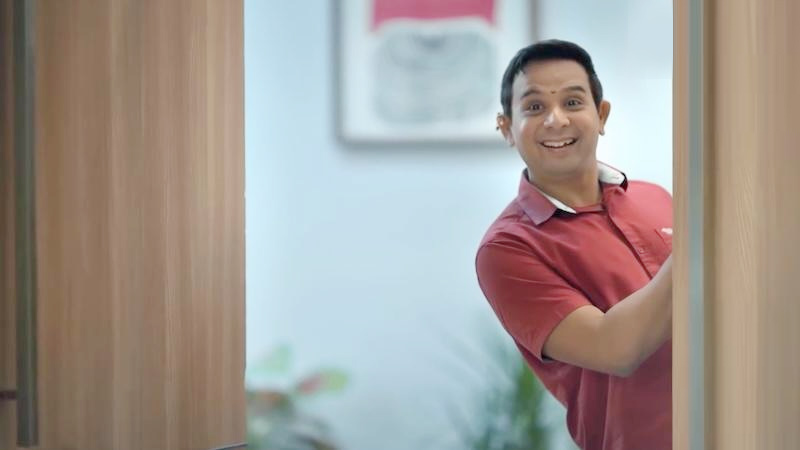
MUMBAI: Some friendships are made in heaven; others are coded in Mumbai. Hamara Vinayak, the first-ever digital original from Siddharth Kumar Tewary’s Swastik Stories, turns the divine into the delightful, serving up a story that’s equal parts start-up hustle and spiritual hustle.
Some tech start-ups chase unicorns. This one already has a god on board. Hamara Vinayak takes the leap from temple bells to notification pings and it does so with heart, humour and a healthy dose of the divine.
At its core, the show asks a simple but audacious question: what if God wasn’t up there, but right beside you, maybe even debugging your life over a cup of chai?
The show’s tagline, “God isn’t distant… He’s your closest friend” perfectly captures its quirky soul. Across its first two episodes, screened exclusively for media in Mumbai, the series proves that enlightenment can come with a good punchline.
The series follows a group of ambitious young entrepreneurs running a Mumbai-based tech start-up that lets people around the world book exclusive virtual poojas at India’s most revered shrines. But as their app grows, so do their ethical grey zones. Into this chaos walks Vinayak, played with soulful serenity and sly wit by the charming Namit Das, a young man whose calm smile hides something celestial.

He’s got the peaceful look of a saint but the wit of someone who could out-think your favourite stand-up comic. Around him spins a crew of dream-driven youngsters – Luv Vispute, Arnav Bhasin, Vaidehi Nair and Saloni Daini who run a Mumbai-based tech start-up offering devotees across the world the chance to book “exclusive” poojas at India’s most sacred shrines. It’s a business plan that blends belief and broadband – and, as the story unfolds, also tests the moral compass of its ambitious founders.
“The first time I read the script, I found the character very pretty,” Namit joked at the post-screening interaction. “It’s a beautiful thought that God isn’t distant, he’s your closest friend. And playing Vinayak, you feel that calm but also his cleverness. He’s the friend who makes you think.”
The reactions to the series ranged from smiles to sighs of wonder. Viewers were charmed by the show’s sincerity and sparkle, a quality that stems from its creator’s belief that faith can be funny without being frivolous.
Among the cast, Luv Vispute shines brightest, his comic timing adding sparkle to the show’s more reflective beats. But what keeps Hamara Vinayak engaging is the easy rhythm of its writing – one moment touching, the next teasing, always gently reminding us that spirituality doesn’t have to be solemn.
Luv spoke fondly of his long association with Swastik. “Since my first show was with Swastik, this feels like home,” he said. “Every project with them is positive, feel-good, and this one just had such a different vibe. I truly feel blessed.”
Saloni Daini, who brings infectious warmth to her role, added that she signed up the moment she heard the show was about “Bappa.”
“We shot during the Ganpati festival,” she recalled. “The energy on set was incredible festive, faithful, and full of laughter. It’s such a relatable story for our generation: chaos, friendship, love, kindness, and faith all mixed together.”

Vaidehi Nair and Arnav Bhasin complete the ensemble, each representing different shades of ambition and morality in the start-up’s journey. Their camaraderie is easy and believable, a testament to how much the cast connected off-screen as well.
This clever fusion of mythology and modernity plays to India’s two enduring loves, entertainment and faith. Mythology has long been the comfort zone of Indian storytellers, from the televised epics of the 1980s to the glossy remakes that still command prime-time TRPs. For decades, gods have been our most bankable heroes. But Hamara Vinayak tweaks the formula not by preaching, but by laughing with its characters, and sometimes, at their confusion about where divinity ends and data begins.
Creator Siddharth Kumar Tewary, long hailed as Indian television’s myth-maker for shows like Mahabharat, Radha Krishn and Porus, explained the show’s intent with characteristic clarity, “This is our first story where we are talking directly to the audience, not through a platform,” he said. “We wanted to connect young people with our culture to say that God isn’t someone you only worship; He’s your friend, walking beside you, even when you take the wrong path. The story may be simple, but the thought is big.”
That blend of philosophy and playfulness runs through the show. “We had to keep asking ourselves why we’re doing this,” Tewary added. “It’s tricky to make something positive and spiritual for the OTT audience, they’ve changed, they want nuance, not sermons. But when the purpose is clear, everything else aligns.”
For the creator of some of Indian TV’s most lavish spectacles, Hamara Vinayak marks a refreshing tonal shift. Here, Tewary trades celestial kingdoms for co-working spaces and cosmic battles for office banter. Yet his signature remains: an eye for allegory, a love for faith-infused storytelling, and an understanding that belief is most powerful when it feels personal.
Hamara Vinayak, after all, feels less like a sermon and more like a conversation over chai about what success means, what faith costs, and why even the gods might be rooting for a start-up’s Series A round.
As Namit Das reflected during the Q&A, “Life gives us many magical, divine moments we just forget to notice them. Sometimes even through a phone screen, you see something that redirects you. That’s a Vinayak moment.”
The series also mirrors a larger cultural pivot. As audiences migrate from television to OTT, myth-inspired tales are finding new form and flexibility online. The digital screen lets creators like Tewary reinvent the genre, giving ancient ideas a modern interface, without losing the emotional charge that’s made mythology India’s storytelling backbone for decades.
In a country where faith trends faster than any hashtag, Hamara Vinayak feels both familiar and refreshingly new, a comedy that’s blessed with heart, humour and just enough philosophy to keep the binge holy.
For a country where mythology remains the oldest streaming service, Tewary’s move from TV to OTT feels both natural and necessary. Indian storytellers have always turned to gods for drama, guidance and TRPs from Ramayan and Mahabharat on Doordarshan to glossy mytho-dramas on prime time. But digital platforms allow creators to remix reverence with realism, and in Hamara Vinayak, faith gets an interface upgrade.
The result is a show that feels like a warm chat with destiny, part comedy, part contemplation. And in an age of cynicism, that’s no small miracle.
As Tewary put it, smiling at his cast, “The message had to be positive. We just wanted to remind people that even in chaos, God hasn’t unfriended you.”
With 5 episodes planned, Hamara Vinayak promises to keep walking that fine line between laughter and light. It’s mythology with memes, devotion with dialogue, and a digital-age reminder that even the cloud has a silver lining or perhaps, a divine one.
If the first two episodes are any sign, the show doesn’t just bridge heaven and earth, it gives both a Wi-Fi connection.






