Executive Dossier
‘We’re not going in with a pistol, we’re going with a cannon’ : Rajesh Kamat – Colors CEO


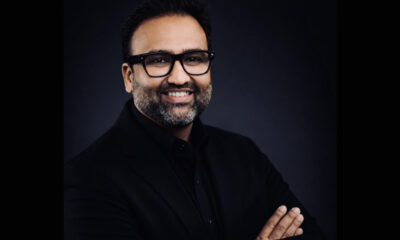
Rajesh Kamat, CEO of Viacom18’s Hindi GEC Colors, has a clear mandate – to ensure his upcoming channel a position amongst the top 3 players in the category within a year of launch.
In a genre where Colors is the 10th entrant, Kamat has his task cut out and will have to bring to bear all the experience he garnered in earlier stints as MD of Endemol India and senior VP commercial & business planning at Star India.

Speaking to Indiantelevision.com, Kamat gives his take on the whys and wherefores of the most expensive channel launch activity ever undertaken by a Hindi GEC.
Excerpts:
|
What would you term as the core TG for Colors?
In a GEC, the 15 to 34 is what gets you your first one third. The 25 + is where the loyal audience starts. What we’re doing is, we’re getting the early adaptors and the initiators in the first phase. Once we get that, we’ve made our entry into the single TV households. That’s when you start consolidating. And the consolidation phase is actually your 25+ female. Though males would come in, that consolidation phase would focus on the female. |
|
|
That aspect of your programming focus is not reflected in either Fear Factor or in Mohe Rang De, the two shows that have been showcased thus far? |
|
|
So you will have a big band for movies? |
|
|
But where will they come from? Isn’t the market more or less locked in as far as movie titles are concerned? |
|
|
Your entry into viewer mind space will therefore be with these tent pole shows and movies?
But while doing this, we will have the conventional shows that we believe will compete in the long running rating game. |
|
|
|
|
Will you be putting out your big movie titles in this six month window?
We see it that 300 GRPs is the target. But it is all this activity in the initial six months that will give us the 100 GRPs (base to build on). |
|
|
How will you crack the balance 200? |
|
|
Isn’t that something that all the channels in the chasing pack (to Star Plus and Zee TV) have failed to crack? How to cross the 100 GRP barrier? |
|
|
Which raises the question for you? These past three months has seen Imagine make a fast take-off and 9X slowly and surely build its story. That means among the new entrants two have already succeeded and are fighting it out for the third position. And way above them we have the strong number 1 and 2. Is that how you’re looking at it in terms of the distance you have to cover?
But if we have such a scenario, the balance three, 150 and 300, or 150 and 100 or 150 and 120 there’s a game. Two players at 120 each and one player at 80, is better than one player at 150.
Again, this whole game is about sustenance. It’s financial investors versus strategic investors. What is the mindset? Are you looking at ‘first year I have to extract this much money’? |
|
|
You’ve identified six months as the time frame to embed yourself in viewer mind space. That all three new entrants might succeed is not a scenario that most experts have even considered, let alone thought possible?
Even in India, where people used to talk about 70 per cent of the audiences flowing from one show to another, is a thing of the past. Now, there is nothing like saying I go from this show to this show on the same channel. It doesn’t go vertical. You actually migrate between channels based on the shows you like. That’s how the viewership pattern is going.
And it’s not also as if the same person in the same household is watching. You’re aggregating different types of eyeballs. There is no linearity in terms of audience flow.
Audience flow at an earlier point used to be from a Kasautti… to a Kahaani… and then on to a Kyunki. Because they (the majority) liked the same kind of shows. Those days are gone. |
|
|
So if we were to draw a one liner on why players like yourself believe you are not too late getting into this game, it would be because linearity in terms of watching schedules are a thing of the past? |






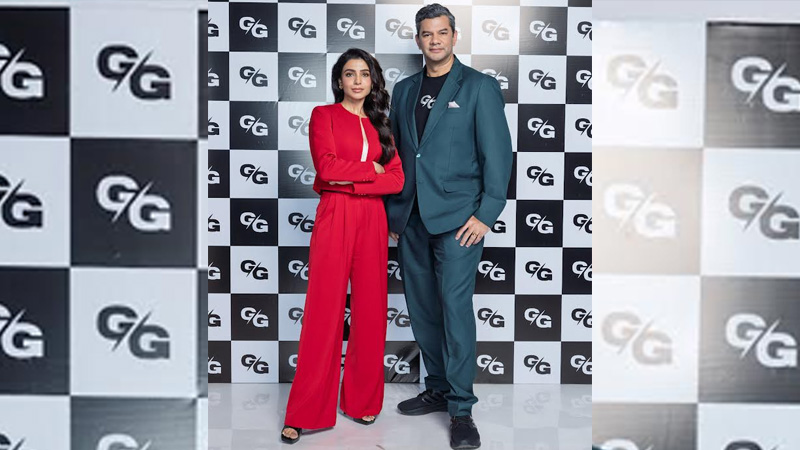
MUMBAI: Game faces on, pressure high India’s gaming ambitions are levelling up. Good Game, billed as the world’s first as-live global gaming reality show, has officially launched in India with a bold mission: to crown the country’s first Global Gaming Superstar.
Blending esports with mainstream entertainment, the show brings together competitive gaming, creativity and on-camera performance in a format that tests more than just joystick skills. Contestants will be judged on gameplay, screen presence and their ability to perform under pressure, reflecting how gaming has evolved from pastime to profession and pop culture currency.
Fronting the show are three high-profile ambassadors: actor and entrepreneur Samantha Ruth Prabhu, Indian cricket star Rishabh Pant, and gaming creator Ujjwal Chaurasia. The winner will take home Rs 1 crore ($100,000) among the largest prize pools for any Indian reality show along with the chance to represent India on a global stage.
Backed by a planned annual investment of up to Rs 100 crore, Good Game is also courting brand partners, promising a minimum reach of 500 million among India’s core youth audience. The creators position the show as a bridge between entertainment and interactive culture, offering long-format content, community engagement and commercial scale.
Auditions are now open to Indian citizens aged 18 and above, inviting amateur and professional gamers, creators and performers alike. Shortlisted candidates will be called for in-person auditions in Mumbai on 14 and 15 February, and in Delhi on 28 February and 1 March 2026.
With big money, big names and even bigger ambition, Good Game signals a shift in how India views gaming not just as play, but as performance, profession and prime-time spectacle.






