Executive Dossier
“We don’t want to be the first but be the best”: Pradeep Hejmadi

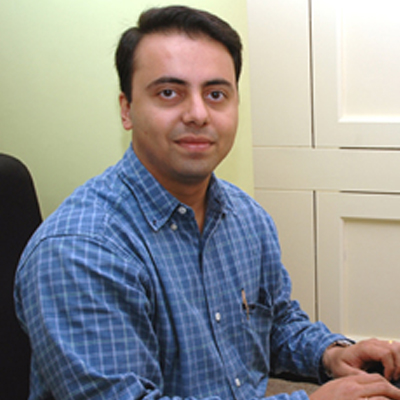
With multi-dimensional understanding of the media business, he has spearheaded and successfully launched innovative and first-in-class profit-bearing initiatives in the Indian media marketplace.
Having more than 18 years of well-rounded experience in the Indian media industry spanning media sales, media planning and buying, consumer research, business planning and product development, former TAM Media Research senior vice-president and now Zee TV business head Pradeep Hejmadi, is in the happy space.

Hejmadi has filled up the position which was vacant since 2010 and believes he has a long way to go. With the channel’s fiction offerings doing pretty well as per TAM TV ratings, according to Hejmadi it is time for the channel to strengthen its weekend band with new shows and target younger profile.
In a conversation with indiantelevision.com’s Disha Shah, Hejmadi talks about the challenges that he had to face when he came on-board, the channel’s biggest upcoming property – ‘Aryan’ and how it will live up to the channel’s expectations.
Excerpts:
It’s been five months since you took charge as the business head of Zee TV. How has the experience been so far?
It was like getting onto a running horse or a speeding vehicle. For me, it was more about gathering the right amount of momentum to get on-board and steer it in the right direction. The initial challenge was to get a sense of the pace like what track are we on and what track we need to be in and what is the destination and fix those things. Then it was just to get on-board and work with the team to add to the spirit and the momentum.
Have you brought any changes in terms of content and marketing?
Nothing at all… (laughs).. Honestly talent has been there. It has all the ingredients. Zee has had a legacy of being a pioneer in creating new formats and being acknowledged by viewers as a powerful brand in the fiction space.
There were just a few small things that needed to be aligned. Firstly, it was getting our priorities in order which we did as a team. It was about sitting down and saying “What are the things that we are doing right now and what are the serious things that we need to take on the front and which are the things that we need to start on a development front.” So it was really about setting our priorities right and then getting a process and a way of functioning to harness the best that was already there.
So we have a very good creative team; an effective marketing team and a powerful PR and digital team working here. We just had to bring all these pieces together and get them to fire in proper synchronization.
And obviously, every time you hit a bump on the road, there can be a bit of alignment requirements as well. This is the other piece that is required but it is no rocket science. Life is no different, irrespective of what work you do because principles are the same. I came here to help several millions of consumers. At TAM, I had a responsibility in delivering in a particular manner and here I have the responsibility of delivering in a slightly different manner.
Which band works wonders for the channel? Weekday or weekend programming?
The beauty about facts is that you don’t have to think about them, you need to note them down. When I joined Zee, Jodha Akbar was on top and that was one show which was standing for us on top. Most of the other shows delivered medium range ratings and on the non-fiction end we had Dance India Dance (DID) which was winding up.
It was in an interesting phase that I came on-board. We prioritised and looked at what are the things that are really going to give us reflection points in our shows and the teams took the backend to it. They put the energy back into it. There was a need for some alignment, because so much happens at the same time. One has to understand that the buzzing lights on the road are not the street markers. Those are pass inkers. So if you start thinking that they are the ones you have follow then you lose your direction.
So we needed to separate the cat eyes on the road from the blinking headlights of the other vehicles to remain in the race and that is what we did as a team. We made that difference between those blinking cat eyes versus the shinning lights of some vehicles. With that focus, by god’s grace and the opportunity that audience provides you to get your act together, we are where we are and intend to be.
‘DID’ has delivered good ratings during weekends, do you think ‘Aryan’ will live up to the expectations?
Sometimes media business is like a circus. There will be both clowns and animals and so when you a buy a ticket, you just don’t buy it for the clown. The same thing happens when you sit in front of the television screens. It must have a mix of multiple things.
So we should not compare a horse stick with a clown act. In the same way, there is no comparison between DID and Aryan. What we are trying to do with Aryan and other shows like Neeli Chatri Wale and the 9 pm non-fiction band is to create variety so that the whole family can sit together and watch. Not for even a moment, are we wanting Aryan to compete with a DID. They both are very different.
DID is a platform to identify and give to the industry a fresh pole of choreographers. These are the guys who have raw talent in them but are not actors. Aryan on the other hand is meant to appeal to a family, be inclusive of the family but bring in the audience through a slightly younger profile because that is the kind of profile that starts watching television on a weekend. It is a story that will inspire people to believe in themselves. Our intent is to create a nice family blog where you go back to general entertainment days where you can actually sit with your family and watch television.
We don’t want passing of remotes to happen. That’s our intent of weekend programming. Weekend is an environment we are going to create for families to sit and watch television together.
In the future as well, we will create different kinds of properties to give audiences a variety to enjoy. Weekend programming is by sheer nature very varied; while some do celebrity-based dance shows, we do non-celebrity based shows.
As for Aryan, it took us almost eight months to be where we are now and the challenge continues as it is a trilogy. Maharakshak is the brand and Aryan is the first of its trilogy followed by two other superheroes.
Will we see a return of Sa Re Ga Ma Pa? And is the channel working on new formats?
Yes. Sa Re Ga Ma Pa will soon hit the television screens. Work is on. Once we reach the stage where we are confident of the talent and the format we will announce it officially. As of now, we are working on multiple projects and those will go on air first.
Talking about new formats, one should not forget that every format demands newness. DID and Sa Re Ga Ma Pa are power brands for us, so we don’t have to go looking for something new. We need to make sure that we do justice to the standard that it has lived up to.
I think sometimes audiences are comfortable in what they are familiar with but they would like to see something better and if we are able to provide that with little alterations then that too becomes new for them.
Is an increase in number of hours of original programming in fiction on agenda?
Yes, but gradually. The audience has limited time so we have to make sure that we become their preferred choice.
We are clear that we will create new properties and put out more hours but we have to make sure that every hour is worth its value in gold for the audience because every time we put a new show we are expecting the audience to shift its time. We are not in a mad rush to just keep on expanding slots because we are answerable to millions of viewers who come to us every week.
Once we are at that point where we feel that it is time to go on to the next one, we will. We are in no hurry to score on somebody else’s score sheet. Our focus areas are very clear in terms of what we want to do. We don’t want to be the first but be the best.
Zee being the pioneer, are you planning to revive the afternoon slot anytime soon?
Given the way the industry is balanced between a hybrid revenue model of advertising and subscription, it is not that if I go to open an afternoon slot and get audience’s affection, it will translate into subscription revenues for me. It has to be advertising revenue and then over a period of time subscription revenue will start coming in. And advertisers somewhere think a 2 rating point in the afternoon is worth less than a 2 rating point in traditional primetime. So as long as that mindset is there, it does not work for me from an economic model point of view.
For makers to make a show and put it in the afternoon costs as much as to make a show what advertisers love to call, prime time. If I can deliver 6 per cent reach and 2.5 rating in afternoon, as a content provider I don’t see what is wrong in it. But somewhere the yield on that has always been a matter of concern and therefore over a period of time, if you see that what Zee pioneered and others followed, has now died because economically the model crashed.
With digitisation dates being postponed, how do you see it impacting the channel?
Digitisation is a far bigger phenomenon than a short-term milestone. We have to learn to do well no matter how the environment changes. I don’t see how it will impact the channel in the immediate run. However, it will help us on the distribution level to ensure better revenues and possibly reduce the carriage costs etc. But at the same time, we should not forget that audiences need that time to be able to cough up money, last miles to go and put up the boxes and it needs to be done in a more organised and systematic manner.
From Zee’s perspective, whatever be the environment, playing out of a set-top box or an analogue cable or DTH service provider, we need to be as relevant and as important for the audience to come and watch us. Those are just means of getting there. We would like digitisation to happen sooner, but also done in a systematic manner so that it makes sense for the whole value chain.




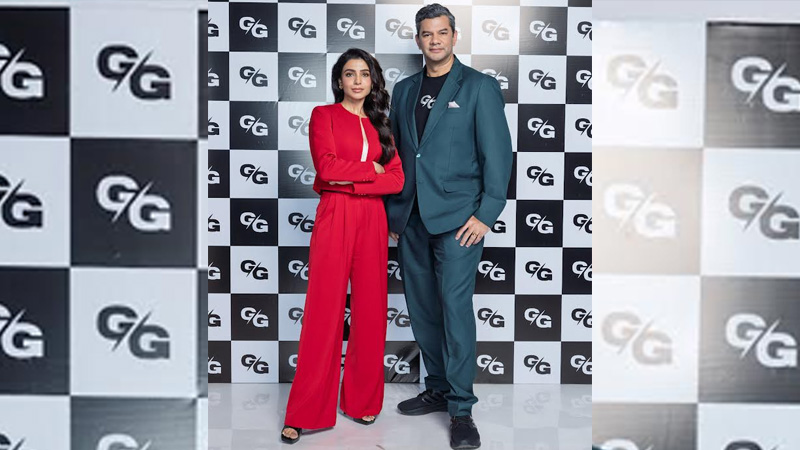
MUMBAI: Game faces on, pressure high India’s gaming ambitions are levelling up. Good Game, billed as the world’s first as-live global gaming reality show, has officially launched in India with a bold mission: to crown the country’s first Global Gaming Superstar.
Blending esports with mainstream entertainment, the show brings together competitive gaming, creativity and on-camera performance in a format that tests more than just joystick skills. Contestants will be judged on gameplay, screen presence and their ability to perform under pressure, reflecting how gaming has evolved from pastime to profession and pop culture currency.
Fronting the show are three high-profile ambassadors: actor and entrepreneur Samantha Ruth Prabhu, Indian cricket star Rishabh Pant, and gaming creator Ujjwal Chaurasia. The winner will take home Rs 1 crore ($100,000) among the largest prize pools for any Indian reality show along with the chance to represent India on a global stage.
Backed by a planned annual investment of up to Rs 100 crore, Good Game is also courting brand partners, promising a minimum reach of 500 million among India’s core youth audience. The creators position the show as a bridge between entertainment and interactive culture, offering long-format content, community engagement and commercial scale.
Auditions are now open to Indian citizens aged 18 and above, inviting amateur and professional gamers, creators and performers alike. Shortlisted candidates will be called for in-person auditions in Mumbai on 14 and 15 February, and in Delhi on 28 February and 1 March 2026.
With big money, big names and even bigger ambition, Good Game signals a shift in how India views gaming not just as play, but as performance, profession and prime-time spectacle.






