News Broadcasting
Uma Sudhir signs off from NDTV after 27 years
The executive editor shaped NDTV’s southern reportage for nearly three decades

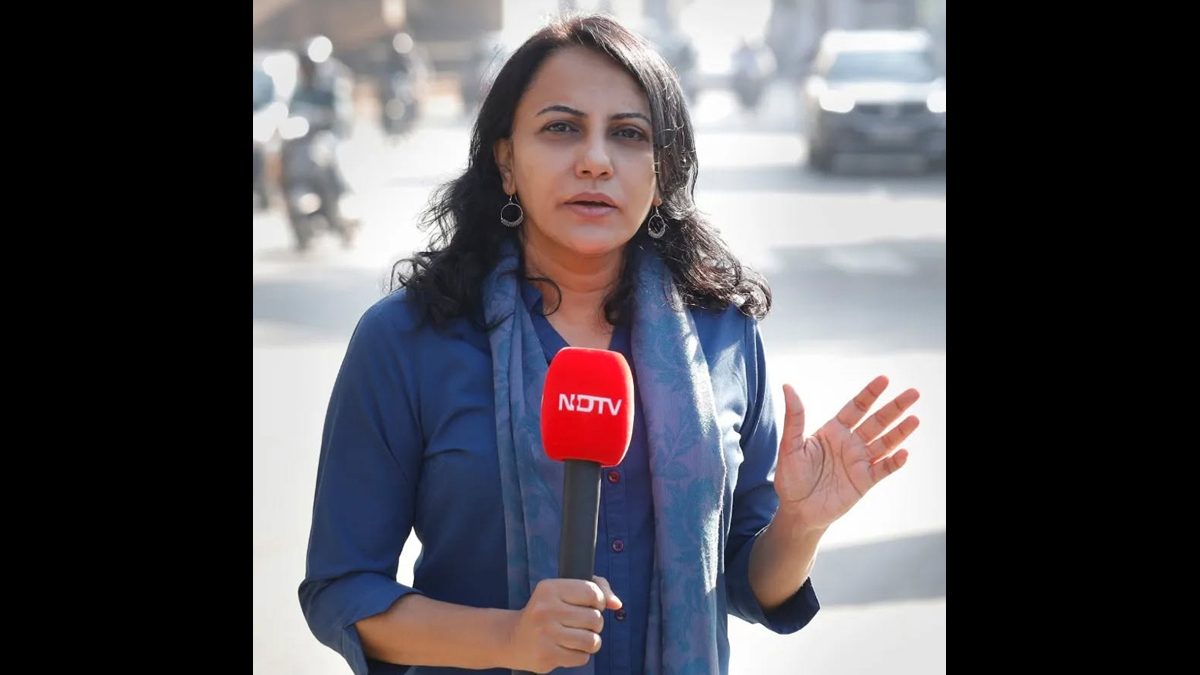
NEW DELHI: Senior journalist Uma Sudhir has retired from NDTV, bringing to a close a 27-year association with the network.
Sudhir served as executive editor, heading NDTV’s south India editorial operations. Over nearly three decades, she emerged as one of the most recognisable faces of on-ground reporting from the region, with sustained coverage of politics, governance and social issues across Telangana and Andhra Pradesh.
At NDTV, Sudhir played a central role in strengthening regional journalism within national television news. Her reporting consistently connected local developments to the national conversation, ensuring stories from the field shaped policy debates beyond studio discussions. Known for her boots-on-the-ground approach, she came to represent a generation of reporters whose authority rested on fieldwork rather than prime-time punditry.

An award-winning journalist, Sudhir is a recipient of the Ramnath Goenka Excellence in Journalism Award and the Chameli Devi Jain Award. Her body of work has been widely recognised for its public-interest focus, spanning elections, governance, gender issues, rural distress, environmental reporting and social justice.






News Broadcasting
News TV viewership jumps 33 per cent as West Asia war draws audiences
BARC Week 8 data shows news share rising to 8 per cent despite T20 World Cup

NEW DELHI: Even as individual television news channel ratings remain under a temporary pause, the genre itself is seeing a clear surge in audience attention.
According to the latest data from Broadcast Audience Research Council India, television news recorded a 33 per cent jump in genre share in Week 8 of 2026, covering February 28 to March 6.
The news genre accounted for 8 per cent of total television viewership during the week, up from 6 per cent the previous week. The spike in attention coincided with escalating geopolitical tensions involving the United States, Israel and Iran, which have kept global headlines firmly fixed on West Asia.
The rise is notable because it came at a time when cricket was dominating television screens. The high-stakes stages of the ICC Men’s T20 World Cup, including the Super 8 fixtures and semi-finals, were being broadcast during the same period.
Despite the cricket frenzy, viewers appeared to be toggling between sport and global affairs, boosting the overall share of news programming.
The surge in genre share comes even as the government has enforced a one-month pause on publishing ratings for individual news channels. The move followed regulatory scrutiny of the television ratings ecosystem.
While channel-level rankings remain temporarily out of sight, the genre-level data suggests that when global tensions escalate, audiences continue to turn to television news for real-time updates.







