Comment
‘TV broadcasting should not be left to the market’: BBC’s Greg Dyke


In the four years since I became Director General I have always come up against the same problem when visiting America. The problem is this. An awful lot of Americans just don‘t get the BBC. And by get I mean understand.

 Let me explain. The BBC is a broadcaster which relies neither on advertising nor subscription. It‘s publicly funded by a compulsory tax which you have to pay if you want to have a television in your house anywhere in the United Kingdom.
If you don‘t pay you can go to jail. As you can imagine churn is not a big problem for the BBC
Some Americans find the way we‘re funded odd to say the least. But it doesn‘t end there.
The British Government sets the size of the annual licence fee, so it decides how much money we get. Yet at the same time the BBC is totally independent from government in its journalism and is fiercely proud of its independence.
It often reports events the government would rather it didn‘t report and, as you may have read, relations between the BBC and the British government in recent months have, to say the least, been pretty frosty.
This has been largely due to our coverage of Iraq which I‘ll come back to later.
I think you‘d agree then that in the terms of US broadcasting the BBC is something of an oddity.
In fact, last year I was sitting at a dinner party in London next to a charming American woman who asked me what I did. I said I run the BBC. She then informed me she regarded the BBC as a communistic organisation.
That was decision time. Did I get into a detailed argument about publicly funded broadcasting with someone who appeared culturally unable to understand the merits of such a system, or did I just politely get back to eating my dinner.
Coward that I am, I compromised and asked her where she came from. She said Chicago. At that I gave up and explained very politely that if you came from Chicago, the home of the free market, you were never going to understand the BBC and suggested we talk about something else.
A lot of Americans who admire the BBC nonetheless find it hard to understand. And I am sure that if anyone in Britain, let alone the US, today came up with the idea for a publicly funded, competitive broadcaster it would be laughed at.
And yet the BBC works and is a much loved and respected organisation in Britain and around the world, producing some wonderful, meaningful programmes.
It could just be that the free marketers have got it wrong.
But in a market dominated world the question now being asked in some quarters back in Britain is, “should we keep the BBC in its present form?” Is it worth preserving? Surely the market can provide all the radio and television that the public want or need?
In Britain this question will become increasingly important in the months and years ahead for two reasons.
First, the continuing take-up of subscription television creates a superficially appealing argument against a broadcaster funded via compulsory charge.
Why not just let people choose what they want and pay for it? If they are happy with acres of soaps, reality shows and imports, why not let them have them?
And second, the BBC‘s Royal Charter, a piece of government legislation which allows the BBC to exist and collect the licence fee, is up for review in 2006 – and whilst that may seem like a long time away the government is kicking off the consultation process next month.
They have promised a root and branch examination of what the BBC does and its core purposes as part of that review process.
Not surprisingly, many of our commercial rivals see Charter Review as an opportunity to cut us down to size. One or two, led by Rupert Murdoch, would probably like to kill us off altogether. It seems Australians don‘t get the BBC either.
Now I have no problem with the BBC being under scrutiny. Public funding is a privilege which we, rightly, have to justify. What I constantly remind our people is that just because the BBC has been around for a long time it doesn‘t have a God-given right to exist. We have to demonstrate that we add real public value.
But the question remains: does the BBC – and publicly funded broadcasting in general – have a place in our market driven 21st century?
In Britain, governments of all political persuasions have always made a conscious decision to intervene in broadcasting. This isn‘t because they believe state intervention is good or that commercial enterprise is bad.
It stems from a belief that fostering the best of both these worlds is the most likely way of providing both the kind of TV and radio people want and that a society needs. And I would argue the two are different.
Now we don‘t tend to do this with other industries but broadcasting is special.
It plays a crucial role in our lives, both as individuals and as members of civil society. It tells us what‘s happening in the world, helps us form opinions and informs national debates. It connects people through shared experience and reflects our personal interests.
But in particular broadcasting is unique in its ability to reflect a country‘s values and culture – the things which make us different.
In Britain, our system has traditionally recognised these values. Successive governments have sought to create a television system which is both high quality and fundamentally British.
Over the years it‘s given us a wide range of programmes which are enriching and entertaining but which also reflect our culture and our values.
Regulation has played a part in creating this system but the most important influence has been the BBC and the unique way it is funded.
Public funding for the BBC has resulted in British television overall spending a lot more money than the market alone would ever justify on indigenous programming which reflects British tastes, British values, British culture.
To illustrate this point, let me share with you a fact that some here today may find surprising. I‘m sure you are all aware of America‘s dominance of global broadcasting, whether in terms of gross spend or overseas market penetration. But what you may not know is that in terms of spend per head of population on indigenous programming, Britain spends more than America.
In fact we spend more money per person on new, home-grown television programmes than in any other country in the world.
As I say, even more than in the US where the total spend is obviously much larger because of the much larger population; but the annual spend per head on home-grown production in Britain is $75 per head compared to $65 here.
But the BBC is by far the biggest single investor – responsible for 40 per cent of the TV production in the UK. We use public money to create a powerful incentive for domestic investment across the board and our freedom from commercial pressures also allows us to set the benchmark for quality and range which the other networks must be willing to match if they are to compete.
Take the BBC out of the equation and a cycle of cost-cutting and reduced investment would almost certainly follow.
The truth is that television left to the market alone behaves like any other industry. You spend as little on content as you can get away with to maximise profit.
Outside of America, that probably means importing more and making fewer programmes. After all – why spend millions developing your own risky drama or comedy when you can buy rights to guaranteed crowd-pleasers like Buffy or Friends for a fraction of the cost?
This might be good for the profits of commercial television companies but is it in the best interests of our society?
TAs I‘ve already said in Britain successive governments have always agreed that broadcasting is too important to be left simply to the market. They‘ve always believed that market intervention has been for the benefit of our broadcasting system.
The BBC‘s continued commitment to indigenous programming right across the board is one of the main reasons our biggest commercial competitor, ITV, spends more on original production than any other channel in Europe. It has to do this if it is to compete with the BBC.
Channel 4, the second biggest commercial channel in the UK, is the fourth biggest commercial spender in Europe. Again, it has to meet audience expectations but it must also compete with BBC TWO, the BBC‘s second biggest channel.
So it‘s wrong to see the BBC as a separate entity, divorced from the rest of the UK broadcasting system. A strong, publicly-funded broadcaster at the heart of our industry has a positive influence far beyond the confines of our own channels and services.
But being the bedrock of broadcasting doesn‘t guarantee our survival. In fact, the threats to the BBC have probably never been greater.
Globalisation is making it harder than ever for public service broadcasting to survive. Its influence is felt in every country around the world and every corner of our industry.
Globalisation is about importing more and making fewer programmes. It‘s about replacing distinctive domestic programming with international formats and US content. In the world of broadcasting, globalisation means Americanisation.
This is not America‘s fault. It‘s simply a product of the size of the American market which produces phenomenal amounts of TV, made in the English language.
This, combined with the international success of the US movie industry inevitably makes it the world‘s leading exporter of programmes.
This only becomes a problem when audiences around the world end up with most of their television output telling them more about American society and culture than about their own.
This process is accelerating. Governments everywhere are being urged to deregulate, to liberalise, to open their media markets to international players – which in reality is shorthand for a handful of US multi-national media companies.
The UK government has just passed legislation which will allow our commercial broadcasters to be bought by American companies – even though there is no reciprocal arrangement.
You can buy ITV, the UK‘s biggest commercial network, while we can‘t buy a single station in Cincinnati.
In Europe and at the World Trade Organisation, there‘s pressure – again driven by America – to liberalise the trade rules on audio visual services further and to limit the scope of public funding.
This is despite the fact that European markets are already very open to American media, that the best American shows are available on our main channels, that digital TV is awash with US imports and that America already has a 50 per cent share of Europe‘s audience for films.
And this trend is heading upwards. Between 1995 and 2000, Europe‘s trade deficit with America in the area of audio visual products jumped from $4.8 billion to $8.2 billion.
The problem anyone faces in expressing concern over these developments is that you risk being branded as being anti-competition or anti-American.
Equally, defending the role of public funding in broadcasting can see you characterised as an enemy of free enterprise and consumer choice.
Well, I‘m certainly not anti-commercial, having spent my entire career before the BBC in the private sector, and I am all in favour of choice.
I also see myself as a friend of America – my comments are the product of concern rather than hostility.
But I just don‘t accept that we no longer need publicly funded broadcasting.
I don‘t agree with those who argue that we should leave broadcasting to the market. And I certainly don‘t agree with those who say that television is just another commodity to be marketed and sold around the world like Starbucks or Coca Cola.
The public funding of broadcasting is not about protectionism or propping up inefficient businesses. What‘s at stake is the kind of television people have a right to expect in their society – TV which reflects their culture and their values.
Television is only different from coffee or Coke if we recognise that fact. If we treat TV like these things, it will become like them. We end up with nothing more than a briefly enjoyable experience devoid of any lasting value.
I believe we all have a right to television which reinforces rather than undermines the distinctive nature of our different societies.
The challenge we face is squaring this principle with the changes we are witnessing in broadcasting – changes which often place a premium on profitability and market penetration above all else.
We can‘t expect the market alone to take account of these concerns. In the absence of a strong publicly funded broadcaster, the cultural, social and democratic value of TV will always come second.
I sense that even here in America – the largest and most dominant TV culture in the world – concerns are growing over the way market forces dominated by US media companies are influencing TV and radio services.
These concerns focus mainly on the impact of consolidation and particularly its impact on the provision of unbiased and challenging news and current affairs.
The way the American media reported the Iraq war played into these fears. I know there‘s been much debate both here and abroad about how and why much of the American media dropped any pretence of objectivity when covering the war.
Big names from Walter Cronkite to Christiane Amanpour are among those who‘ve now put their heads above the parapet to express concerns about the media‘s willingness to toe the government line.
I don‘t intend to add significantly to that debate today, other than to say for any news organisation to act as a cheerleader for government is to undermine your credibility.
News organisations should be in the business of balancing their coverage, not banging the drum for one side or the other.
This is something which seemed to get lost in American reporting during the war.
One piece of research I read showed that of the 840 experts interviewed by US broadcast news outlets during the war, just four were opposed to the war. I have to tell you if that was true in Britain the BBC would have failed in its duty.
Telling people what they want to hear is not doing them any favours. It may not be comfortable to challenge governments or even popular opinion but it‘s what broadcasters are here to do. We have a responsibility to broadcast a range of voice.
Looking at the growth in demand for BBC News in the United States before and during the Iraq war, there is clearly a demand here for reporting and analysis which isn‘t afraid to reflect all sides.
In the last two years our global TV and radio services, BBC World and BBC World Service, have both doubled their audiences here.
Our online services have experienced enormous growth too and have regularly received emails back from people here in the US saying “thank you” for trying to explain events. Thank you for being impartial.
As I said, I don‘t come to this from an anti-business or anti-American standpoint.
I know public funding is a privilege and that commercial companies must make a profit if they are to survive. But the question I would pose to you is do these things have to be mutually exclusive?
Finally, let me say this – public service broadcasters like the BBC are not, as is sometimes suggested, a hangover from a bygone era or the last vestige of state-subsided industry.
Far from being a barrier to the success of commercial enterprise, we can be the catalyst for competition, for quality and creativity.
Broadcasting can do many things. Its power to inform, educate and entertain has never been greater. Its ability to explain the wider world and foster understanding was never more needed.
The question we must ask ourselves is this: are we here to simply serve up that which interests the public? Or do we believe in television which also serves the public interest?
In today‘s competitive markets and globalised economies, I believe the role of national, publicly funded broadcasters like the BBC is more important not less if that public interest is to be properly served.
Being publicly funded gives us the freedom to take risks, to be creative and to ask awkward questions. That is something we should all treasure and if we lose it we do so at our peril.
Thank you.





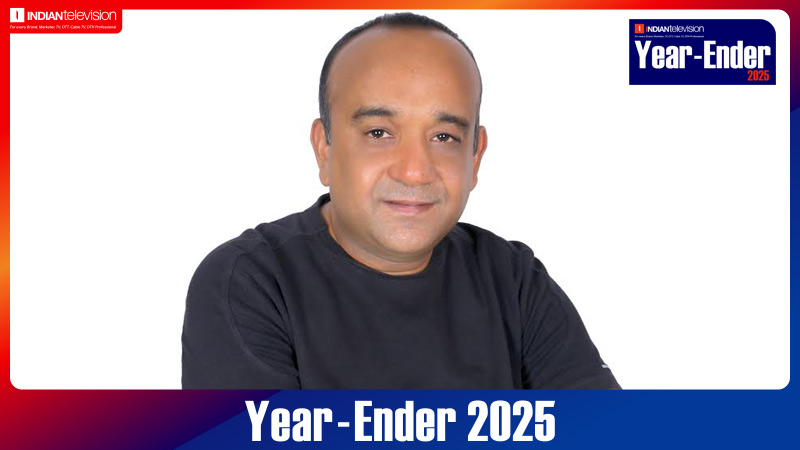
MUMBAI: 2025 will be remembered as the year India’s OTT industry stopped chasing scale for its own sake and began reckoning with how audiences actually consume content. Completion rates fell, patience wore thin and the limits of long-form excess became impossible to ignore. In this guest column, Pratap Jain, founder and CEO of ChanaJor, traces how micro-drama moved from the fringes to the centre of viewing behaviour, why short-form fiction emerged as a retention engine rather than a trend, and how platforms that respected time, habit and emotional payoff were the ones that truly grew up in 2025.
If there is one thing 2025 will be remembered for in the Indian OTT industry, it’s this: the industry finally stopped pretending.
Stopped pretending that bigger automatically meant better.
Stopped pretending that viewers had endless time.
Stopped pretending that scale without retention was success.
What began as a quiet reset in 2023 and a cautious correction in 2024 turned into a very visible shift in 2025. Business models matured. Content strategies tightened. And most importantly, platforms started aligning themselves with how Indians actually watch content, not how the industry wished they would.
At the centre of this shift was micro-drama—not as a trend, but as a behavioural inevitability.
When OTT finally understood the time problem
For years, long episodes were treated as a marker of seriousness. A 45–60 minute runtime was almost a badge of credibility. Shorter formats were pushed to the margins, labelled as “snack content” or “mobile-only.”
That belief quietly collapsed in 2025.
What platform data showed very clearly was not a drop in interest—but a drop in patience. Viewers weren’t rejecting stories. They were rejecting commitment.
Across platforms, the same patterns appeared:
* First-episode drop-offs on long-form shows kept increasing
* Completion rates continued to slide
* Viewers were sampling more titles but finishing fewer
At the same time, shows with episodes in the six to 10 minute range started showing the opposite behaviour: higher completion, higher repeat viewing, and stronger daily habit formation.
Micro-drama didn’t win because it was short. It won because it respected time.
Micro-Drama didn’t arrive loudly. It took over quietly.
There was no single moment when micro-drama “launched” in India. It crept in through dashboards and retention charts.
By mid-2025, it was clear that viewers were happy watching four, five, sometimes six short episodes in one sitting—even when they wouldn’t finish a single long episode. Romance, relationship drama, slice-of-life conflict, and grounded comedy worked especially well.
This wasn’t disposable content. It was compressed storytelling.
In shorter formats, there was no room for indulgence. Every episode had to move the story forward. Weak writing was punished faster. Strong writing was rewarded immediately.
Micro-drama raised the bar instead of lowering it.
Where ChanaJor naturally fit into this shift
ChanaJor didn’t pivot to micro-drama in 2025 because the market demanded it. In many ways, the platform was already built around the same viewing behaviour.
From the beginning, ChanaJor focused on short-to-mid-length fictional stories that felt close to everyday Indian life—hostels, rented flats, office romances, small-town relationships, young people figuring things out. Stories that didn’t need heavy context or cinematic scale to connect.
What worked in ChanaJor’s favour in 2025 was clarity:
* A clearly defined audience
* Tight episode lengths
* Storytelling that prioritised emotion and pace over spectacle
While several platforms rushed to copy global micro-drama formats, ChanaJor stayed rooted in familiar Indian settings and conflicts. That familiarity mattered. Viewers didn’t have to “enter” the world of the show—it already felt like theirs.
Why audiences started responding differently
One of the biggest misconceptions going into 2025 was that audiences wanted shorter content because their attention spans had reduced. That wasn’t entirely true.
What viewers actually wanted was meaningful payoff per minute.
On platforms like ChanaJor, episodes didn’t waste time setting the mood for ten minutes. Conflicts arrived early. Characters were recognisable within moments. Emotional hooks landed fast.
A typical consumption pattern looked like real life:
* One episode during a break
* Two more before sleeping
* A few the next day
This is how viewing habits are built—not through marketing spends, but through comfort and consistency.
Viewers came back not because every show was a blockbuster, but because they knew what kind of experience to expect.
2025 was also the year OTT faced business reality
The other big change in 2025 was on the business side. Subscriber growth slowed. Discounts stopped hiding churn. Customer acquisition costs rose.
Platforms were forced to ask harder questions:
* Are viewers finishing what they start?
* Are they returning without reminders?
* Is this content worth what we’re spending on it?
This is where micro-drama began outperforming expectations. A well-written short series could deliver sustained engagement without massive budgets. It didn’t peak for one weekend and disappear—it stayed alive through repeat viewing.
Platforms like ChanaJor benefited because they weren’t chasing inflated launch numbers. The focus was on consistency and retention, not noise.
Failures Became Visible Faster
2025 also exposed weaknesses brutally.
Several platforms assumed micro-drama was a shortcut—short episodes, quick shoots, instant traction. What they discovered was that bad writing fails faster in short formats than in long ones.
Viewers dropped off within minutes. Episodes were abandoned mid-way. Weak stories had nowhere to hide.
Micro-drama didn’t forgive laziness. It amplified it.
The platforms that survived were the ones that treated short storytelling with the same seriousness as long-form—sometimes more.
OTT Stopped Chasing Prestige and Started Chasing Habit
Perhaps the most important shift in 2025 wasn’t technical or creative—it was psychological.
OTT stopped trying to look like cinema. It stopped chasing validation through scale and awards alone. It began behaving like what it actually is in people’s lives: a daily companion.
Platforms like ChanaJor found their space here because that mindset was already baked in. The goal wasn’t to dominate a weekend launch. It was to quietly become part of someone’s everyday viewing routine.
That shift changed everything—from release strategies to how success was measured.
What 2025 Ultimately Taught the Industry
By the end of the year, three truths were impossible to ignore:
* Time is the most valuable thing a viewer gives you
* Retention matters more than reach
* Format must follow behaviour, not ego
Micro-drama didn’t take over because it was fashionable. It took over because it fit real life.
Looking Ahead
Micro-drama is not replacing long-form storytelling. It is redefining the baseline of engagement.
Longer shows will survive—but only when they earn their length. Short-form fiction will continue to evolve, becoming sharper, more emotionally confident, and better written.
Platforms like ChanaJor have shown that it’s possible to grow without shouting—by understanding the audience, respecting their time, and telling stories that feel real.
2025 wasn’t the year OTT became smaller. It was the year it became smarter.
Note: The views expressed in this article are solely the author’s and do not necessarily reflect our own.








