Executive Dossier
“Three CAS models suggested because no one formula would work all over the country” : Pradip Baijal – TRAI chairman

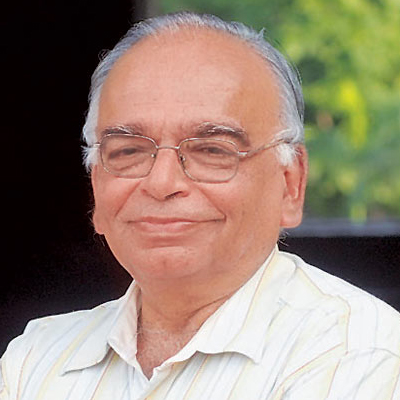
Broadcast and cable TV regulator Telecom Regulatory Authority of India (Trai) has finally come out with its much-awaited recommendations. On first reading, the report is likely to create more confusion, rather than clear doubts in the industry.
But Trai, headed by a former bureaucrat, Pradip Baijal, is convinced that the recommendations could be the best that could have been offered for an industry that has been unregulated for over a decade during which time it has grown into a humungous one with a turnover of over Rs 150 billion.

Even as journalists grappled with the executive summary of the Trai recommendations, which were lengthy enough, here’s what transpired at a press conference that was addressed by Trai members on various issues relating to the recommendations that were submitted to the information and broadcasting ministry today.
Excerpts from the interaction:
|
What are the recommendations all about?
Pradip Baijal (PB): Cable television has been an unregulated sector, but even in that mode it has done a great job — gone over poles, over trees, over rooftops. But the industry today manages a turnover of over Rs 15,000 crores (Rs 150 billion) with just over a decade of existence in an unregulated era.
Now, keeping this overview in mind, we would not like to go for over-regulation. The recommendations here today present that viewpoint. |
|
Would you care to explain the broad points that the executive summary is enlisting, considering that itself is so exhaustive and confusing?
PB: If that’s the consensus, then I’d start off by saying that regulation has to be an evolutionary process. It cannot be — rather should not be — suddenly thrust on an industry that has survived almost 15 years in an unregulated mode.
Here again, I’ll explain that cable TV is a popular medium of entertainment and information and India, probably, would be the only country in the world where there is more cable connections than fixed-line connections.
If you read the recommendations carefully, you’ll realise that we have created an enabling regulation. We also have taken into account future aspects like convergence. If things work out, then a cable TV provider may be able to provide telecom services too (vice versa too would hold good) under the unified licensing regime.
As far as the ‘must provide’ clause is concerned, we believe that this would ensure availability of all types of content to the consumer. We also have suggested changes in DTH guidelines, which may help the industry and the way pricing should be done, has been suggested with a view to benefit the consumer too. |
|
Why has the Trai suggested three models for the country, shying away from anything definitive and creating more confusion in the government’s mind?
PB: If there were simple answers for the cable and broadcast industry, we would have provided them. Or, at least, tried to do so. Why only in India, the world over countries are grappling with regulations regarding this sector. India, would be the 136th country in the world to be going in for some regulation for this sector.
Now, to answer your question, three models have been suggested because we feel no one formula would work all over the country because the realities are different in different parts of the country. Conditional access worked in Chennai for a different reason. But the same could not be said so easily about |
|
In case of price ceilings, Trai has said that new pay channels would have to go through boxes on a mandatory basis, but what about those channels, like HBO, which are hopping bouquets? (HBO is to change over from One Alliance to Zee Turner.) HV SINGH (secy-cum-principal advisor, Trai):
Good question and valid one too. But if you read the report, it says quite clearly how the pricing needs to be done and we have suggested an idea, not provided a formula. In the case of HBO, as mentioned by you, the movement will work out to zero vis-?-vis additions and subtractions of channels from a service provider’s list, so HBO’s price can remain the same. Rather, being a stand-alone channel can benefit HBO more. |
|
But what about those channels like Zoom TV, which have been newly launched, but has no precedence of the same genre of channel whose pricing could be used as a bench mark?
P.B: Look, if the industry does not get such ideas, you’ll give them by asking such questions and raising these issues. But a good question. If there are some disputes relating to any particular case, the regulator would intervene and we’ll settle it on a case-by-case basis on receiving complaints.
If there are complaints relating to Hungama TV, for example, on pricing we’d look into it and decide a rate. |
|
What’s the reason for Trai not doing anything on regulating the quantum of advertising on pay channels?
P.B: Nowhere in the world do such caps exist. It’s best left to the industry and the audiences to decide.
RAKESH KACKER (advisor, Trai): There’s an option for the government to regulate advertising time and ads on TV channels. If it wishes, it can exercise those powers under various Acts to bring in a legislation. |
|
Does Trai believe that CAS would become a reality, considering most state governments would not like to have it?
P.B: CAS would gradually come and spread and I think it’s the best way forward. It would bring about more transparency and less intervention from the regulator. |
|
Do you really feel the government would accept the report in toto? Which CAS model is most likely to find acceptance?
P.B: That is for the government to answer as the ball is always in the government’s court. But in the short-term, we feel that all models (suggested) are likely to co-exist. |
|
As far as the ‘must provide’ clause is concerned, don’t you feel, it may end up giving some advantage to an existing player and DD, which is proposing free DTH service?
P.B: The advantages would be there for everybody. Since there is only one DTH licencee, it anyway, has the beginner’s advantage. |
|
Would the ‘must provide’ clause be applicable to a cable op, for example, if he doesn’t have the capacity to transmit beyond a certain number of channels?
P.B: If somebody doesn’t have the capacity to do something, you really cannot force him to do so. But if a cable operator has the capacity, then he must show all the available channels.
RK: What you are saying can be solved with digitisation. It’s a separate exercise that Trai is undertaking. (Trai has sought consultants help to prepare a report on migration from analog mode of technology to a complete digital one.) But to answer your question, the capacity or the infrastructure would decide carriage of channels. |
|
On ‘must carry’ again. If everything is to be made available to every platform, where does that leave exclusivity?
PB: You are talking about exclusivity from a broadcaster’s point of view. We are here to benefit the consumers and ensure that he gets maximum choice. This clause is aimed at enabling that only.
Moreover, we are not in favour exclusivity and exclusive rights, etc. Then Trai would have to decide the definition of `exclusivity’, which we would rather not get into. |
|
Do you really think the consumer would end up having choice after your recommendations are implemented?
PB: Choice would come only when an addressable system is there. But, I do think that Model 1 looks like a practical one. |






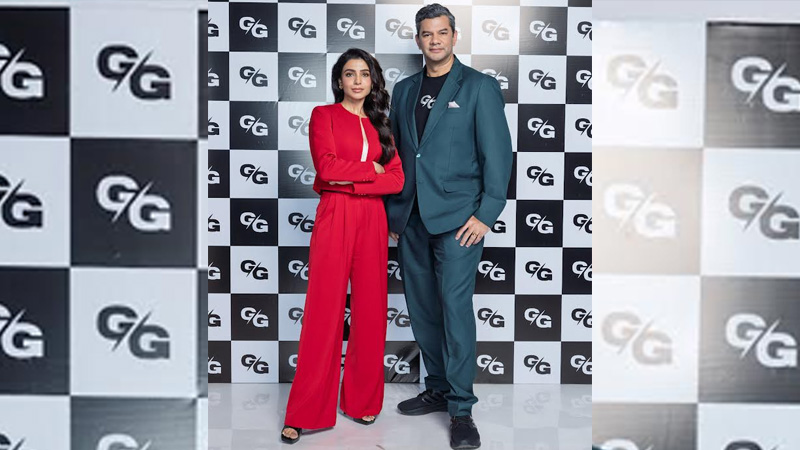
MUMBAI: Game faces on, pressure high India’s gaming ambitions are levelling up. Good Game, billed as the world’s first as-live global gaming reality show, has officially launched in India with a bold mission: to crown the country’s first Global Gaming Superstar.
Blending esports with mainstream entertainment, the show brings together competitive gaming, creativity and on-camera performance in a format that tests more than just joystick skills. Contestants will be judged on gameplay, screen presence and their ability to perform under pressure, reflecting how gaming has evolved from pastime to profession and pop culture currency.
Fronting the show are three high-profile ambassadors: actor and entrepreneur Samantha Ruth Prabhu, Indian cricket star Rishabh Pant, and gaming creator Ujjwal Chaurasia. The winner will take home Rs 1 crore ($100,000) among the largest prize pools for any Indian reality show along with the chance to represent India on a global stage.
Backed by a planned annual investment of up to Rs 100 crore, Good Game is also courting brand partners, promising a minimum reach of 500 million among India’s core youth audience. The creators position the show as a bridge between entertainment and interactive culture, offering long-format content, community engagement and commercial scale.
Auditions are now open to Indian citizens aged 18 and above, inviting amateur and professional gamers, creators and performers alike. Shortlisted candidates will be called for in-person auditions in Mumbai on 14 and 15 February, and in Delhi on 28 February and 1 March 2026.
With big money, big names and even bigger ambition, Good Game signals a shift in how India views gaming not just as play, but as performance, profession and prime-time spectacle.







