Comedy
The character of a channel

Producing a television programme in India is strange business these days. A channel’s research and development team comes up with an idea/concept and asks a producer to develop it further into a show which can be put on air. The production house’s creative directors and writers then do a lot of brainstorming and pitch the developed idea to the channel’s creative and commissioning team. The latter then give inputs to the producer and his team, who then go on to further fine-tune it to what the channel wants. There’s a lot of give and take of creative ideas between the two teams before the show goes on air.
It gets even more interesting after the show starts airing: more often than not, the channel’s creative folks start directing the producer’s team to make changes based on what is working with viewers based on TRPs. Frequently, the production house ends up being a glorified line producer with the title of producer. Normally, he or she surrenders all the rights and IPR inherent (read: copyright) in the programme to the channel for a fixed one time per episode production fee. This is unlike in other more mature television markets where creation or co-creation entitles you to some royalties of fees – often times in perpetuity.
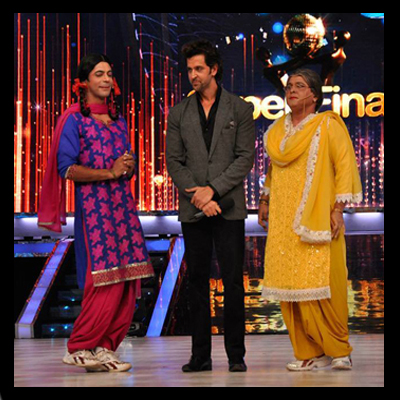
 With this background in mind, let us take a look at the recent case of involving Viacom18’s Colors. It issued a public notice in the newspapers earlier this week saying whosoever attempts to launch or be associated with its show, Comedy Nights with Kapil’s comic character ‘Gutthi’ will be taken to court.
Sources say Sunil decided to part ways because of creative differences and his remuneration, because he thought he deserved more. And another channel was willing to give him what he wanted. Colors took this extreme step because there were rumours, nay even talks going on between Sunil Grover and another rival Hindi channel to develop a show with a similar character as the comedian portrayed in Comedy Nights with Kapil. Produced by Kapil’s K9 Productions along with the Fazilla Allan-Kamna Menezes run SOL Productions, the comedy with its fresh feel and look and gaff lines had taken the nation by storm. In fact, it had given Colors a powerful shot of TVTs, and made both Kapil Sharma and Sunil Grover who plays Gutthi household names.

Not surprisingly, Colors’ fired a notice in the newspapers. It read: “A certain artiste and a stand-up comedian associated with the programme Comedy Nights with Kapil aired on Colors television channel is planning to launch or be associated with other shows, wherein the said artiste is likely to perform the character of ‘Gutthi’ or use the mannerisms and characteristic features of ‘Gutthi’ or any other character played by the artiste in the said programme.”
Ever since, many in the industry have been drawing parallels with numerous instances wherein television channels, particularly entertainment, have been overtly possessive about their actors when moving from one channel to the other or quitting a show mid-way.For instance, when actor Giaa Manek, who rose to popularity with her portrayal of Gopi bahu in Star Plus’s Saath Nibhana Saathiya, decided to participate in a reality dance show on Colors, Star Plus revoked her contract and replaced her with another actor.
Ditto with Ratan Rajput, who made it big as Laali in Zee TV’s Agle Janam Mohe Bitiya Hi Kijo. She decided to be part of Imagine’s reality show Ratan Ka Rishtaa even before Agle Janamwrapped-up. While the producers of Agle Janam, Swastik Pictures, had extended the series for a few months, Rajput landed in trouble as she had already accepted the proposal for Ratan Ka Rishtaa. It snowballed into a fight with Zee TV threatening to slap a case against Rajput if she left Agle Janam before it ended as she had signed a contract with the channel.
Most of the time, the law comes into play much later but channels and production houses prevent their popular characters/actors from venturing into any other show. Like Mohit Raina, who plays the titular character in Life OK’s Mahadev, is not allowed to act in any other series as ‘the audience would lose interest in his character’. Even Karan Singh Grover, who plays Asad Khan in Qubool Hai, is given an exclusivity fee by Zee TV to discourage him from bolting to any other channel.
TV channels also resort to prohibiting their actors from revealing their true identity in public. For example, Mona Singh, who played Jassi in Jassi Jaisi Koi Nahi, for months made public appearances in braces and a pair of obsolete spectacles just to keep audience interest in ‘Jassi’ alive and ticking. In a similar vein, there were reports about actor Gurmeet Choudhary’s early ouster from a dance reality show in 2012 as he wasn’t performing too well and prolonged participation would have hampered his popularity on another fictional show.Then again, there have been instances in the past where popular characters have reprised their acts in other shows across channels without anyone taking exception. For example, Bharti Singh, who rose to fame with her Lalli act in Star One’s Laughter Challenge, has frequently revisited her character on other shows and no one’s made a noise about it.
 Ditto for child comic Saloni Daini, who has repeated her Gangubai act on various platforms. For that matter, even Kapil Sharma, who has reprised Shamsher Singh from Sony’s Comedy Circus on Colors’ Comedy Nights with Kapil.
As far as specialised events like awards airing on a rival channel go, at times the Hindi GECs have insisted that actors go dressed in the character garb that they wear on screen. On other occasions, they have simply refused to let any of their actors even be seen on the awards show, thinking they would increase the TVTs of a rival channel.
Clearly, broadcasters and creators have sent out mixed signals: at times they have been firm about how much they are willing to yield; at others they have not done anything and watched mutedly as actors have gone about doing as they please.
Hence, the Colors vs Sunil ‘Gutthi’ Grover case could end being a landmark one. That is if Colors pursues what it believes in to the end.








MUMBAI: If laughter is the best medicine, Sony Marathi seems to have found a way to bottle it and now, uncap it. After nine years, 950 plus episodes and a cult following that treats Maharashtrachi Hasyajatra (MHJ) like a weekly family ritual, the channel has taken the comedy blockbuster beyond the stage with MHJ Unplugged, a digital-only podcast that lets fans peek behind the punchlines.
Season 1 of MHJ Unplugged became an instant favourite, thanks to its refreshing premise: nine beloved MHJ artists dropping their on-stage personas to share raw, reflective, and often emotional stories. From childhood struggles to backstage chaos, each episode offered a rare, unfiltered look at the people behind Maharashtra’s most-watched comedy universe, a contrast fans embraced wholeheartedly.
The numbers tell the story. The debut season clocked 23 million plus views across Sony Marathi’s digital platforms, proving that the MHJ fandom doesn’t end when the cameras stop rolling. And for brands, the podcast became a high-engagement playground for integrations that didn’t feel shoehorned instead blending organically into the show’s storytelling.
Presenting partners Waman Hari Pethe Jewellers and Ravetkar Group rode the wave, with both receiving prominent host mentions and consistent visibility via L-bands, Aston bands and episode-level branding. Ravetkar Group even levelled up with on-set physical branding, rooted in the show’s community-first sentiment.
But the jewel in the crown quite literally was Waman Hari Pethe Jewellers’ now-signature integration: the “Waman Hari Pethe Soneri Kshan moment”. Each episode spotlighted a heartfelt moment between the host and guest, capped with a gifted silver coin that aligned perfectly with the brand’s motto “Soneri Kshananche Sobti”. It wasn’t just product placement, it was emotional placement.
Ravetkar Group founder and managing director Amol Ravetkar said, “Just as we build homes, we want to build moments of joy. Sponsoring this beloved show, which celebrates local talent and humour, reinforces our commitment to the culture and values of the communities we serve. We are proud to support quality regional entertainment and be a part of the incredible ‘MHJ universe’ that has captured millions of hearts.”
Waman Hari Pethe partner Ashish Pethe said, “Waman Hari Pethe Jewellers is delighted to partner with Sony Marathi’s MHJ Unplugged. This collaboration allows us to connect directly with our customers. MHJ Unplugged is a perfect vehicle for us as there is a perfect synergy between our customers and the audience of MHJ. Happy that we could share in the joy and laughter that this unique platform brings to the MHJ universe.”
Much of the show’s resonance comes from the way host Amit Phalke anchors it steering conversations with warmth, humour, and an ear for the stories that deepen fans’ emotional connection with the MHJ family.
Now, buoyed by Season 1’s success, Sony Marathi is gearing up for a bigger, bolder Season 2, with new sponsors already circling and an expanded content slate in the works. The channel calls MHJ Unplugged a “milestone in Marathi entertainment,” an experiment that not only paid off, but opened doors for high-engagement digital IPs rooted in regional storytelling.
If Season 1 brought fans closer to their favourite comedians, Season 2 promises to pull them right into the greenroom. After all, in the MHJ universe, the laughter doesn’t end, it simply goes unplugged.








