Comment
Sunny, porn and big bad world of TV


It took a lot of frisking around in bed in the buff – with first, women,and then men – for the camera to transform an Indian Sikh girl Karenjit Kaur Vohra from Ontario into a global porn star who goes by the handle of Sunny Leone. From there she made her way back to India and into our homes with the fifth season of Bigg Boss where she has surprised all.
Her face is finely structured, her smile bewitching the youth of India. She is comfortable in her skin as a sex goddess. Her laugh is gay, full of abandon. She comes across like a person who knows what she is all about, and she loves it. She has all the oomph and jiggles in the right places to make her stand out from the rest of the Bigg Boss 5 gang. She is Indian, and looks partly so, but sounds totally foreign. And yet she speaks Hindi with a charming accent and style. She is exotic. A mysterious enticement.
Yes, she has that seductive figure, the seductive American/Canadian accent and a very seductive way of carrying herself.

But she has done nothing – yet – to warrant her the porn star status that has made her the wet dream of millions of her fans the world over.
|
Adult content can offer a release for many frustrated youth, who, in its absence, tend to vent their pent-up frustration out on girls as young as four or five as newspaper reports have revealed |
|---|
The media has gone to town with Sunny. Reams and reams of pages of editorial have been written about her. Internet news sites, facebook communities and blogs have gushed about her porn star status in the hope of titillating readers to consume more of their pictures, and the accompanying puerile editorial. (This piece hopefully is not adding to the pulpy content). News channels too have spent thousands of minutes of on-air time examining Sunny Leone from every angle and even flashing pictures of her nearly undressed.
Then some unknown organisations backed by shady characters have been grappling at straws to nail her and the show for crossing the boundaries of decency. And cash in on the Sunny phenomenon. And possible bask in the glare of the media by sending out dubious press releases about her being banned by some unknown associations of persons.
But Sunny -the consummate professional that she is – she has not given them the chance; she has walked the thin line extremely well.
Do you know Sunny Leone may have never made it to Bigg Boss 5? Well, she had been signed on earlier this year. But folks at the channel were balking at having her on-air as there were concerns whether cause-hunting groups would make a pornographic star’s appearance on the show as a cause celebtre.
Finally, however, senior management decided to bite the bullet and go ahead, and ordered the channel’s standard and practices division to keep an even sharper watch on the content before it is pushed out on air.
India which has given the Khajurhao, the Kama Sutra to the world has hypocritically been blocking out risqué content for years, nay decades.
While most progressive countries allow adult content on air late night with some controls, India‘s lame policy makers and influencers have shut the door on it. Pseudo moralists in government and pseudo social activists have strangled and paralysed any movement on this score. India has millions of sex workers nationally servicing 10 times as many men daily. Parlours offer sex services from young masseuses under the guise of massage. There‘s a strong underground pornographic production network on anyway which disseminates clips through the net and through illegal channels in South East Asia and even India. These continue to flourish under the very noses of these same pseudo moralists. Some may also have the blessings of some of these very protesters in power.
|
The Bhatt angle may have been just a ploy to attract eyeballs, deflect some heat the channel may have been getting-courtesy – Sunny, and also bring in Bollywood to make it look legit. |
|---|
The fact is that adult content can offer a release for many frustrated youth who in its absence tend to vent their pent-up frustration out on girls as young as four or five, something which we tend to see in shocking newspaper reports day in day out. The government‘s Victorian approach is helping no one, apart from giving some ammo to the moral brigade to make noise from time to time and keep the information and broadcasting ministry busy. The government has set a digitization of Indian cable TV deadline. The technology that digital cable TV and DTH brings with it enables selective blocking of what can be termed objectionable content in the home by the viewer himself. The viewer will get to decide what he/she and his family members will be permitted to watch.
So it’s about time that the powers-that-be drop their pseudo-moralism and take steps to rethink broadcast of adult content in the age of the internet where sex is the most searched term on google. And there are more visuals of the sexual act easily accessible to even underage kids at the click of a mouse then ever in mankind‘s history. Also, remember an extremely bold film like The Dirty Picture by the queen of family dramas Ekta Kapoor is getting rave reviews and attracting the so-called "conservative Indians" to cinema halls and multiplexes.
Back to Sunny. She has tried to break out into Hollywood in the past, without much success. But Bollywood seems to be more accepting and welcoming than mainline or B-grade movie makers of the good old US of A. Earlier this week, she cast her spell on film maker Mahesh Bhatt who has been linked with the most beautiful of actresses and has had several relationships with the most desirable women. Bhatt fawned over her, showered lavish praise on her – behaving like an ageing, veteran film maker who has found his muse towards the sunset of his career.
And he has offered her a part in Jism 2. Sunny, appears warm to the idea, and has left it to her agent in the US and Pooja Bhatt’s Fisheye Network to hammer out an agreement on her behalf for her Bollywood debut. If that is worked out, it will be a dream come true for Bhatt.
A performer who has done it all, will be relatively easy to deal with.
Dropping clothes will come naturally; smooching will not be a problem, she will possibly go the Full Monty; no body doubles will be needed. It will make for an interesting movie
Sunny times are ahead. Yeah!!!
Or at the end of it all nothing may emerge from it. The Bhatt angle may have been just a ploy by the channel‘s marketers and spin doctors to attract eyeballs, deflect some heat the its management may have been getting courtesy Sunny, and also bring in Bollywood to make it look like even India‘s most respected entertainment institution is wooing her and possibly get a veneer of legitimacy attached to what is going on on-air.
If this is true then, our dear Sunny will head back to Los Angeles at the end of Bigg Boss 5, and remain a much remembered nymph. And she will be doing what she knows best: producing and marketing herself in the big lucrative world of porn.







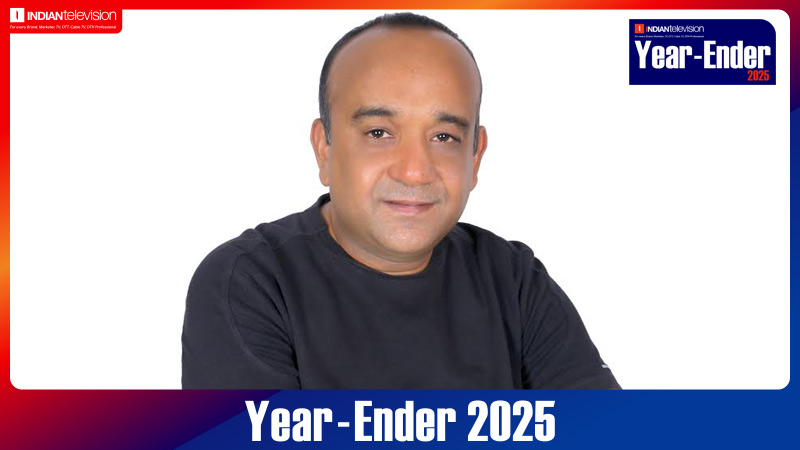
MUMBAI: 2025 will be remembered as the year India’s OTT industry stopped chasing scale for its own sake and began reckoning with how audiences actually consume content. Completion rates fell, patience wore thin and the limits of long-form excess became impossible to ignore. In this guest column, Pratap Jain, founder and CEO of ChanaJor, traces how micro-drama moved from the fringes to the centre of viewing behaviour, why short-form fiction emerged as a retention engine rather than a trend, and how platforms that respected time, habit and emotional payoff were the ones that truly grew up in 2025.
If there is one thing 2025 will be remembered for in the Indian OTT industry, it’s this: the industry finally stopped pretending.
Stopped pretending that bigger automatically meant better.
Stopped pretending that viewers had endless time.
Stopped pretending that scale without retention was success.
What began as a quiet reset in 2023 and a cautious correction in 2024 turned into a very visible shift in 2025. Business models matured. Content strategies tightened. And most importantly, platforms started aligning themselves with how Indians actually watch content, not how the industry wished they would.
At the centre of this shift was micro-drama—not as a trend, but as a behavioural inevitability.
When OTT finally understood the time problem
For years, long episodes were treated as a marker of seriousness. A 45–60 minute runtime was almost a badge of credibility. Shorter formats were pushed to the margins, labelled as “snack content” or “mobile-only.”
That belief quietly collapsed in 2025.
What platform data showed very clearly was not a drop in interest—but a drop in patience. Viewers weren’t rejecting stories. They were rejecting commitment.
Across platforms, the same patterns appeared:
* First-episode drop-offs on long-form shows kept increasing
* Completion rates continued to slide
* Viewers were sampling more titles but finishing fewer
At the same time, shows with episodes in the six to 10 minute range started showing the opposite behaviour: higher completion, higher repeat viewing, and stronger daily habit formation.
Micro-drama didn’t win because it was short. It won because it respected time.
Micro-Drama didn’t arrive loudly. It took over quietly.
There was no single moment when micro-drama “launched” in India. It crept in through dashboards and retention charts.
By mid-2025, it was clear that viewers were happy watching four, five, sometimes six short episodes in one sitting—even when they wouldn’t finish a single long episode. Romance, relationship drama, slice-of-life conflict, and grounded comedy worked especially well.
This wasn’t disposable content. It was compressed storytelling.
In shorter formats, there was no room for indulgence. Every episode had to move the story forward. Weak writing was punished faster. Strong writing was rewarded immediately.
Micro-drama raised the bar instead of lowering it.
Where ChanaJor naturally fit into this shift
ChanaJor didn’t pivot to micro-drama in 2025 because the market demanded it. In many ways, the platform was already built around the same viewing behaviour.
From the beginning, ChanaJor focused on short-to-mid-length fictional stories that felt close to everyday Indian life—hostels, rented flats, office romances, small-town relationships, young people figuring things out. Stories that didn’t need heavy context or cinematic scale to connect.
What worked in ChanaJor’s favour in 2025 was clarity:
* A clearly defined audience
* Tight episode lengths
* Storytelling that prioritised emotion and pace over spectacle
While several platforms rushed to copy global micro-drama formats, ChanaJor stayed rooted in familiar Indian settings and conflicts. That familiarity mattered. Viewers didn’t have to “enter” the world of the show—it already felt like theirs.
Why audiences started responding differently
One of the biggest misconceptions going into 2025 was that audiences wanted shorter content because their attention spans had reduced. That wasn’t entirely true.
What viewers actually wanted was meaningful payoff per minute.
On platforms like ChanaJor, episodes didn’t waste time setting the mood for ten minutes. Conflicts arrived early. Characters were recognisable within moments. Emotional hooks landed fast.
A typical consumption pattern looked like real life:
* One episode during a break
* Two more before sleeping
* A few the next day
This is how viewing habits are built—not through marketing spends, but through comfort and consistency.
Viewers came back not because every show was a blockbuster, but because they knew what kind of experience to expect.
2025 was also the year OTT faced business reality
The other big change in 2025 was on the business side. Subscriber growth slowed. Discounts stopped hiding churn. Customer acquisition costs rose.
Platforms were forced to ask harder questions:
* Are viewers finishing what they start?
* Are they returning without reminders?
* Is this content worth what we’re spending on it?
This is where micro-drama began outperforming expectations. A well-written short series could deliver sustained engagement without massive budgets. It didn’t peak for one weekend and disappear—it stayed alive through repeat viewing.
Platforms like ChanaJor benefited because they weren’t chasing inflated launch numbers. The focus was on consistency and retention, not noise.
Failures Became Visible Faster
2025 also exposed weaknesses brutally.
Several platforms assumed micro-drama was a shortcut—short episodes, quick shoots, instant traction. What they discovered was that bad writing fails faster in short formats than in long ones.
Viewers dropped off within minutes. Episodes were abandoned mid-way. Weak stories had nowhere to hide.
Micro-drama didn’t forgive laziness. It amplified it.
The platforms that survived were the ones that treated short storytelling with the same seriousness as long-form—sometimes more.
OTT Stopped Chasing Prestige and Started Chasing Habit
Perhaps the most important shift in 2025 wasn’t technical or creative—it was psychological.
OTT stopped trying to look like cinema. It stopped chasing validation through scale and awards alone. It began behaving like what it actually is in people’s lives: a daily companion.
Platforms like ChanaJor found their space here because that mindset was already baked in. The goal wasn’t to dominate a weekend launch. It was to quietly become part of someone’s everyday viewing routine.
That shift changed everything—from release strategies to how success was measured.
What 2025 Ultimately Taught the Industry
By the end of the year, three truths were impossible to ignore:
* Time is the most valuable thing a viewer gives you
* Retention matters more than reach
* Format must follow behaviour, not ego
Micro-drama didn’t take over because it was fashionable. It took over because it fit real life.
Looking Ahead
Micro-drama is not replacing long-form storytelling. It is redefining the baseline of engagement.
Longer shows will survive—but only when they earn their length. Short-form fiction will continue to evolve, becoming sharper, more emotionally confident, and better written.
Platforms like ChanaJor have shown that it’s possible to grow without shouting—by understanding the audience, respecting their time, and telling stories that feel real.
2025 wasn’t the year OTT became smaller. It was the year it became smarter.
Note: The views expressed in this article are solely the author’s and do not necessarily reflect our own.






