Sports
Sport has led the way in making live experiences truly accessible: Siddharth Sharma at FICCI-EY report launch
JioStar’s Siddharth Sharma says access, not attendance, will define the next phase of growth

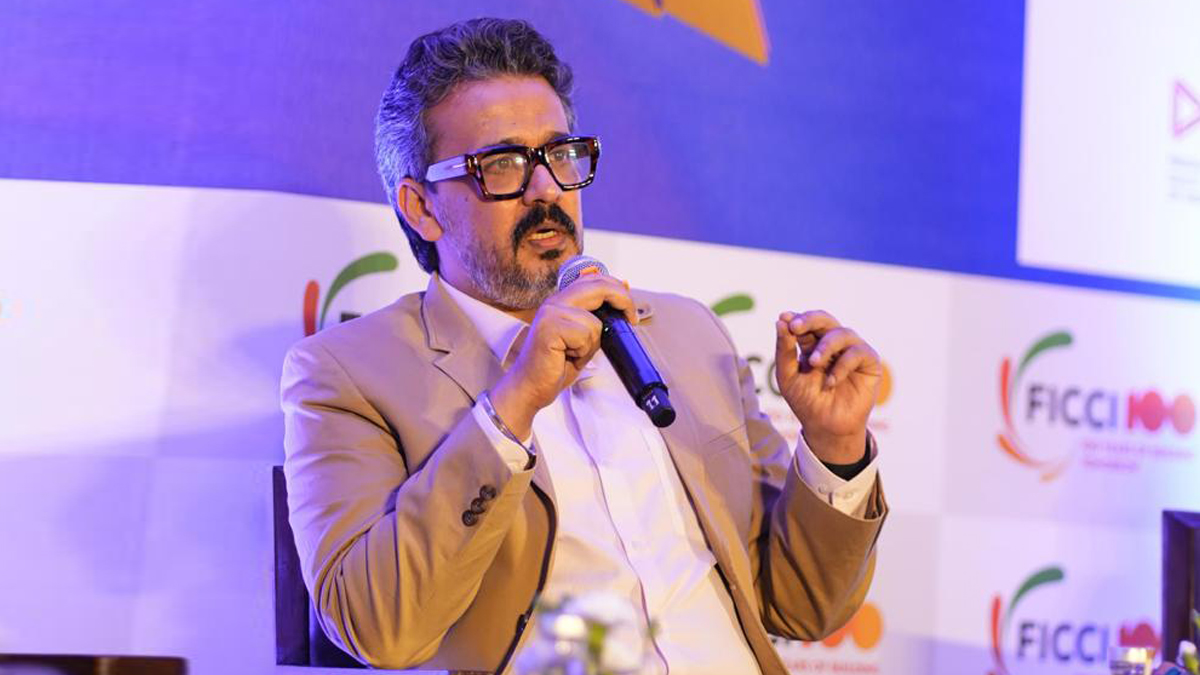
MUMBAI: The future of live entertainment will not be built in bigger venues but on bigger screens. Digital scale, not physical capacity, will power the next surge, Siddharth Sharma, head of content, sports, JioStar, said at the FICCI-EY M&E Industry Report launch 2026.
Speaking at a panel on the business of live entertainment, Sharma pointed to a decisive shift already underway. While concerts and cultural events are gathering pace, sport has long cracked the code on scale. Mega properties such as the TATA IPL now pull in tens of millions of concurrent viewers on digital platforms, numbers no stadium can contain.
“Sport has led the way in making live experiences truly accessible,” Sharma said, citing multi-language feeds, interactive features, multiple streams and population-scale concurrency as game changers now spilling into entertainment formats.

The playbook is expanding fast. From live streams of Mahashivratri and Ganesh Utsav to immersive storytelling around Ram Navami, platforms are pushing culturally rooted experiences into homes, tilting the model from attendance-led to access-led consumption.
Global concerts, including Coldplay, mark another pivot. Sharma called them inflection points for “made-for-broadcast” experiences, where interactivity, including on-demand camera angles and real-time engagement, extends the event far beyond those in the arena.
“The stadium of the future will not have a pin code. It will be defined by how much control the consumer has over the screen,” Sharma said.
That shift matters in India, where only a sliver of audiences can attend large events physically. Digital amplification stretches reach from thousands on-ground to millions at home, widening access while unlocking deeper engagement.
Personalisation is now the battleground. Platforms are moving away from a one-size-fits-all feed to tailored experiences, language, interface, interactivity and even commerce stitched into the stream. “We are moving from one experience for millions to millions of experiences for each user,” Sharma said, pointing to watch parties and real-time interactions turning viewers into participants.
The next leap, he argued, hinges on mindset. With storytelling, scale and technology converging, platforms and broadcasters can amplify cultural moments beyond physical limits.
Live is no longer a place. It is a screen: limitless, personalised and always on.






Sports
Cricket eyes global takeover as ICC’s Sanjog Gupta maps next growth frontier
Record-breaking viewership, new markets and women’s surge power the sport’s global push
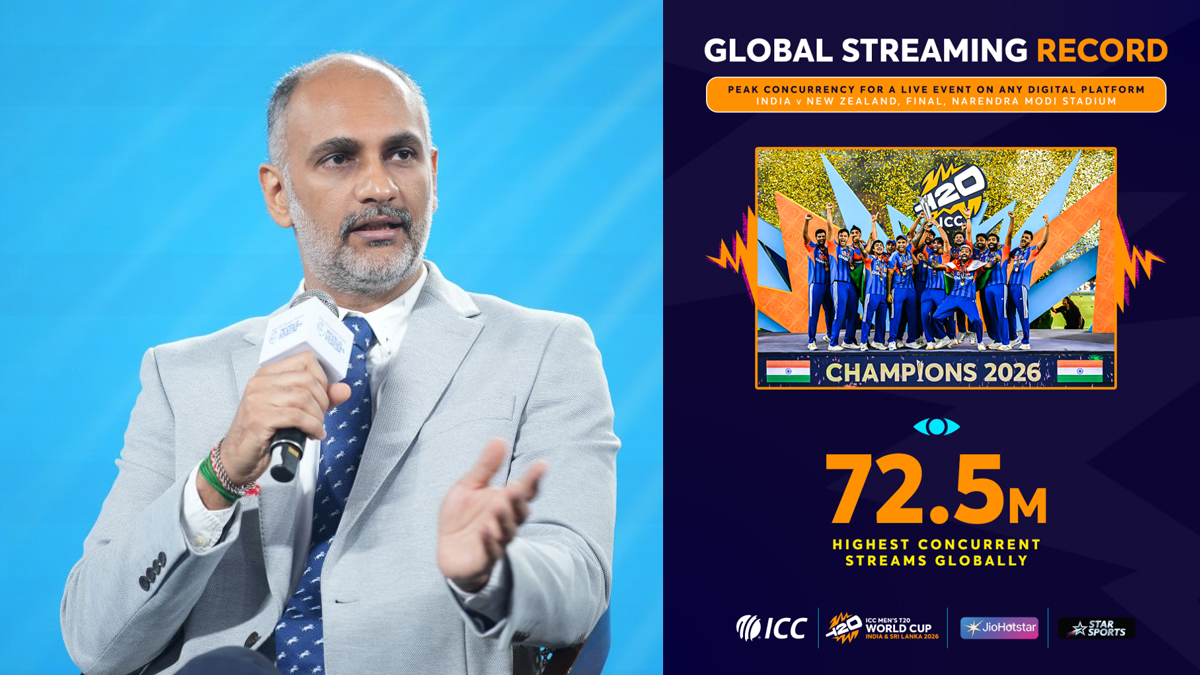
DUBAI: Cricket is no longer just a subcontinental obsession; it is pitching for global dominance. And the numbers are doing the talking.
As the clock struck 9 PM on March 8, 2026, the ICC Men’s T20 World Cup final triggered a historic surge, clocking 72.5 million concurrent digital viewers on JioHotstar in India—a new world record. The figure eclipsed the previous global benchmark set just days earlier during the second semi-final. Three of the four most-watched streaming events globally now belong to ICC tournaments, underlining the sport’s swelling digital muscle.
Sanjog Gupta, chief executive at the International Cricket Council, calls it unmatched scale and engagement. “No other experience, whether individual or collective, user-generated or curated, real or virtual, comes close to delivering this breadth of consumer attention and depth of fan affiliation,” Gupta writes in WPP Media’s Sporting Nation report.
The digital boom is matched by physical turnout. Nearly 1.3 million fans filled stadiums across India and Sri Lanka during the tournament, with strong attendance even for matches not involving host nations. Emerging teams such as Nepal, Italy and Scotland drew record crowds, signalling both deep-rooted passion and untapped headroom.
The global footprint is widening fast. The tournament delivered over 100 per cent viewership growth in markets such as Nepal, Germany and Japan on ICC.tv, while tailored content strategies drove engagement in Italy, Brazil, Indonesia and China. On social media, the ICC generated more than 15 billion views, amplified by over 300 content creators who collectively added another three billion views, offering fans a decentralised, creator-led lens into the game.
At the heart of this push lies a clear ambition: make cricket the world’s sport of choice. That requires more than marquee events. It demands grassroots participation, digital-first fan engagement and robust commercial scaffolding.
Traditional powerhouses such as India, Australia, England and South Africa continue to anchor the sport. But Gupta is clear that the future lies beyond them. The ICC is targeting expansion across the United States, Europe and emerging Asian markets, backed by development programmes and direct-to-fan digital ecosystems.
“The globalisation of the game is not simply about geography,” Gupta notes. “It is about ensuring that wherever the game travels, it retains its spirit while adapting to social contexts and localising when it enters new markets.”
The shift is already visible on the pitch. Associate nations are no longer fringe players. Nepal, Italy and the USA have begun to command global attention, while sides such as Sri Lanka and Zimbabwe have reasserted their pedigree. These performances, Gupta argues, are not anomalies but evidence of a broadening competitive base.
Parallelly, women’s cricket is emerging as a central growth engine. The ICC Women’s T20 World Cup 2026 in England and Wales is expected to accelerate momentum built over the past decade. India’s triumph in the ICC Women’s Cricket World Cup 2025 has further amplified interest, with ripple effects across markets. The ICC’s strategy is unequivocal: scale investment, expand visibility and create a pipeline of new stars.
Even as formats evolve, tradition holds firm. Test cricket, buoyed by the ICC World Test Championship, continues to anchor the sport’s legacy, while ODIs and T20Is drive accessibility and market expansion. The coexistence of formats, Gupta argues, is cricket’s unique strength, offering everything from endurance to instant spectacle.
None of this growth comes cheap. Global brands including DP World, Emirates, Aramco, Hyundai, Coca-Cola and Google are underwriting cricket’s expansion, turning sponsorship into a symbiotic engine of scale, visibility and development.
For Gupta, the direction is clear. Cricket’s future will not be defined by a handful of dominant markets but by a widening global community of players, fans and partners.
From packed stadiums in India to new builds in the United States and emerging hubs across Europe and Asia, the game is stretching its boundaries.
And if recent records are any indication, cricket is not just growing. It is accelerating towards a future where its reach is broader, its engagement deeper and its ambition unmistakably global.








