News Broadcasting
Regional, News: Zee’s growth road

Laxmi Goel is taking time to settle down in his new role as Zee News Ltd. (ZNL) director. Now in his baggage will fall a clutch of regional channels which he has to manage along with the news business he has been in charge of.
 Sitting on a revenue of Rs 2.01 billion, the task cut out for Goel is to grow the size of the egg. As the startup channels have to be nurtured and funded, he will also have to worry about the profitability of the company Though ZNL posted a net profit of Rs 161 million for the 2005-06 fiscal, this did not include the loss of Rs 460 million from Zee Telugu.
The southern language channels will continue to perplex Subhash Chandra‘s younger brother for a longer time. While Kalanithi Maran‘s Sun Group channels hold fort in the region, Asianet is powerful in Kerala. Zee Telugu and Zee Kannada, the only two channels from the Zee stable so far, have yet to stamp their mark in a market they have newly entered.
So, what is Goel‘s plan of attack? Launch local language news channels in the southern region and create a bundle along with the general entertainment channels. He has already executed that in the Bengali market (Zee‘s cable TV arm enjoys over 60 per share in Kolkata) by entering into a 50:50 joint venture with Akash Bangla (said to be funded by supporters of the Left party) to launch Chobbees Ghanta. “We have planned for the south Indian regional news channels which will take shape at a time we consider to be right,” he says.

 |
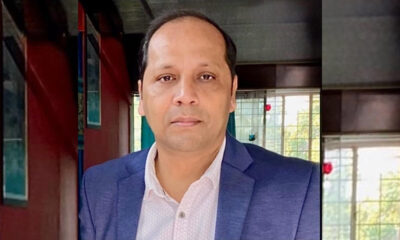
| Zee News Ltd director Laxmi Goel |
Also in the pipeline is the launch of Tamil and Malayalam language channels, the two lucrative and most difficult markets to penetrate. But without it, Goel knows, the regional bouquet will not be complete. He has to take the dive into these markets, no matter what odds the company has to face. “The capex investment of each channel could be in the range of Rs 250-400 million. The launch of these channels will happen at the appropriate time,” he says.
Zee‘s task gets tougher with Maran controlling the movie library and spinning out popular soaps from TV producers who work exclusively for the Sun Group. This forced Zee Telugu to experiment with alternate programming, aimed at younger audiences. “We launched prime time game shows and events in an attempt to get audiences veer away from soaps shown on the top three channels. The task is to break the old viewing habits of audiences. We are succeeding, albeit slowly,” says Zee South Channels business head Ajay Kumar.
 Zee Kannada has adopted a different programming plan and, with the market size being small, is tailoring programming for the mass audiences. The focus right now for this almost two-month old infant channel is to secure broad distribution as, without reach, it will not be able to build the audiences for tapping ad sales.
Outside the southern region, all the Zee regional channels are profitable except Gujarati. Zee Bangla will see major investments on programming, marketing and film buying. So will Zee Gujarati which has already been launched in UK and US. Says Zee (Marathi, Bangla & Gujarati) business head Nitin Vaidya, “We are on a major investment drive to spruce up the Bengali and Gujarati channels. We want to turn around and establish Zee Bangla, which is in second spot, as a clear leader in that market. With Zee Gujarati available in the UK and US, we are investing to take care of those audiences.”
In a meeting with analysts, Chandra admits Zee Gujarati is suffering small losses. “But all the regional channels in the bouquet are making marginal profits. The profits this year should grow. And we expect all the new businesses to break even by the fourth quarter of this fiscal,” he says.
ZNL is expected to grow over 25 per cent this fiscal. Says Essel Group CEO of corporate strategy and finance Rajiv Garg, “We are projecting a revenue of Rs 2.5 billion in FY07 and Rs 2.9 billion in FY08.”
 For speedier growth, the challenge will be to up the revenues even in those regional markets where Zee is one of the leading players. This means Zee Marathi, Zee Punjabi, Zee Gujarati and Zee Bangla will have to take the tough stance of hiking advertising rates which have grown only at a snail‘s pace. Analysts put Zee‘s ad revenues from regional channels at around Rs 800 million, and only growing slowly.
“Regional channels have a growth potential in the long term. The regional ad market is growing faster in the southern region, but there the Zee channels have a feeble presence. We see better prospects for these channels in an addressable environment. With ETV, which has a strong Marathi channel going pay, subscription revenues for Zee will also improve,” says an analyst.
Size, though, will have to come from the news channels. As Goel says, “The news genre has seen appreciable growth in the last few years.”
No wonder NDTV‘s total income has jumped to Rs 1.94 billion for FY06, up from Rs 1.57 billion a year ago. TV Today Network‘s turnover rose to Rs 1.68 billion while Television Eighteen, which owns and operates CNBC TV18 channel, posted a revenue of Rs 1.27 billion last year. Though Hindi channel Zee News stood firm ground in this fragmented environment, it barely managed to reap from the windfall that spread across the news networks as the ad market for this genre exploded over the last few years.
Zee News is investing in news automation systems as it plans to gain audiences with, as Goel says, investigative journalism and focus on hard news in prime time. “We have changed the look and feel of the channel. We are also putting money in field resource augmentation. We expect our new automation systems to be working by July-August. The channel is gearing up to face the next level of competition,” says Goel.
Muscling its way to stay head of the pack of Hindi news channels is a mission impossible at this stage, analysts say. “The Hindi news space is seeing very aggressive play from all the players including market leader Aaj Tak. But to the credit of Zee News, it must be said that it has managed to stay stable,” they add.
In the financial TV news, Zee Business stands almost eclipsed. CNBC TV18 dominates the space and has supplemented its English channel with Awaaz to lap up Hindi viewers. NDTV has launched Profit which has much better distribution than Zee Business.
Will Zee launch a general English news channel? Goel skirts the question. “It has been the declared mission of Chandra that you must be present in every genre and segment that has potential for growth. We will decide on this later,” he says.
The reality is that this genre is too crowded and thin a market to accommodate many players. The operating cost, at the least, would be upwards of Rs 700 million a year and with distribution and ad revenues an issue, it is hardly likely that Zee will take the plunge now. “In the Hindi and English news space, the process of consolidation has already started because the market can‘t sustain so many players in a healthy manner. The next battle will be fought in the regional language space in the news genre,” he says.
So, take the warning. Zee News will probably come up with more regional news channels, gobbling up some if and when they are available.






News Broadcasting
CNBC India unveils new logo, rolls out refreshed identity across network
Debuted at IBLA, the redesign signals a sharper, digital-first future

MUMBAI: CNBC has unveiled a refreshed brand identity across its India network, introducing a new logo and visual system that reflects a more modern, digital-first direction.
The rebrand was officially revealed at the India Business Leader Awards held in Mumbai on March 14, marking the first public showcase of the updated design at one of the network’s most prominent platforms.
The overhaul is among the most visible brand updates for CNBC in recent years, aimed at aligning its look and feel with evolving audience habits and a growing multi-platform presence.
At the centre of the refresh is a redesigned logo that moves away from the network’s long-standing multi-coloured peacock motif, opting instead for a cleaner and more minimalist aesthetic. A key visual cue is a blue upward-pointing arrow embedded within the letter ‘N’, symbolising forward momentum, growth and a focus on the future.
The new identity is being rolled out across the entire CNBC cluster in India, including CNBC-TV18, CNBC-TV18 Prime, CNBCTV18.com, CNBC Awaaz and CNBC Bajar. The move brings a more cohesive and contemporary design language across television and digital platforms alike.
The rollout began on March 30, with the network aiming to create a unified viewer experience regardless of how audiences access its content, be it on broadcast, online or connected devices.
With this refresh, CNBC is signalling its next phase of growth in India, blending legacy credibility with a sharper, forward-looking identity designed for an increasingly digital news ecosystem.