Executive Dossier
‘Pricing and creation of bouquets is our big differentiator’ : Tony D’silva – Sun Direct COO


Kalanithi Maran is building his DTH empire on one key proposition: pricing. Mopping up two million subscribers in his home turf, Maran expects to taste success in the northern pockets of the country with the very same recipe.
Armed recently with Hindi content and sports channels, Sun Direct has launched in Mumbai and will be quickly moving to other markets as a pan India direct-to-home service. The target: six million subscribers by FY’10.
Sun Direct plans to invest Rs 35 billion in the venture over two years, out of which Rs 20 billion will have been consumed by the end of this fiscal. A large chunk of this will be towards providing set-top boxes (STBs) free.

Malaysia-based Astro has taken a 20 per cent stake in the company for Rs 5.90 billion. Sun Direct is a zero-debt company and there are no plans to raise further money through dilution of equity.
Sun Direct’s ARPU (average revenue per user) is the lowest among all the DTH operators, ranging between Rs 85-90. But the costs are tightly controlled and the company hopes to break even in six years.
In an interview with Indiantelevision.com’s Sibabrata Das, Sun Direct COO Tony D’Silva speaks about the company’s ambitious growth plans.
Excerpts:
|
How much is Sun Direct investing in the DTH venture? |
||
|
How much has Astro put in so far? |
||
|
Is there a plan to raise further money through equity? |
||
|
Since Sun Direct is offering STBs free, wouldn’t the company have to absorb huge losses? |
||
|
Even when Sun Direct’s ARPU is the lowest among all the DTH operators? |
||
|
||
|
Is your content cost also lower than many of the other DTH operators? |
||
|
What is your customer acquisition cost? The advertising budget for this fiscal is Rs 1.5 billion. We aim to spend a similar amount in the next fiscal unless the market dynamics changes drastically. Our customer acquisition cost is Rs 4500. But with our pricing strategy, we expect to garner six million subscribers by FY’10. |
||
|
The pricing strategy can attract wrong customers. Isn’t it a dangerous model to have if your churn rate is high while the customer acquisition cost is steep? |
||
|
What is the strategy Sun Direct has adopted to repeat its success model outside its home turf? We have also introduced a Hindi package. The ‘Shine Pack’ is available at Rs 499 and Rs 999 for five and 10 months respectively. We have the highest number of add-on packages, ranging from Rs 6 to Rs 195. And the sports channels are available on a la carte rates. |
||
|
Doesn’t it make sense to offer sports channels in packages? |
||
|
Why was your launch in Mumbai delayed? |
||
|
Have you added more STB manufacturers into your list of vendors? |
||
|
Have you launched high-end STBs?
We have, but only in the southern market. They are priced at Rs 10,000 and are made by Homecast. Only a couple of hundreds have moved and we are just testing the waters. |
||
|
Are you lining up premium content?
We feel the market is too early for premium and interactive content. Our first task is to be successful as a pan India operator. The creation of bouquets and pricing has to be a big differrentiator. |
||
|
Some DTH service providers are advertising their Hindi movie offerings. Is Sun Direct going to create such content to grab viewers outside the south?
We don’t have any such plan at this stage. We are examining whether we should do that or go for HD. We have space for 5 HD channels. This will be for the top-end of the market and give us higher ARPUs. |
||
|
Has Sun Direct approached Isro for more Ku-band transponders?
We have asked Isro for two more transponders. We offer 200 channels including 23 radio channels and video-on-demand. We are fortunate that we are co-located on the same satellite used by DD Direct Plus and so can get their channels without consuming our own bandwidth. |








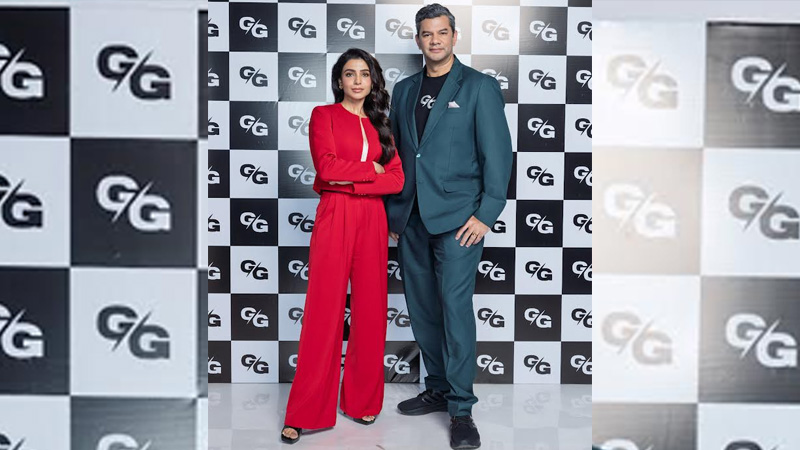
MUMBAI: Game faces on, pressure high India’s gaming ambitions are levelling up. Good Game, billed as the world’s first as-live global gaming reality show, has officially launched in India with a bold mission: to crown the country’s first Global Gaming Superstar.
Blending esports with mainstream entertainment, the show brings together competitive gaming, creativity and on-camera performance in a format that tests more than just joystick skills. Contestants will be judged on gameplay, screen presence and their ability to perform under pressure, reflecting how gaming has evolved from pastime to profession and pop culture currency.
Fronting the show are three high-profile ambassadors: actor and entrepreneur Samantha Ruth Prabhu, Indian cricket star Rishabh Pant, and gaming creator Ujjwal Chaurasia. The winner will take home Rs 1 crore ($100,000) among the largest prize pools for any Indian reality show along with the chance to represent India on a global stage.
Backed by a planned annual investment of up to Rs 100 crore, Good Game is also courting brand partners, promising a minimum reach of 500 million among India’s core youth audience. The creators position the show as a bridge between entertainment and interactive culture, offering long-format content, community engagement and commercial scale.
Auditions are now open to Indian citizens aged 18 and above, inviting amateur and professional gamers, creators and performers alike. Shortlisted candidates will be called for in-person auditions in Mumbai on 14 and 15 February, and in Delhi on 28 February and 1 March 2026.
With big money, big names and even bigger ambition, Good Game signals a shift in how India views gaming not just as play, but as performance, profession and prime-time spectacle.






