News Broadcasting
News channels record increase in OTS in metros


MUMBAI: Connectivity of a television channel is something that every executive is concerned about in the industry – whether in the media or broadcast sector or cable TV. And pioneering this data and analytics information is Delhi-based Chrome Data & Analytics which keeps a tab on around 73 million TV homes nationally in analogue cable TV, digital cable TV and DTH.
We take a look at what the opportunity to see (OTS) was for various television genres and channels in week 48 of the year. It appears it was a week of the news channels, both business and general English news, as far as the eight metros are concerned.
 |
The reach of English news channels grew by 1.5 per cent and business news channels witnessed a 1.1 per cent gain. However, the English entertainment channels in the eight metros witnessed a drop of 0.3 per cent while the English movie channels saw a 0.6 per cent rise.
 |
Tarun Tejpal’s alleged misconduct with a journalist colleague in an elevator in a five star hotel in Goa, raised not only eyebrows of most urban Indians but also their interest as they tuned into news channels to catch up on the latest with the iconoclastic senior scribe.
Hindi GECs in the Hindi speaking markets (HSM) saw a drop of 0.9 per cent, while Hindi movies and Hindi news dropped by 0.1 per cent and 0.8 per cent respectively. Only the religious channels saw a 1.4 per cent increase in HSM.

The all India performance of sports and infotainment channels dipped in week 48. While sports recorded a one per cent drop, infotainment witnessed 2.6 per cent shaving respectively. Only the position of the kids’ channels in the all India market remained stable.
The top Hindi GEC channel in HSM was Star Plus with a 97.8 per cent OTS. Zee TV and Colors were not too far behind with 97.4 per cent and 97.3 per cent OTS respectively. Life OK lagged behind in the race with 94.9 per cent OTS.
Amongst the Hindi movie channels in HSM, Star Gold was the biggest gainer with 96.7 per cent OTS, while UTV Movies lagged at 88.8 per cent.
 |
ABP News was the leader in the Hindi News genre with an OTS of 93.2 per cent. And with 88.9 per cent, CNN-IBN was leading in the English news genre in eight metros, while CNBC Awaaz topped in the business news genre.
Undoubtedly, it has been an interesting week for the channels. Let’s wait and watch how things unfold for the channels in the coming week.
Click here for the full analysis







News Broadcasting
CNN-News18 to host Fury in the Gulf conclave on West Asia crisis
Three-hour summit to unpack geopolitical fallout and impact on India
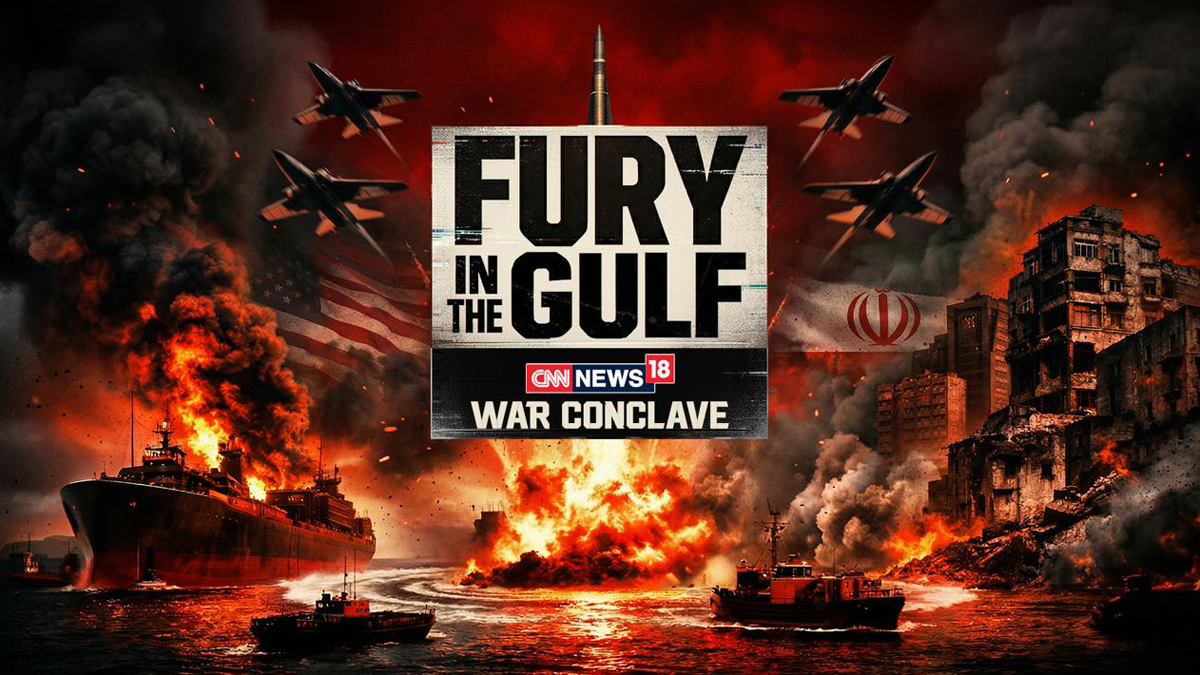
MUMBAI: CNN-News18 is set to host a special three-hour broadcast, Fury in the Gulf – War Conclave, on April 7, aiming to decode the escalating West Asia crisis and its far-reaching implications for India.
Scheduled from 4:00 PM to 7:00 PM, the conclave comes at a time when tensions between Iran and the United States are reshaping global geopolitics and triggering economic uncertainty. With India’s deep energy ties, trade links and large diaspora in the Gulf, the developments carry significant domestic relevance.
Built around the theme ‘Conflict, Consequences, and The Future,’ the programme will feature six curated sessions combining one-on-one interviews and panel discussions. The focus is to cut through the clutter and offer viewers a clearer understanding of the fast-evolving situation.
Key sessions include ‘Diplomacy in Times of War’ featuring Shashi Tharoor, and ‘World After the Iran Conflict’ with voices such as Ram Madhav, Reuven Azar, representatives from the European Union and the Iranian Deputy Envoy. Another session titled ‘Another Dunkirk?’ will bring together K. J. S. Dhillon and Jitin Prasada among others.
CNN-News18 editorial affairs director Rahul Shivshankar said, “In times of war, clarity becomes the most powerful tool. Fury in the Gulf – War Conclave brings together credible voices to address the questions and confusion that arise amid an overwhelming influx of information.”
He added that the initiative is aimed at delivering “facts, perspective, and insight” at a time when misinformation can easily cloud public understanding.
Echoing the sentiment, CNN-News18 CEO– English and business news Smriti Mehra said the conflict marks a defining global moment, with consequences that extend well beyond the region. She noted that the conclave seeks to present the crisis with “depth, nuance and responsibility” so audiences can better grasp its real-world impact.
As geopolitical tensions continue to dominate headlines, the conclave positions itself as an attempt to bring order to the noise, offering viewers a structured, insight-led look at a complex and rapidly shifting global situation.






