Special Report
Localisation key to growing non cricket ad pie


It‘s that time of year. When sports lovers of the non-cricketing variety (an extreme minority in a country that seems to swear by only one sport) have something to cheer about. The Indian cricket team is on a welcome break. Viewers too, one dare say, more so since the Boys in Blue have been been getting more brickbats than bouquets in the recent past.
Even as ESPN Star Sports focusses its attention on the F1 season and rival Ten Sports gets set to telecast the tennis world‘s first Grand Slam of the year, the French Open, it is as good time as any to pose the question — is there REALLY life after cricket?
Well, with Narain Kartikeyan and Sania Mirza entering the arena, interest in F1 and tennis is rising. Also, if the BCCI does finally launch its own channel then that will give private players pause for thought.

Getting in the view of the people who decide where and how the advertising rupee will be channelised in regards to television sports properties, Indiantelevision.com tapped the media planning community to get a grasp on the current scenario and what the future offered. Read on…
|
MARKET SIZE : First off, when one talks sport it needs noting that it is unique as opposed to other genres in that the revenue earned can go up drastically in one year due to a major event (like the cricket World Cup). The size of the sports genre in terms of ad revenues currently stands at Rs 5 billion. This represents about seven per cent of the total TV ad pie. Out of this, cricket takes away a whopping 85 per cent. Of this, 70-80 per cent goes to India cricket. So even a big non-India series like The Ashes, while being bigger than the likes of tennis or Formula I, has relatively limited appeal compared with anything involving the Indian team (even when they‘ve been doing as poorly as they have these past months). The following data with Indiantelevision.com gives an idea of just how important India cricket is and why ESPN Star Sports (ESS) fought so desperately last year for the rights. It is estimated that ESS made Rs 1,100 million in 2004 when they had the Asia Cup. This year in the absence of serious India cricket its ad revenue is expected to drop by 20 per cent. While it is doing initiatives to build up other properties like football which will be discussed later on, this will not fully cushion the impact. As things stand, ESS will showcase India going to Zimbabwe in October 2005 and Bangladesh in October 2006. Both are relatively smaller properties. It is only next year that things will pick up with the Fifa World Cup and India‘s tour of South Africa in December 2006. Ten Sports made Rs 1,200 million in 2004. This could grow by 15-20 per cent in 2006. Next year Ten will showcase India visiting Pakistan and the West indies. For 2005 Ten is expected to more or less maintain its ad revenue for 2004 thanks in part to the India-Sri Lanka-West Indies triangular in August. Negotiations for this series are currently taking place. Sony has the Champions Trophy next year and the World Cup in 2007. Planners note that the revenue cricket will get will depend on the extent to which ad rates are jacked up compared to the last time around. That is because the number of spots sold during the telecast is limited. For the Champions Trophy, since it is in India next year, the rates could go up by over 25 per cent. Cricket‘s revenue growth rate could touch 30 per cent in 2006. As Taj Television India MD Sharmista Rijhwani says, “Cricket is a religion in this country, and live cricket involving India always brings in the most viewers and as such will continue to remain the key revenue driver for any sports channel. This is not just due to the mass appeal of the game but also due to the demigod status of the cricket stars. “Likewise, any cricket-based programme like highlights, repeats of memorable games, preview/reviews, continues to have an unmatched grip on sports viewers. Our line-up over the next two years includes four India cricket series.”
Interestingly Starcom‘s Manish Porwal opines that the triangular in Sri Lanka in August will not blow the roof off the ceiling like the Pakistan tour. The big question though is who gets the rights when Sri Lanka come calling later this year. This includes a triangular at home against West Indies and Sri Lanka. England comes down next year. Should the BCCI, learning from past mistakes, launch its own channel then the cricket ad pie will get splintered further. Cricket is attracting a broader ad base: The perception of how cricket can be used is changing. As Lodestar Media‘s Nandini Dias says, “Normally cricket was seen as a male bastion. So we would consider it for Ceat, Castrol, financial brands, Birla White Cement etc. Over the last 2-3 years we also consider it for brands which are family oriented like Nerolac.” Porwal says, “One of the things that is helping cricket get ad revenue is the fact that benchmarks are available. There are data points. Viewership can be predicted better today for a day night India Sri Lanka encounter as it has happened before in the past. “This has reduced the unpredictability factor. The fact that more cricket is happening on weekends is also getting more people to tune in. So the advertiser can better measure his reach. Also the proportion of day-night games to all day games is going up. Naturally the former get more ratings.” EFFECT OF CRICKET ON OTHER SPORTS PROPERTIES MINIMAL: What effect does a major cricket property have on revenues of other sports? The general consensus is is that cricket does not affect the revenue that other properties earn. In fact cricket impacts mainline channels like Star Plus and SET. Planners point out that earlier you had male oriented brands moving off Star and Sony and moving onto cricket. These days cricket also attracts clients like Fair And Lovely which speak to both men and women. Therefore when cricket is on the likes of Star and Sony come out with special deals to keep clients on board who might migrate to cricket. In addition one cricket property could also compete with another. This especially holds true for next year. However Relay Worldwide GM Chetan Madaya feels that by and large the revenue that cricket will get will depend on the state of the economy. “If the economy is buoyant then there will be advertisers willing to put money on a tournament regardless of how many tournaments have gone before. “If Company A advertises for India-Pakistan in January 2006 and not for India-South Africa which takes place in December 2006 there will nonetheless be other clients who will step in to take Company A‘s place.” He also feels that clients, whether it is Coke or Samsung in India, need to take a long term (5-8 year) view of cricket and other sports. Brands according to him need to decide on whether sport should be an integral part of their long term strategy. Right now sport is seen as an opportunistic move. Cricket can be compared to the most popular programmes on Star Plus. In addition it also gives clients visibility in the South. Hence if immediate impact is needed then cricket can be used as an alternate to Star Plus. In this manner its importance has grown. Planners spoken to point out that brand budgets remain constant. The media planner is faced with making a choice between the best channel mix. The usual learning is that most of these channels are very interchangeable. So the more cost effective channel usually benefits. CHALLENGE IN MILKING CRICKET: What effect is the India cricket rights mess having on the media buying process? Group M‘s Manas Misra says that with the enormous uncertainty prevailing, selling cricket has been turned into an unorganised process. “This is not good for the game. It has reached a situation where people are waiting to see who get the rights. Deals are being done at the last minute. For the recently-concluded India Pakistan series, DD came in very late in the picture. Deals had to be negotiated at short notice. This affects the flexibility that DD has manouevre.” Having said that, it is a fact that DD in particular offers a cost effective buy. Planners opine that DD Sports holds the edge here over private channels. Interestingly Prasar Bharati CEO KS Sarma claims that DD garnered Rs 1.8 billion in gross revenues from the recently concluded India-Pakistan series. The talk in the industry though is at a much more modest Rs 1.35 billion but even going by Sarma‘s numbers one could argue that represents a wasted opportunity when you consider that expected figures were in the range of Rs 2.25 to 2.4 billion if it had been on a private channel. And considering that DD got in both a terrestrial and C&S audience it should have been even higher. Unsurprisingly, planners aver that DD did not undersell the property at all. Porwal argues that there is a price elasticity that exists within cricket. “DD does rational pricing and I think that they got it correct.” Porwal, meanwhile, points to one danger for cricket in the future. Costs could outweigh the benefits for a client getting onto cricket. Another problem he sees is that there is too much clutter happening. “There are too many innovations like 50:50, super fours, play of the day that happen during pre and post shows. The more innovations there are the less unique each one becomes.” SET India executive VP sales and revenue management Rohit Gupta, however, states that with sponsored innovations the viewership of the pre and post show on Max‘s Extraaa Innings have gone up four to five times.” Mindshare‘s Laxmi Narsimhan points to the fact that there are lots of properties next year will give buyers the chance to negotiate better. THE VIEWER‘S FICKLE TASTES: Perhaps a more serious danger that planners have noted is of viewer fatigue. If India do badly then viewers will switch off. In fact right now the interest in cricket has gone down. On a more positive note while cricket is expensive planners concede that it is the only national medium in the country. Even Bollywood cannot be considered national. Therefore even if a client decides to spend money on something else instead of cricket he/she has to remember that it cannot deliver the reach of cricket. OTHER SPORTS FIGHT OVER A PIFFLY Rs 750 MILLION: Other sports, meanwhile, fight over a relatively meager Rs 750 million pie. When asked in terms of ROI how Ten Sports and ESPN Star Sports stacked up, planners maintain that the only real valuable property is cricket. As regards the rest, there are only marginal differences separating the rival broadcasters.
When asked whether the share of other sports would grow this year Dias says, “We may not see a huge growth this year but in the next three there should be dramatic differences. India has been a single sport nation for years now with two sports channels who had a tie-up. Since last year the number of sports channels have increased. Only one of the five channels (including Zee Sports) can get a cricket series.” The challenge therefore will be for the other channels to promote another sport. Already there is innovation like PHL for hockey and the upcoming Futsal initiative for football. If the grassroots strategy is planned carefully then in another 2-3 years audiences will have developed liking and interest in each of these sports. That will result in ad revenue flowing in other sports planners opine.
It is estimated that the non cricket ad pie will grow at around 20 per cent a year. According to Misra, growing sports at the grassroots level is crucial. “If the channels do not do that then the viewership base for football, hockey will not expand.” When asked whether they would be putting in more money on F1 and tennis in anticipation of viewership growth as a result of Sania Mirza and Narain Kartikeyan, planners said that they are at this point of time considering it. Porwal states that there is no hard and fast rule as to who gets how much here. It depends on the property coming up. For instance next year‘s soccer World Cup will take out a chunk for football. In fact football could take out 30 per cent of the revenue for other sports next year. EPL and Uefa Champions league are also of value here. A large part of this can be attributed to the interactive initiatives that ESS has done like Goals where Nokia was involved. The tennis Grand Slams also have potential for growth in ad revenue along WWE on Ten Sports. That is because WWE gives advertisers an alternate platform to market to kids. A localised initiative like PHL will boost hockey‘s revenue. As far as channel based localisation was concerned planners feel enthused over the fact that ESS is conducting initiatives like the recently concluded Harsha Ki Khoj. The main issue for them is how ESS uses the winner Narsimhan as well as the other local interactive activities in the pipeline not just for ESS but for the other players. In this regard Rizhwani points out that interactivity is high on the agenda of Ten Sports in the coming months. “The overwhelming success of the monthly WWE contests where viewers can participate in an sms contest and get a chance to travel to watch live, one of the WWE pay per view specials has encouraged us to launch a few more in the coming months. The first of these is Janta Ki Awaz – an interactive weekly sms poll which invites viewers to respond to a relevant question on a current sports topic. “The response to the first six polls has been overwhelming both in terms of quality and the number of responses received. During the coming months, viewers and planners can expect to see many more of the same during live action telecasts on the channel.” All About Passion: Porwal states that apart from cricket all other sports will remain passion associations. “Clients will invest in them because they are able to reach a niche segment that is a die hard fan and not due to the ratings. This particularly applies to soccer.”
Mirza‘s presence could well attract advertisers that target women towards the sport of tennis. Planners have noted that what could help tennis‘ cause is the fact that there are virtually no young women icons in the country. Suddenly a starved industry has found an achiever who is not in the ‘beauty business‘. The worry for planners however is the fact that with all the hype being created Mirza could lose focus on the key priority- winning matches. This in turn could result in viewers turning off the sport to some extent. The potential within soccer: Planners are reasonably optimistic about soccer which has been growing in popularity over the last 2-3 World Cups. Obviously in terms of ratings there is no comparison to cricket. However as an alternate sport it has gained popularity consistently. Porwal is particularly keyed up about next years soccer World Cup. “People feel the need to belong to the global community. That is why they will tune in large numbers for the World Cup. Hence ESS will be able to cash in a big way here. However a tournament like Euro will only cater to a niche base. Advertisers looking to make a dent in three centres – Goa, West Bengal and Kerala will use it. That is because nationwide people are not naturally inclined towards the sport. At the same time soccer could be used by some corporates as a strategic intent. An example of this is Mahindra. The company has a team Mahindra United which is doing extremely well. “ Going beyond the 30 second spot: Planners spoken to state that they have started exploiting sports the way it is done abroad. This is happening with brand endorsements, product placements, associations with properties, talent hunts, equipment branding, backing of clubs and teams. Needless to say 99 per cent of all this activity revolves around cricket. But with younger newer icons like Karthikeyan, Mirza sports branding and broadcasting may see better days. Misra points out to innovations like Third Umpire, scrollers happening. Also the use of billboards is slowly becoming an alternative to on air advertising. “Clients are getting smart. They feel that if the camera pans a billboard a few times in the day then people will automatically see it.” According to Rizhwani the focus of Ten Sports has always been on providing wholesome, innovative sports content in its purest form. While the channel has consciously stayed away from forcing so-called advertising innovations during live telecasts that could take away from enjoying the purity of the game she states that Ten Sports does go the extra mile by creating interesting innovations and vignettes to find ways to partner its advertisers in taking their brand message to the viewers. “This philosophy has been well appreciated by our advertising partners and viewers alike.” ESS MD RC Venkateish says, “We do not look at ourselves as simply selling spots. We are a marketing solutions provider. A great example of this is what we did for the 2003 India Australia series and the 2004 Asia Cup. We have a dedicated team referred to as the ‘Innovations‘, which provides customised solutions based on the communication requirement of a client. “To give you an example for the India Australia series we came out with the Push Clean Facts initiative for which we teamed up with Gillette Vector. The visual had interesting facts about cricketers coming out from the Gillette razor. In fact Gillette had come to us with is idea. For the Asia Cup BSNL came on board for the Action Replay initiative.” Max too has been taking interactivity to the next level. That helps advertisers get further integrated into cricket. For instance for the Holland Cup and Champions Trophy last year it had ‘Voice of India‘ has been developed. This will basically be a poll which will be aired on the channel and will seek people‘s opinion regarding various situations in the match. Viewers could vote by SMSing their reply to 2525. Planners also feel that by and large broadcasters are doing fine in the presentation of sports. When asked whether sports broadcasting could be improved further in ways that would benefit the broadcasters and advertisers Dias says, “In India sports is not taught at the grass root levels. In school there is so much concentration on academics that sports is seen as a waste of time. So the change has to happen first in the way sports is perceived and not necessarily in the presentation of the sports.” Conclusion: Cricket will continue to be all-important in a media planners mix notwithstanding fears of viewer fatigue. However with more channels coming up it is imperative for the channels to look at ways in which the other properties can be monetised. Therefore localisation is the key. |






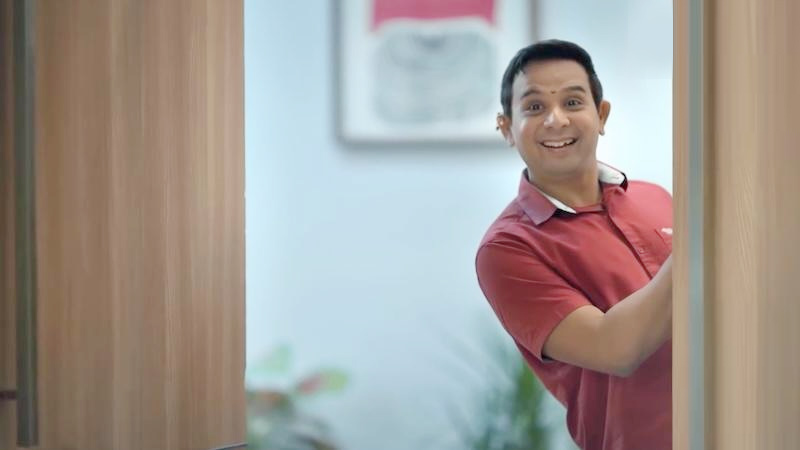
MUMBAI: Some friendships are made in heaven; others are coded in Mumbai. Hamara Vinayak, the first-ever digital original from Siddharth Kumar Tewary’s Swastik Stories, turns the divine into the delightful, serving up a story that’s equal parts start-up hustle and spiritual hustle.
Some tech start-ups chase unicorns. This one already has a god on board. Hamara Vinayak takes the leap from temple bells to notification pings and it does so with heart, humour and a healthy dose of the divine.
At its core, the show asks a simple but audacious question: what if God wasn’t up there, but right beside you, maybe even debugging your life over a cup of chai?
The show’s tagline, “God isn’t distant… He’s your closest friend” perfectly captures its quirky soul. Across its first two episodes, screened exclusively for media in Mumbai, the series proves that enlightenment can come with a good punchline.
The series follows a group of ambitious young entrepreneurs running a Mumbai-based tech start-up that lets people around the world book exclusive virtual poojas at India’s most revered shrines. But as their app grows, so do their ethical grey zones. Into this chaos walks Vinayak, played with soulful serenity and sly wit by the charming Namit Das, a young man whose calm smile hides something celestial.

He’s got the peaceful look of a saint but the wit of someone who could out-think your favourite stand-up comic. Around him spins a crew of dream-driven youngsters – Luv Vispute, Arnav Bhasin, Vaidehi Nair and Saloni Daini who run a Mumbai-based tech start-up offering devotees across the world the chance to book “exclusive” poojas at India’s most sacred shrines. It’s a business plan that blends belief and broadband – and, as the story unfolds, also tests the moral compass of its ambitious founders.
“The first time I read the script, I found the character very pretty,” Namit joked at the post-screening interaction. “It’s a beautiful thought that God isn’t distant, he’s your closest friend. And playing Vinayak, you feel that calm but also his cleverness. He’s the friend who makes you think.”
The reactions to the series ranged from smiles to sighs of wonder. Viewers were charmed by the show’s sincerity and sparkle, a quality that stems from its creator’s belief that faith can be funny without being frivolous.
Among the cast, Luv Vispute shines brightest, his comic timing adding sparkle to the show’s more reflective beats. But what keeps Hamara Vinayak engaging is the easy rhythm of its writing – one moment touching, the next teasing, always gently reminding us that spirituality doesn’t have to be solemn.
Luv spoke fondly of his long association with Swastik. “Since my first show was with Swastik, this feels like home,” he said. “Every project with them is positive, feel-good, and this one just had such a different vibe. I truly feel blessed.”
Saloni Daini, who brings infectious warmth to her role, added that she signed up the moment she heard the show was about “Bappa.”
“We shot during the Ganpati festival,” she recalled. “The energy on set was incredible festive, faithful, and full of laughter. It’s such a relatable story for our generation: chaos, friendship, love, kindness, and faith all mixed together.”

Vaidehi Nair and Arnav Bhasin complete the ensemble, each representing different shades of ambition and morality in the start-up’s journey. Their camaraderie is easy and believable, a testament to how much the cast connected off-screen as well.
This clever fusion of mythology and modernity plays to India’s two enduring loves, entertainment and faith. Mythology has long been the comfort zone of Indian storytellers, from the televised epics of the 1980s to the glossy remakes that still command prime-time TRPs. For decades, gods have been our most bankable heroes. But Hamara Vinayak tweaks the formula not by preaching, but by laughing with its characters, and sometimes, at their confusion about where divinity ends and data begins.
Creator Siddharth Kumar Tewary, long hailed as Indian television’s myth-maker for shows like Mahabharat, Radha Krishn and Porus, explained the show’s intent with characteristic clarity, “This is our first story where we are talking directly to the audience, not through a platform,” he said. “We wanted to connect young people with our culture to say that God isn’t someone you only worship; He’s your friend, walking beside you, even when you take the wrong path. The story may be simple, but the thought is big.”
That blend of philosophy and playfulness runs through the show. “We had to keep asking ourselves why we’re doing this,” Tewary added. “It’s tricky to make something positive and spiritual for the OTT audience, they’ve changed, they want nuance, not sermons. But when the purpose is clear, everything else aligns.”
For the creator of some of Indian TV’s most lavish spectacles, Hamara Vinayak marks a refreshing tonal shift. Here, Tewary trades celestial kingdoms for co-working spaces and cosmic battles for office banter. Yet his signature remains: an eye for allegory, a love for faith-infused storytelling, and an understanding that belief is most powerful when it feels personal.
Hamara Vinayak, after all, feels less like a sermon and more like a conversation over chai about what success means, what faith costs, and why even the gods might be rooting for a start-up’s Series A round.
As Namit Das reflected during the Q&A, “Life gives us many magical, divine moments we just forget to notice them. Sometimes even through a phone screen, you see something that redirects you. That’s a Vinayak moment.”
The series also mirrors a larger cultural pivot. As audiences migrate from television to OTT, myth-inspired tales are finding new form and flexibility online. The digital screen lets creators like Tewary reinvent the genre, giving ancient ideas a modern interface, without losing the emotional charge that’s made mythology India’s storytelling backbone for decades.
In a country where faith trends faster than any hashtag, Hamara Vinayak feels both familiar and refreshingly new, a comedy that’s blessed with heart, humour and just enough philosophy to keep the binge holy.
For a country where mythology remains the oldest streaming service, Tewary’s move from TV to OTT feels both natural and necessary. Indian storytellers have always turned to gods for drama, guidance and TRPs from Ramayan and Mahabharat on Doordarshan to glossy mytho-dramas on prime time. But digital platforms allow creators to remix reverence with realism, and in Hamara Vinayak, faith gets an interface upgrade.
The result is a show that feels like a warm chat with destiny, part comedy, part contemplation. And in an age of cynicism, that’s no small miracle.
As Tewary put it, smiling at his cast, “The message had to be positive. We just wanted to remind people that even in chaos, God hasn’t unfriended you.”
With 5 episodes planned, Hamara Vinayak promises to keep walking that fine line between laughter and light. It’s mythology with memes, devotion with dialogue, and a digital-age reminder that even the cloud has a silver lining or perhaps, a divine one.
If the first two episodes are any sign, the show doesn’t just bridge heaven and earth, it gives both a Wi-Fi connection.






