GECs
‘Insight into consumer behaviour all important‘


Ratings don‘t answer all issues facing planners and broadcasters alike, qualitative data is what is needed.Psychographics are becoming more important than ever before and insights into consumer behavior is what will keep you ahead. That was the gist of what research consultant Prashant Sanwal put forth at indiantelevision.com‘s National CAS Media Summit in Mumbai last Friday in his presentation during the session “Beyond Ratings”.
Sanwal, former head of programming and marketing at SET and later, head of the Alpha channels, probed the question of whether ratings alone would be a sufficient measure and guide to planners after CAS is implemented. Exploring the vista beyond ratings, Sanwal said that it is pertinent to understand sociological/psychological changes to predict which formats will work in the future, as well as to anticipate which people would go in for the set top boxes.
Excerpts from the presentation:

Current Scenario
Today?s markets are represented by 4 Cs
– Complexity
– Cut-throat Competitiveness
– Constant Change
– and…
What is needed are need holistic solutions not part
– This requires complete information
– Little knowledge is dangerous
Ratings
* Imply measure
* How many? watch what? for how long?
* Need to know WHY which people watch what for how long
Thus ratings are a must but not enough
– Need Qualitative inputs too
Some Qs – beyond ratings
* Why will which kind of people go for STBs?
* Why do more men watch movies? In the afternoon?
* Why do other (than Star) saas-bahu shows not work?
* For how long will saas-bahu work?
* Understand sociological/psychological changes to predict which formats will work in the future
* Is Kyunki really X times more effective than Kkusum or Lipstick?
* Is mere watching = involvement?
Some Qs
*Solidarity Vs Power
– Who controls remote, when, for how long?
– Active vs passive watching
– Do all members in front of the TV watch with equal interest?
*Message effectiveness
– What is remembered?
– Is it considered relevant?
– What are the feelings associated?
– Brand ? Program fit?
Surface messages Vs Metamessages
– In communication two kinds of messages are sent out
– You ask your assistant ?Have you finished the report??
*Surface
– Literally is the work finished or not
*Meta
– I don?t think you have finished your work
– You are incompetent
Metamessages
– Conveyed through intonation, pitch and facial and bodily expressions accompanying the words.
– Meaning conveyed through
Words: 7%
Tonality: 38%
Body posture: 55%
– Thus the powerful part of communication is through metamessages
In Sum
– Ratings don?t answer all the issues
– In today?s scenario you need Qualitative data too
– Psychographics are becoming more important than ever before
– Insights into consumer behavior is what will keep you ahead – Can you afford to ignore this in the face of the final C?
CUT IN COSTS!
Among the key points the presentation made therefore, are that it is equally important to study whether a Kyunki Saas Bhi Kabhi Bahu Thi is more effective than a Kkusum or a Lipstick, and whether the saas bahu formula will endure.
Other questions that need to be looked into are – who controls the remote, when, for how long and whether all members in front of the TV watch with equal interest. Message effectiveness also needs to be monitored with respect to what is remembered, whether it is considered relevant and the feelings associated with it.
 Prashant Sanwal has recently started his own research and marketing consultancy company called Vitamin S. Like vitamins he intends to use research as a process to both prevent and cure marketing problems.






GECs
EPIC Company unifies all brands under single EPIC identity
IN10 Media rebrand aligns TV, digital and films into one ecosystem
MUMBAI: The EPIC Company, formerly known as IN10 Media Network, has announced a sweeping brand consolidation, bringing its television channels, digital platforms and content IPs under a single identity, EPIC.
The move is aimed at simplifying the company’s structure while creating a more connected content ecosystem spanning television, digital and films. By aligning multiple verticals under one umbrella, the company is looking to present a sharper, more cohesive face to both audiences and partners.
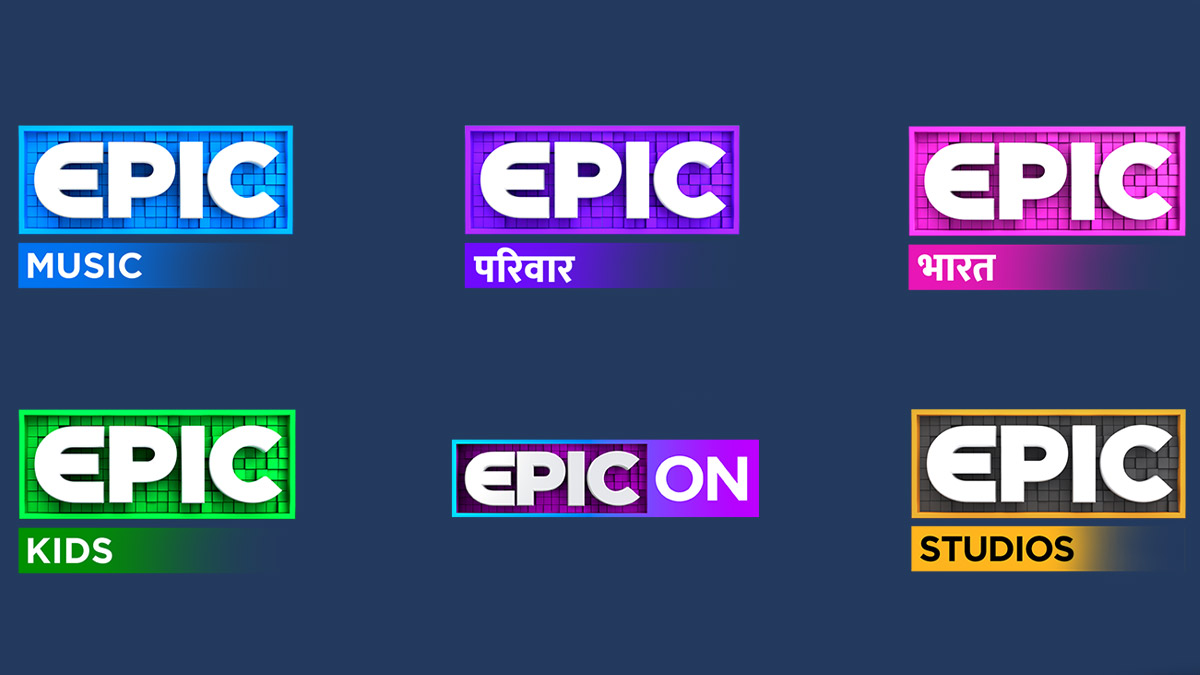
As part of the transition, several channels have been rebranded to align with the EPIC identity. EPIC will now operate as EPIC TV, while Nazara becomes EPIC Bharat, Filamchi is now EPIC Bhojpuri, Gubbare transitions to EPIC Kids, and ShowBox is reintroduced as EPIC Music. Ishara will continue under the identity EPIC Parivaar, maintaining its core positioning.
The company has also refreshed EPICON, its streaming platform, to reflect a more unified and modern brand experience. The overhaul is designed to improve content discovery and create a seamless experience across platforms.
This consolidation follows the recent launch of EPIC Studio, a unified production arm that brings together Juggernaut Productions and MovieVerse Studio, as the company expands its footprint across films, OTT and television.
The EPIC Company managing director Aditya Pittie said, “As our scale has grown, it has become important to simplify how we operate and how we present ourselves to the ecosystem. This consolidation gives us a clearer, more future-ready structure to partner, invest, and build at scale, while ensuring that for viewers, the experience is more seamless and intuitive.”
With the rebrand, The EPIC Company is positioning itself as a platform-agnostic content network, focused on scale, simplicity and integrated storytelling. By bringing everything under one banner, it is aiming to make its content universe easier to navigate and harder to ignore.






