Executive Dossier
‘India far less regulated than most developed nations’ : S K Arora – I&B secretary

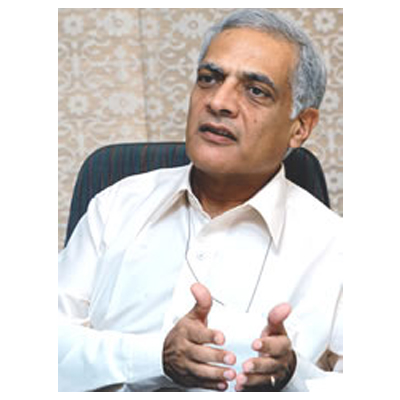
A 1971 batch officer of the Indian Administrative Service, SK Arora is a man of few words and believes that actions should speak for themselves. But as the information and broadcasting secretary, the media glare just refuses to leave him. More so, as the government’s approach to policies relating to media is widely debated and criticized by the industry and some political parties who support the present coalition government from outside.
In a rare interview, Arora, who has served in various capacities in the central and state governments (including his home cadre of Andhra Pradesh), discusses various issues relating to I&B ministry and media in a freewheeling conversation with Indiantelevision.com Anjan Mitra.
Excerpts:

|
On his overview on the media industry: As far as projections for the TV industry are concerned, the government doesn’t have any such numbers. It’s for the industry to base its numbers on the experience here in India and those internationally. But, if the industry projections made by the likes of Ernst & Young and PwC are to be believed, then the numbers are quite healthy and the industry is anticipating considerable boom. |
||
|
On government’s perspective of the media industry vis-?-vis regulation: Till five to seven years back, the media industry in India was largely unregulated. But since then, the government has brought in several guidelines including those related to uplinking, FM radio, syndication in newspapers, foreign investment in print medium, downlinking and even conditional access system, which unfortunately could not be implemented in the form it was being intended to. At the same time, the government is now looking at new regulations like those pertaining to downlinking and a uniform content regulation framework for radio, TV and films. |
||
|
||
|
On whether the Indian market is over-regulated compared to Western countries: At the government level, we respond to rapid developments on various fronts, including technology. Our response and regulations are not grandiose in nature. Regulations here are evolving along with the industry and its needs. Take, for example, the uplink and downlink policy. When the government realized that all the issues that needed to be addressed were not being done so through the uplinking laws, downlink guidelines were framed. It’s now awaiting Cabinet approval. |
||
|
On criticism of legislation being enacted in a piecemeal fashion instead of planning a comprehensive law: (The Broadcast Bill, introduced in Parliament by Jaipal Reddy under a different government, got referred to a joint parliamentary committee. Before the legislation could get the sanction of Parliament’s authority, incorporating the parliamentary panel’s recommendations, the government fell because of political reasons and with it the Broadcast Bill was abandoned.) Now the government is responding in a manner to the changing scenario as it finds best. The changes taking place in the industry necessitates action and regulation in a piecemeal fashion to respond to the need of the hour as effectively as possible. |
||
|
On whether talks of content regulation is a lot of hot air or actual intent: The latest on this is that the government has appointed a 30-member panel, under the chairmanship of the I&B secretary, comprising representatives from the government, industry and activists to study and make suggestions on content in films, radio and TV. The agenda is to design, elaborate and expand the present censorship guidelines. If one looks at such content guidelines in the US and the UK, such legislation runs into hundreds of pages. Here in India it’s brief. The agenda of the panel, which is yet to be notified, will be, thus, to have some commonality of guidelines for radio, TV and films and form content guidelines that will not only be self-explanatory, but also the basis of what should be done by future regulators. This panel on content guidelines has a three-month time frame to submit its recommendations to the government. |
||
|
On self-regulation and adult content: |









MUMBAI: Game faces on, pressure high India’s gaming ambitions are levelling up. Good Game, billed as the world’s first as-live global gaming reality show, has officially launched in India with a bold mission: to crown the country’s first Global Gaming Superstar.
Blending esports with mainstream entertainment, the show brings together competitive gaming, creativity and on-camera performance in a format that tests more than just joystick skills. Contestants will be judged on gameplay, screen presence and their ability to perform under pressure, reflecting how gaming has evolved from pastime to profession and pop culture currency.
Fronting the show are three high-profile ambassadors: actor and entrepreneur Samantha Ruth Prabhu, Indian cricket star Rishabh Pant, and gaming creator Ujjwal Chaurasia. The winner will take home Rs 1 crore ($100,000) among the largest prize pools for any Indian reality show along with the chance to represent India on a global stage.
Backed by a planned annual investment of up to Rs 100 crore, Good Game is also courting brand partners, promising a minimum reach of 500 million among India’s core youth audience. The creators position the show as a bridge between entertainment and interactive culture, offering long-format content, community engagement and commercial scale.
Auditions are now open to Indian citizens aged 18 and above, inviting amateur and professional gamers, creators and performers alike. Shortlisted candidates will be called for in-person auditions in Mumbai on 14 and 15 February, and in Delhi on 28 February and 1 March 2026.
With big money, big names and even bigger ambition, Good Game signals a shift in how India views gaming not just as play, but as performance, profession and prime-time spectacle.







