Special Report
Commercial success of golf emerges as a ray of hope for other sports

When he was thrown out of the Air Force Golf Club in Delhi on charges of theft in 1994, Ashok Kumar’s aspirations of reaching the higher echelons in golf looked all but shattered. For one, who belonged to rural area of Samastipur in Bihar, it was a shocking experience as he was trying to earn his livelihood by doing a job as a caddie.
 Arjun Atwal and Jyoti Randhwa |
After nearly a decade, the same caddie is proving to be an emerging professional in the country. Ashok finished fifth in the Indian golf tour with his earnings crossing Rs. 0.8 million in the previous season.
Ashok’s fairy-tale journey is one among many such stunning stories if one considers the top golf professionals in the country.
“Golf has changed my life,” says Ashok, who used to earn Rs. 50 per day as a caddie before amateur Amit Luthra came to his rescue.

Ashok’s effort coupled with the rise of golf in the country is proving to be an ideal blend for talented professionals.
An Indian professional earning over Rs 2 million in prize-money from the domestic sports circuit is not something that one gets to hear about often.
True, there is bound to be an alarming difference when prize-money on offer in the international circuit is compared with domestic tournaments. But unlike cricket, in which there is a huge discrepancy in terms of what state players and big stars manage to earn on an annual basis, golf has proved an attractive proposition even on the domestic circuit.
When the previous season of the Indian Professional Golf (IPGA) Tour, known as Hero Honda Golf Tour, ended in April this year, caddie-turned pro Mukesh Kumar had earnings of Rs 2.17 million from the 21 events he had teed off in.
The total prize money on offer in the 25 events conducted in 2002-03 season was Rs 24.2 million, again the biggest in terms of money involved in the domestic circuit. Besides this, there are two Asian PGA Tour events in the Hero Honda Masters and Royal Challenge Indian Open, both worth $300,000, held in the country, making total money at stake over Rs 54 million.
These figures are commendable considering the fact that ITC Limited was forced to withdraw its sponsorship from various sporting events in 2001 after the introduction of the Tobacco Products Bill. ITC’s trademark apparels brand Wills Sport, involved as the title sponsor of the IPGA Tour since 1997, had contributed more than Rs 45 million in 2000-01 for its involvement in the IPGA and APGA Tours.
 Jeev Milkha Singh |
After ITC was smoked out, Hero Honda Motors Limited stepped up its involvement as the two-wheeler major took over as the title sponsor of the IPGA. Also, the prize-money of the Hero Honda Masters, the APGA tour with which the company has been involved since 1997, has been increased from $200,000 to $300,000 making it on par with the other APGA event Royal Challenge Indian Open.
A good deal of credit for the popularity of golf in the country goes to the Professional Golfers Association of India and Tiger Sports Marketing (TSM), which has the commercial rights for the Indian PGA Tour and the Hero Honda Masters. IMG has the commercial rights for Royal Challenge Indian Open.
According to Delhi-based Tiger Sports Marketing (TSM), which has a stake in leading sports management company Percept D’Mark, the domestic prize-money in the new season, set to commence in July, is expected to touch Rs 26 million.
“We had five new sponsors in Color Plus, Forest Hill Golf Course Chandigarh, Tata Steel, J&K Tourism and Hyundai Motor India in the last season. The response from corporate houses continues to be very encouraging. For instance, DHL, which had sponsored a modified stableford tournament last year, increased its prize money from Rs 0.6 million to Rs 1 million in its second year. Tata Steel is planning to conduct a Rs 2.5 million event this year after being involved with a Rs 1 million event in its inaugural professional tournament in Jamshedpur,” said TSM senior manager-media, Joy Chakravarty.
Other sponsors associated with IPGA events include The Hindu, Servo, The Hindustan Times, Dutch Bangla Bank, SRF and Honda Siel.
The rise of golf in stature in monetary terms has gone hand in hand with the success of Indian professionals such as Jyoti Randhawa, who won the APGA order of merit last year and Arjun Atwal winning two events on the European PGA Tour. Besides Randhawa and Atwal, Jeev Milkha Singh continues to excel on tougher circuits such as the Japanese PGA Tour.
 Geoffrey Boycott and Shilpa Shetty at the Hero Honda Masters 1999. |
“Golf may not be cricket but it provides a solid platform for sponsors to tap a certain section of audiences. In case of Hero Honda, it sponsors cricket tournaments targeting masses while it uses golf as a brand building exercise. They cater to the segment, which plays golf,” added Chakravarty.
Besides professional events, golf, through corporate events and charity-linked tournaments provides different options. In case of corporate events, usually one-day affair during weekend, corporate houses invite selective list of consumers or clients and business partners for strengthening their relationship. During the off-season, TSM is gearing up for the international charity tournament `Christel House Open 2003′. The event, sponsored by ING Vysya and co-sponsored by 3M and MSN India, will held simultaneously at 20 golf courses in four continents on 16 June.
So what are the expenses a sponsor has to bear when its gets involved with an event? “Lets say if the prize-money of an event is x, then the amount spend by sponsor is approximately 2x. Besides prize-money, sponsor has to give capitation fee to Professional Golfers Association of India, management fee to Tiger Sports Marketing, venue décor and capitation fee to golf course. This excludes advertising and other promotional activities undertaken by the sponsor,” said Chakravarty.
There seems to be no dearth of accountability as far as operations of TSM are concerned. Besides providing value for money to its clients by providing maximum visibility at the course, unlike in many other sports in the country, TSM also excels in its relation with media.
The coverage of IPGA tour is assured by a professional team, which comprises scorers and public relation division of TSM. Even for Hindi media, which at times, seems to be clueless when it comes to coverage, TSM provides enough insight to the media persons to clear their concern regarding nuances of the sport.
“Besides media coverage, we have developed an online platform for our clients in the form of `indiangolftour.com’. We have our monthly newsletter, which goes to golf courses throughout the country. Then we had tied up with TEN Sports for IPGA Tour last year. There are media partners for our events and there are professional-amateur (pro-am) events during each professional event, which provides networking opportunities to our sponsors,” said Chakravarty, who feels there are lots of intangible benefits as well which sponsors get through their association with golf.
Gone are the days when golf was considered to be a past time by selective group of people or Army professionals. The number of golf courses has touched 204 across the country and the list also includes designer courses such as Arnold Palmer-designed DLG Golf and Country Club and Jack Nicklaus-designed Classic Golf Resort in the northern part of the country.
With Indian players performing well on the international circuit and domestic circuit continuing to grow, golf is destined to stay here for a long time. Cricket may be miles ahead of the rest but success of golf proves there is space for more if sport federations bring in more professionalism and accountability in their operations.
For list of leading money earners on the circuit:
The Money list





MUMBAI: Some friendships are made in heaven; others are coded in Mumbai. Hamara Vinayak, the first-ever digital original from Siddharth Kumar Tewary’s Swastik Stories, turns the divine into the delightful, serving up a story that’s equal parts start-up hustle and spiritual hustle.
Some tech start-ups chase unicorns. This one already has a god on board. Hamara Vinayak takes the leap from temple bells to notification pings and it does so with heart, humour and a healthy dose of the divine.
At its core, the show asks a simple but audacious question: what if God wasn’t up there, but right beside you, maybe even debugging your life over a cup of chai?
The show’s tagline, “God isn’t distant… He’s your closest friend” perfectly captures its quirky soul. Across its first two episodes, screened exclusively for media in Mumbai, the series proves that enlightenment can come with a good punchline.
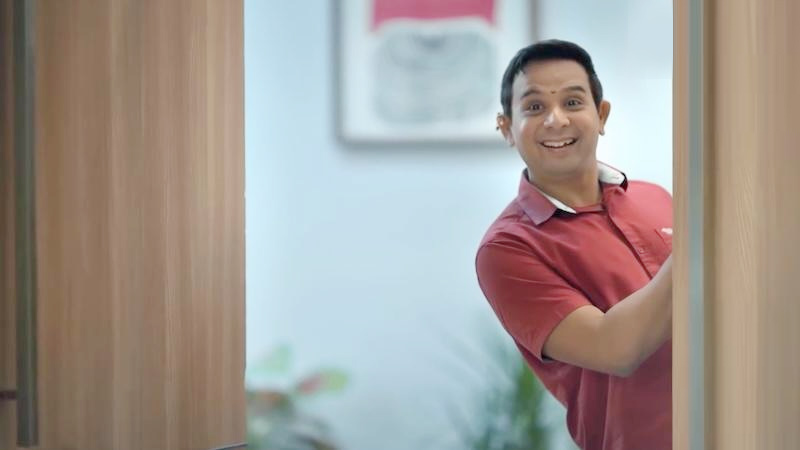
The series follows a group of ambitious young entrepreneurs running a Mumbai-based tech start-up that lets people around the world book exclusive virtual poojas at India’s most revered shrines. But as their app grows, so do their ethical grey zones. Into this chaos walks Vinayak, played with soulful serenity and sly wit by the charming Namit Das, a young man whose calm smile hides something celestial.

He’s got the peaceful look of a saint but the wit of someone who could out-think your favourite stand-up comic. Around him spins a crew of dream-driven youngsters – Luv Vispute, Arnav Bhasin, Vaidehi Nair and Saloni Daini who run a Mumbai-based tech start-up offering devotees across the world the chance to book “exclusive” poojas at India’s most sacred shrines. It’s a business plan that blends belief and broadband – and, as the story unfolds, also tests the moral compass of its ambitious founders.
“The first time I read the script, I found the character very pretty,” Namit joked at the post-screening interaction. “It’s a beautiful thought that God isn’t distant, he’s your closest friend. And playing Vinayak, you feel that calm but also his cleverness. He’s the friend who makes you think.”
The reactions to the series ranged from smiles to sighs of wonder. Viewers were charmed by the show’s sincerity and sparkle, a quality that stems from its creator’s belief that faith can be funny without being frivolous.
Among the cast, Luv Vispute shines brightest, his comic timing adding sparkle to the show’s more reflective beats. But what keeps Hamara Vinayak engaging is the easy rhythm of its writing – one moment touching, the next teasing, always gently reminding us that spirituality doesn’t have to be solemn.
Luv spoke fondly of his long association with Swastik. “Since my first show was with Swastik, this feels like home,” he said. “Every project with them is positive, feel-good, and this one just had such a different vibe. I truly feel blessed.”
Saloni Daini, who brings infectious warmth to her role, added that she signed up the moment she heard the show was about “Bappa.”
“We shot during the Ganpati festival,” she recalled. “The energy on set was incredible festive, faithful, and full of laughter. It’s such a relatable story for our generation: chaos, friendship, love, kindness, and faith all mixed together.”

Vaidehi Nair and Arnav Bhasin complete the ensemble, each representing different shades of ambition and morality in the start-up’s journey. Their camaraderie is easy and believable, a testament to how much the cast connected off-screen as well.
This clever fusion of mythology and modernity plays to India’s two enduring loves, entertainment and faith. Mythology has long been the comfort zone of Indian storytellers, from the televised epics of the 1980s to the glossy remakes that still command prime-time TRPs. For decades, gods have been our most bankable heroes. But Hamara Vinayak tweaks the formula not by preaching, but by laughing with its characters, and sometimes, at their confusion about where divinity ends and data begins.
Creator Siddharth Kumar Tewary, long hailed as Indian television’s myth-maker for shows like Mahabharat, Radha Krishn and Porus, explained the show’s intent with characteristic clarity, “This is our first story where we are talking directly to the audience, not through a platform,” he said. “We wanted to connect young people with our culture to say that God isn’t someone you only worship; He’s your friend, walking beside you, even when you take the wrong path. The story may be simple, but the thought is big.”
That blend of philosophy and playfulness runs through the show. “We had to keep asking ourselves why we’re doing this,” Tewary added. “It’s tricky to make something positive and spiritual for the OTT audience, they’ve changed, they want nuance, not sermons. But when the purpose is clear, everything else aligns.”
For the creator of some of Indian TV’s most lavish spectacles, Hamara Vinayak marks a refreshing tonal shift. Here, Tewary trades celestial kingdoms for co-working spaces and cosmic battles for office banter. Yet his signature remains: an eye for allegory, a love for faith-infused storytelling, and an understanding that belief is most powerful when it feels personal.
Hamara Vinayak, after all, feels less like a sermon and more like a conversation over chai about what success means, what faith costs, and why even the gods might be rooting for a start-up’s Series A round.
As Namit Das reflected during the Q&A, “Life gives us many magical, divine moments we just forget to notice them. Sometimes even through a phone screen, you see something that redirects you. That’s a Vinayak moment.”
The series also mirrors a larger cultural pivot. As audiences migrate from television to OTT, myth-inspired tales are finding new form and flexibility online. The digital screen lets creators like Tewary reinvent the genre, giving ancient ideas a modern interface, without losing the emotional charge that’s made mythology India’s storytelling backbone for decades.
In a country where faith trends faster than any hashtag, Hamara Vinayak feels both familiar and refreshingly new, a comedy that’s blessed with heart, humour and just enough philosophy to keep the binge holy.
For a country where mythology remains the oldest streaming service, Tewary’s move from TV to OTT feels both natural and necessary. Indian storytellers have always turned to gods for drama, guidance and TRPs from Ramayan and Mahabharat on Doordarshan to glossy mytho-dramas on prime time. But digital platforms allow creators to remix reverence with realism, and in Hamara Vinayak, faith gets an interface upgrade.
The result is a show that feels like a warm chat with destiny, part comedy, part contemplation. And in an age of cynicism, that’s no small miracle.
As Tewary put it, smiling at his cast, “The message had to be positive. We just wanted to remind people that even in chaos, God hasn’t unfriended you.”
With 5 episodes planned, Hamara Vinayak promises to keep walking that fine line between laughter and light. It’s mythology with memes, devotion with dialogue, and a digital-age reminder that even the cloud has a silver lining or perhaps, a divine one.
If the first two episodes are any sign, the show doesn’t just bridge heaven and earth, it gives both a Wi-Fi connection.







