News Broadcasting
Broadcast Bill still has minefields to clear before becoming law

So the government again renews its long-in-the-trying attempt to get broadcast regulation in place. Is it just us or is this feeling of déj? vu that it may be another exercise in futility shared by the industry as well?
Still, that doesn’t take away the importance of having a comprehensive legislation for the sector that is estimated to be worth Rs 427 billion in 2010 according to the PricewaterhouseCoopers report presented at this year’s Ficci Frames convention.
The Broadcasting Bill has been dangling on an uncertain thread for close to a decade now. Several information and broadcasting (I&B) ministers in several governments, who have tried to maneuver it past the corridors of the houses of Parliament and into law, have come and gone. All have failed; none have had the drive to push it through. It has proved to be an untouchable piece of legislation; a hot potato that is dropped every time an effort is made.

|
The Bill tries to address the issue of encouraging domestic originating content on TV channels by mandating a 15 per cent share for it. |
Another attempt is being made to enact the covered-with-dust Bill. A draft has been prepared for the Union Cabinet’s persual and initial indications are that it is going to impact almost everyone in the broadcasting food chain. It is slated to be introduced in Parliament during the Monsoon session by not-even-a-year-in-the-seat I&B minister Priya Ranjan Dasmunsi.
I&B ministry secretary SK Arora has been working for a long time on putting together the document. Help has been sought from several quarters while drafting the Bill: the US FCC, Casbaa in Hong Kong, other consultants, consumer groups and interested parties.
The Bill tries to address the issue of encouraging domestic originating content on TV channels by mandating a 15 per cent share for it. Then it caps cross media ownership at 20 per cent, and even share of voice for a TV channel or cable TV network nationally at 15 per cent. A Broadcasting Regulatory Authority of India (Brai) is to be set up (have we not heard this one before?), which will monitor the content on TV channels and oversee the broadcast industry in all its aspects the same way as the Telecom Regulatory Authority of India does in the telecom sector.
|
No broadcaster or cable TV operator is going to cede power and control they have acquired over the years they have been operating in India. |
The first piece of legislation is more than welcome and should in the medium to long term give a boost to local TV production and more so animation. Of course, it goes without saying that it is in the interest of local broadcasters to create local content that appeals to audiences and there’s no running away from it if they are seeking to make money out of the market. That they have so largely shied away from doing so, may be part of their business plan. There will be some bickering about this by some of the players.
Of course, the government will have to specify whether the 15 per cent content cap relates to fresh domestic prime time content or to recycled content. Remember some broadcasters might buy garbage worthy shows dirt cheap and put them on air late at night in order to fulfil the legislative norms.
Additionally, a transition period will have to be specified so that the domestic production industry gears up to deliver the quality animation and programming that is demanded internationally, so that international broadcasters can – if they want – buy worldwide rights.
On the whole, over time the 15 per cent imposition could well catapult TV documentary makers and animation studios into the next level. Though some argue that the cap should be higher, it is a good start.
That is just the soft part of the Bill though. Trying to control share of voice and restricting cross media ownership are two clauses that are arguably going to get the entire Bill stuck in a quagmire; lot of it political. Reason: hectic lobbying is going to commence to do away with them. It is these clauses which in the past have prevented the Bill from becoming a law. And, it is quite likely to do the same once again.
No broadcaster or cable TV operator is going to cede power and control they have acquired over the years they have been operating in India. Many of their business models are based on this power.
The setting up of Brai is another moot point. It’s about time a content watchdog was set up. The other option is that the industry kowtows to a xenophobic government’s every content concern and censorship demand.
Additionally, the draft Bill fails to clearly address broadcasting in a converged era to hand held devices and mobile phones.
A key question everyone is asking: will the Bill go through this time? It looks unlikely to have an easy ride and, in all probability, will be knocked into another shape and form. Or, it may end up being still born. Its passage will depend on how much pressure the I&B mandarins — and the Congress-led coalition government — are willing to withstand not only from the Opposition, but also allies, some of whose sympathisers have big media dreams in East and South India.




News Broadcasting
CNN-News18 rolls out Battle for the States ahead of key polls
Multi-format election coverage tracks voter mood across five battleground states
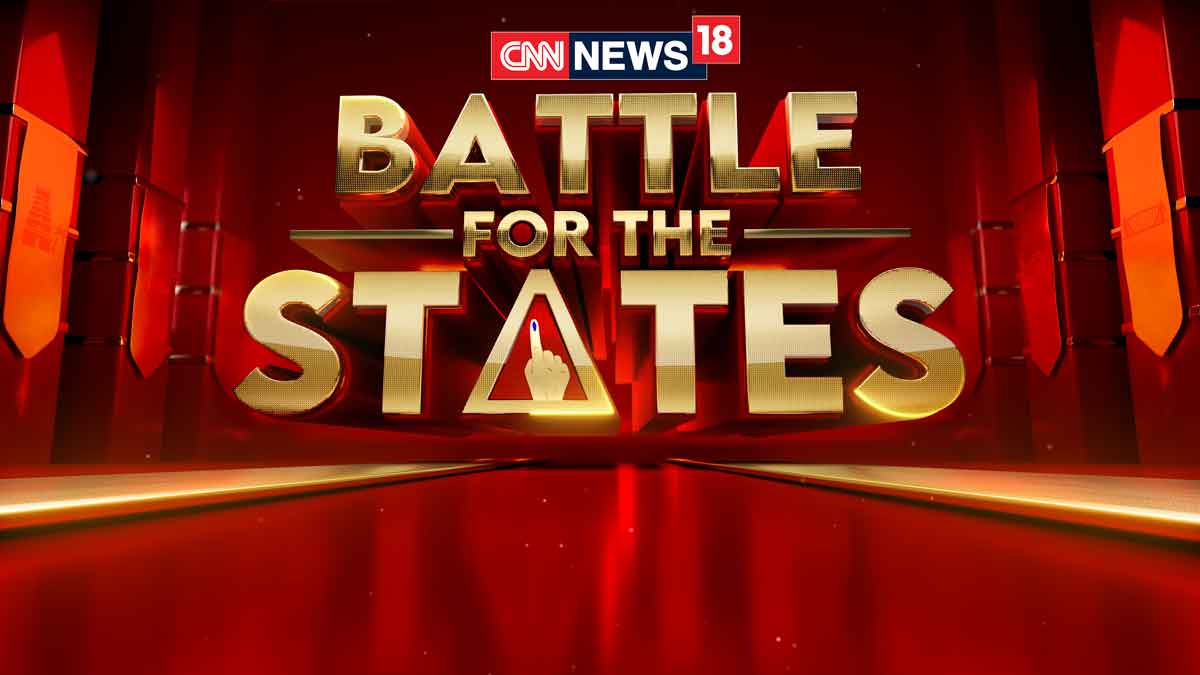
NEW DELHI: CNN-News18 has launched a special election programming initiative titled Battle for the States, as India gears up for high-stakes Assembly elections across West Bengal, Tamil Nadu, Kerala, Assam and Puducherry.
Built around the theme ‘Road to Power’, the multi-format coverage aims to follow the entire electoral journey, from campaigning and polling to results and government formation. The network is leaning into on-ground reportage and data-backed storytelling to decode voter sentiment across regions where local issues often shape the narrative.
The programming line-up includes ‘Vote Tracker’, a three-part series developed in collaboration with survey agency Vote Vibe. The show blends survey insights with expert commentary and field reporting, using augmented reality graphics to present complex electoral data such as vote share, seat projections and leadership preferences in a more accessible format. It will air every Monday evening until April 6.
Adding a cultural lens to political reporting is ‘So Saree!’, a ground-driven segment where women anchors travel across constituencies dressed in traditional handwoven sarees from each state. The format uses attire as a storytelling device, highlighting regional identity while capturing grassroots voices.
Meanwhile, ‘Unfiltered Kaapi’ and ‘Chai-Niti’ bring a more conversational tone, drawing inspiration from everyday political discussions in tea stalls and coffee corners. These segments aim to break down key issues through candid, fast-paced exchanges between anchors and reporters, tailored to regional sensibilities.
For viewers seeking deeper insights, the weekend docuseries ‘Reporters Project’ takes a longer view, with correspondents travelling across constituencies to map voter concerns and political shifts on the ground.
“Elections are about people, their aspirations, identities and the issues that matter to them, and every state tells a different story,” said CNN-News18 editorial affairs director Rahul Shivshankar. He added that the initiative focuses on understanding “the sentiment on the ground and what’s driving voter choices”.
Echoing the emphasis on credibility, Network18 CEO – English and business news Smriti Mehra said the network aims to combine on-ground reporting with data-led insights to deliver clear and timely coverage as the elections unfold.
With a mix of data, culture and grassroots reporting, CNN-News18 is positioning Battle for the States as a comprehensive window into one of India’s most closely watched electoral cycles, where every vote carries a story waiting to be told.






