Applications
Trai’s Tariff Order is faulty, MSOs tell Tdsat

NEW DELHI: The multi-system operators (MSOs) today said it was erroneous on the part of the Telecom Regulatory Authority of India (Trai) to contend that they could earn their revenue from carriage fee and other services provided by them.
Counsel C S Vaidyanathan and Arun Kathpalia on behalf of Digicable Networks and C. Aryama Sundaram on behalf of Indusind Media & Communications Ltd (IMCL) told the Telecom Disputes Settlement and Arbitration Tribunal (Tdsat) that the Trai Tariff order was clear an MSO approaching a broadcaster to get a channel on demand will not be entitled to get carriage fee.
Concluding the arguments he had commenced yesterday, Vaidyanathan said the MSOs were all for the digital addressable system but after sorting out the ‘unworkable problems’.
According to the Trai tariff order, charges collected from the subscription in the basic service tier (BST) of 100 free to air television channels (FTA) for Rs 100 will be in the ratio of 55:45 and that of paid channels or bouquet of paid channels will be a maximum of Rs 150 and shall be shared in the ratio of 65:35 between MSO and the local cable operator (LCO) respectively.
Sundaram said the Tariff order was clear in placing obligations only on the MSO, while there was nothing of this kind on the broadcaster or the LCOs.
While supporting the arguments of Vaidyanathan, Sundaram said that the MSO will make just one and a half times above what the broadcaster pays him, but he will have to share this with the LCO. Thus, the MSO will end up paying from his pocket to meet the demands of the LCOs as well as the broadcasters.
As an example, he said that he will have to pay around Rs 100 to the broadcaster and Rs 52.50 to the LCO out of the Rs 150 for the bouquet of paid and FTA TV channels. The 65:35 ratio was unworkable as the MSO would have to pay out of pocket.
He said a tariff order should mean fixing of tariff, but all that Trai had done was to fix a ceiling for the BST and for the bouquet of paid and FTA channels.
The provision for carriage fee in the Tariff order becomes unworkable when read with the Interconnect Order, he said. Furthermore, he said the Tariff order had also forbidden any placement fee.
He said that Trai had mandated that an MSO will have to make arrangements for 500 channels, and the MSO could only do this by spending hugely on technology.
There were around 300 FTA channels and, therefore, even the BST would be different for every consumer, with the result that different combinations will have to be made.
He also wondered why Trai had not fixed any rate for the broadcaster to pay as carriage fee, noting that this will mean that a broadcaster can give the same content at different rates for MSO, DTH, and IPTV.
The Trai Act was clear that under Section 11(2), the sector regulator should fix the tariff and not merely give a ceiling or a revenue sharing formula.
He said clearly there was non application of mind in the explanatory memorandum to the Tariff Order, and he also said there was clearly no study or research for fixing the formula.
Kathpalia said there was also fear of monopoly as two broadcasters had joined together to set up their own cartel distribution with vertical interest in some MSOs Thus, there was no level playing field for the MSOs.
Arguments will continue tomorrow as Tdsat also has to hear further arguments on behalf of Digicable and a petition by Delhi Distribution Company, New Delhi.
Also read:
Trai Tariff Order not based on any study or rationale: Counsel

Applications
With 57 per cent single new users, Ashley Madison rebrands as discreet dating platform
Platform says majority of new members now identify as single
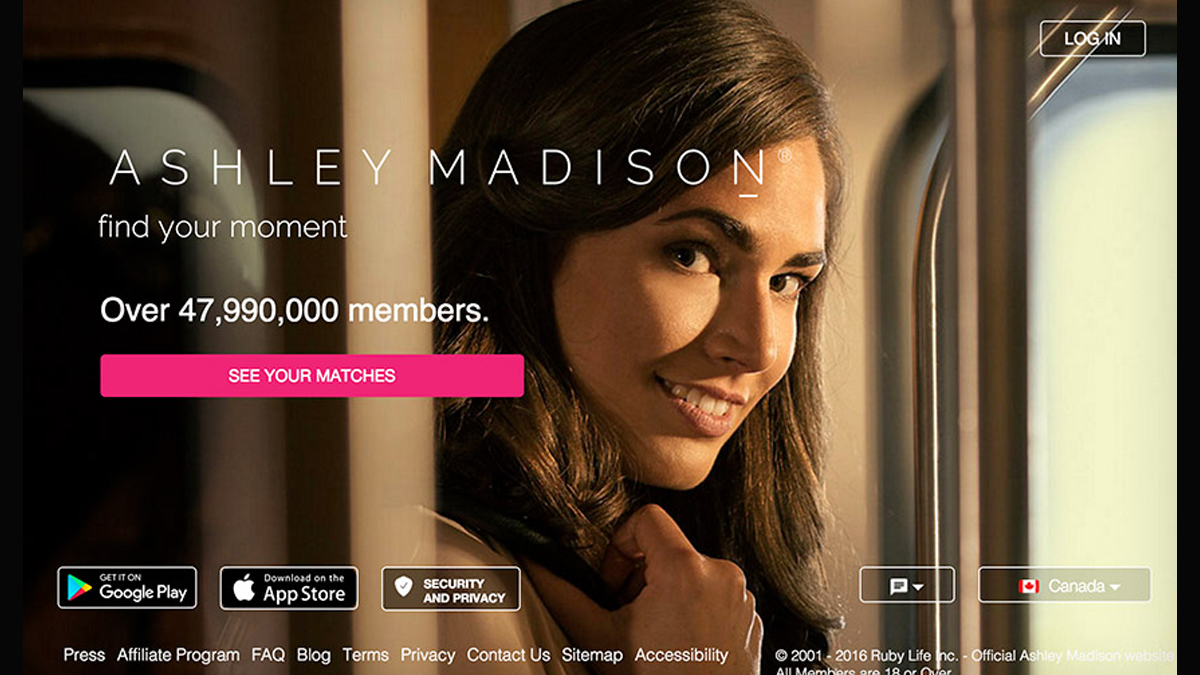
INDIA: Ashley Madison is shedding the “married-dating” label that defined it for two decades, repositioning itself as a platform for discreet dating in what it calls the post-social media age.
The rebrand, unveiled in India on 27 February, 2026, marks a structural shift in business model and identity. Once synonymous with married dating, the company now describes itself as the “premier destination for discreet dating” under a new tagline: Where Desire Meets Discretion.
The pivot is data-driven. Internal figures show that 57 per cent of global sign-ups between 1 January and 31 December, 2025 identified as single: a notable departure from the platform’s married core. The company argues that its community has already evolved beyond its original positioning.

“In an age where our lives have been constantly put on public display, privacy has become the new luxury,” said Ashley Madison chief strategy officer Paul Keable. He framed the platform’s offering as “ethical discretion” for singles, separated, divorced and non-monogamous users seeking private connections.
The shift also taps into wider digital fatigue. A global survey conducted by YouGov for Ashley Madison, covering 13,071 adults across Australia, Brazil, Canada, Germany, India, Italy, Mexico, Spain, Switzerland, the UK and the US, found mounting discomfort with hyper-public online lives.
Among dating app users, 30 per cent cited constant swiping and messaging as a source of fatigue, while 24 per cent pointed to pressure to curate public-facing profiles and early personal disclosure. Some 27 per cent said fears of screenshots or information being shared contributed to exhaustion; an equal share cited unwanted attention.
The retreat from oversharing appears broader. According to the survey, 46 per cent of adults actively try to keep most aspects of their life private online. Only 8 per cent feel comfortable sharing most aspects publicly, while 35 per cent say they are becoming more selective about what they disclose.
Ashley Madison is betting that this cultural recalibration towards controlled visibility can be monetised. By doubling down on privacy infrastructure and reframing itself around discretion rather than infidelity, the company is attempting to convert reputational baggage into a premium proposition.