Applications
Ku-band growth engine for satellite operators: Study

MUMBAI: The Ku-band market will continue to be the main growth engine for the commercial satellite operators who are aggressively targeting new markets such as mobility and other high value services in order to maintain sustained revenue expansion for the coming years, according to a report.
The NSR’s Global Assessment of Satellite Supply & Demand report says that the commercial satellite operators grew capacity leasing revenues by $635 million between 2010 and 2011.
“The Ku-band market will continue to be the main growth engine for the commercial satellite market for the coming ten years”, noted NSR Senior Analyst and the report author Patrick M. French.
“The direct-to-home (DTH) TV market alone could add $1.4 billion in net new revenues by 2021 out of $4.3 billion expected in total for the Ku-band segment. Solid Ku-band revenue gains are also expected from the video distribution, enterprise data, commercial mobility and gov/mil verticals.”
A major finding in the report is that the commercial satellite industry is finally beginning to fully grasp the significance of High Throughput Satellites (HTS) and their potential to drive new market growth in many other market verticals beyond satellite broadband access services.
The report found that all HTS markets combined could add almost $1.9 billion in net new revenues to the industry in the coming ten years, which is the second biggest gain after the Ku-band market.
“The widebeam Ka-band market, especially for the gov/mil segment in the Middle East, is also beginning to get some real traction for the industry even if total revenue growth is expected to be substantially smaller that the Ku-band or HTS side of the business,” added French.
“There should also be continued strong growth in C-band video distribution services driven by expanding carriage of HD and SD channels, plus slow ramp up of 3D and eventually Ultra HD channels.”
The only cloud NSR identified on the horizon was the potential for weakening C-band backhaul demand after 2015 should the industry begin to rapidly migrate to the use of HTS and O3b capacity for data-intensive 3G and 4G backhaul.

Applications
With 57 per cent single new users, Ashley Madison rebrands as discreet dating platform
Platform says majority of new members now identify as single
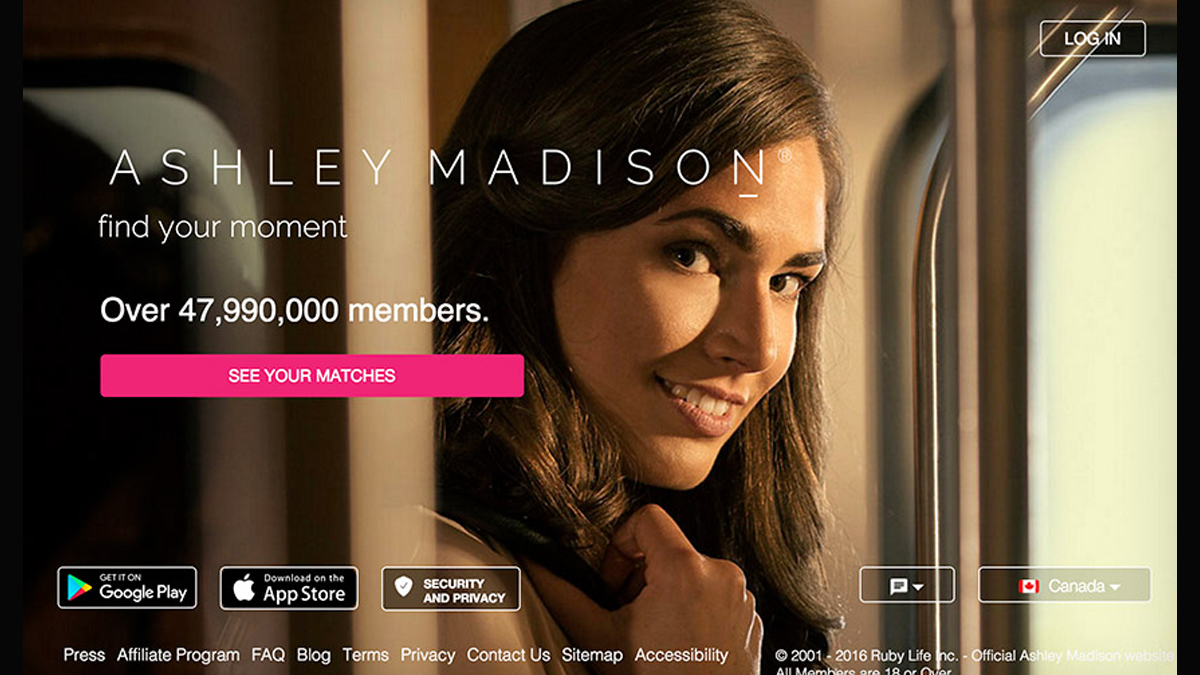
INDIA: Ashley Madison is shedding the “married-dating” label that defined it for two decades, repositioning itself as a platform for discreet dating in what it calls the post-social media age.
The rebrand, unveiled in India on 27 February, 2026, marks a structural shift in business model and identity. Once synonymous with married dating, the company now describes itself as the “premier destination for discreet dating” under a new tagline: Where Desire Meets Discretion.
The pivot is data-driven. Internal figures show that 57 per cent of global sign-ups between 1 January and 31 December, 2025 identified as single: a notable departure from the platform’s married core. The company argues that its community has already evolved beyond its original positioning.

“In an age where our lives have been constantly put on public display, privacy has become the new luxury,” said Ashley Madison chief strategy officer Paul Keable. He framed the platform’s offering as “ethical discretion” for singles, separated, divorced and non-monogamous users seeking private connections.
The shift also taps into wider digital fatigue. A global survey conducted by YouGov for Ashley Madison, covering 13,071 adults across Australia, Brazil, Canada, Germany, India, Italy, Mexico, Spain, Switzerland, the UK and the US, found mounting discomfort with hyper-public online lives.
Among dating app users, 30 per cent cited constant swiping and messaging as a source of fatigue, while 24 per cent pointed to pressure to curate public-facing profiles and early personal disclosure. Some 27 per cent said fears of screenshots or information being shared contributed to exhaustion; an equal share cited unwanted attention.
The retreat from oversharing appears broader. According to the survey, 46 per cent of adults actively try to keep most aspects of their life private online. Only 8 per cent feel comfortable sharing most aspects publicly, while 35 per cent say they are becoming more selective about what they disclose.
Ashley Madison is betting that this cultural recalibration towards controlled visibility can be monetised. By doubling down on privacy infrastructure and reframing itself around discretion rather than infidelity, the company is attempting to convert reputational baggage into a premium proposition.