Applications
Digitisation: Dish TV‘s offensive short of price war

MUMBAI: Direct-to-home (DTH) service providers will use the short window of three weeks to work on channel packages and market them but this will fall short of price war to grab cable TV customers who are required to shift to digital distribution networks for viewing their television shows by 31 October in the four metros of Mumbai, Delhi, Kolkata and Chennai.
Dish TV, India‘s leading DTH operator, has triggered the marketing warfare with a basic channel tier offering comprising 70 channels, including 22 radio channels operated by All India Radio (AIR), free of cost for five years. But the DTH sector may still breathe easy as there is no battle launched yet on the pay channels which would have hurt the finances of the broadcast-carriage services sector which is struggling with low ARPUs (average revenue per user) and subsidisation of set-top boxes (STBs) necessary for digital TV viewing.
“The price war will start only when pay channels are touched. If there is no insane price war yet, it means that the industry has matured and does not want to sink into further losses just for gaining subscriber volumes,” a media analyst said.
The offer, restricted to new Dish TV subscribers, will include all Doordarshan channels, 9X, Zee Smile, B4U Movies, Cinema TV, News Express, P7News and 9XM. It also has three international channels like NHK World, Russia Today DW-TV Asia+.
The offer also comes with a rider that customers have to remain active by subscribing to a regular package at least twice during the year.
In a nutshell, customers will have to pay Rs 1590 for buying a Dish TV STBs and subsequently have to recharge their account with one of the basic packages twice a year to avail of the pay channels. The cheapest non-south basic package Dish TV offers is the Family pack which is available at Rs 200 for a six-month period (The family pack is priced at Rs. 200 per month).
“The new customers will be eligible to receive a basic channel tier of 70 channels for life (five years). They will just have to do the minimum recharge of Rs 200 every six months to help us identify that they are still on our network,” said Dish TV Chief Operating Officer Salil Kapoor.
Kapoor also informed that in case customers do not recharge twice a year, the free channels will be switched off. He exuded confidence that there would be a significant offtake for the offer since customers don‘t want their television sets to go blank referring to the government diktat that broadcasters will have to switch off signals to analogue homes.
Dish TV’s offer is part of its ‘Go Digital’ campaign for which the operator plans to spend Rs 300 million for multi-media campaign which will include print, on-ground and digial in addition to television commercials, according to Kapoor.
Dish TV plans to spend Rs 900 million towards marketing this fiscal ending 31 March 2013.
Competition unmoved by Dish TV‘s offering
According to an executive from a rival DTH operator, Dish TV‘s new offer is akin to DD Direct Plus (Doordarshan‘s free subscription DTH offering) which offers similar channels and that too at a one time investment of buying a STB. “Customers who want free-to-air channels can opt for DD Direct Plus since they don‘t have to pay for recharging apart from the STB,” the executive said requesting anonymity. Besides, Dish TV has the satellite co-location advantage with DD Direct Plus, the executive added.
Tata Sky managing director Harit Nagpal said that the Dish TV offer is just a re-packaging of an old offer. He also felt that the package is devoid of a competitive advantage since it consists of FTA channels which is also available on DD Direct Plus.
“This product has been in the market for quite sometime. But there was no traction for this kind of product because DTH providers operate in a pay TV market and pay TV customers are looking at pay channels at the end of the day,” Nagpal averred.
Kapoor is, however, undeterred by criticism and is confident that the offer will help Dish TV in consolidating its market leadership, “We expect 7 million consumers to switch from analogue to digital. Out of this about 50-60 per cent are expected to opt for DTH. We expect to capture about 30-35 per cent of that,” he held.
He said that the DTH operator was targeting customers across the spectrum and was not restricted to any specific target group.
The cable TV sector, which has been working on its channel packages, is unmoved by such offerings. “Cable TV subscribers will require Hindi GECs such as Star Plus, Zee TV, Sony and Colors. So there will be no impact on us. The 70 channels on free offering are very weak and consumers will not stay with Dish TV because of that. Moreover, since we have a lot of bandwidth, we can match these free channel offerings,” said the executive of a leading multi-system operator (MSO).
Dish TV‘s churn and other benefits
Dish TV will hope to arrest its churn to cable through this offering. “The switch-off due to non payment will not mean a total blackout of channels. He will get to watch the 70 channels under the new offering till he refills within the six-month period. But how effective this will be to arrest churn remains to be seen since the channels on offer are weak,” an industry observer said.
Dish TV will also get to report on its churn numbers for the new subscribers after a period of six months (from the 3 months that it currently does).
The new offering is also seen by some as an attempt by Dish TV to create a differentiator value. “For those who are choosing a DTH service provider, this will be seen as an incremental value offering. The dealers can make this a selling point to induce new customers. Only time will tell how effective a marketing ploy this will be,” said a media analyst at a broking firm.

Applications
With 57 per cent single new users, Ashley Madison rebrands as discreet dating platform
Platform says majority of new members now identify as single
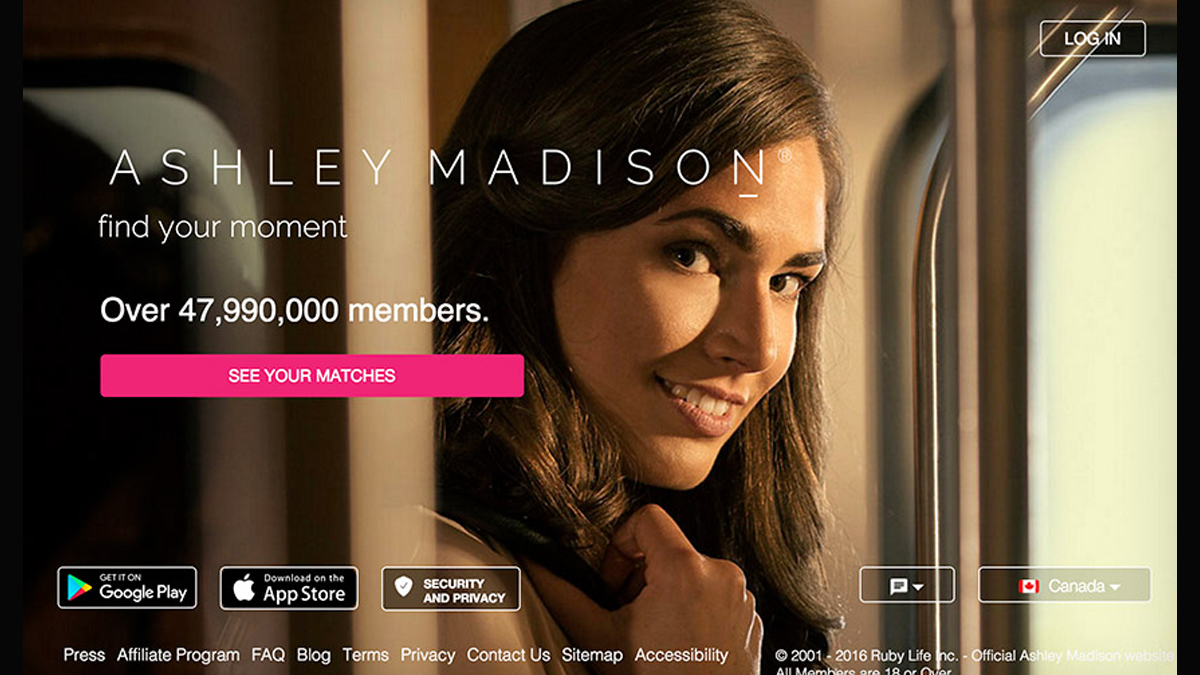
INDIA: Ashley Madison is shedding the “married-dating” label that defined it for two decades, repositioning itself as a platform for discreet dating in what it calls the post-social media age.
The rebrand, unveiled in India on 27 February, 2026, marks a structural shift in business model and identity. Once synonymous with married dating, the company now describes itself as the “premier destination for discreet dating” under a new tagline: Where Desire Meets Discretion.
The pivot is data-driven. Internal figures show that 57 per cent of global sign-ups between 1 January and 31 December, 2025 identified as single: a notable departure from the platform’s married core. The company argues that its community has already evolved beyond its original positioning.

“In an age where our lives have been constantly put on public display, privacy has become the new luxury,” said Ashley Madison chief strategy officer Paul Keable. He framed the platform’s offering as “ethical discretion” for singles, separated, divorced and non-monogamous users seeking private connections.
The shift also taps into wider digital fatigue. A global survey conducted by YouGov for Ashley Madison, covering 13,071 adults across Australia, Brazil, Canada, Germany, India, Italy, Mexico, Spain, Switzerland, the UK and the US, found mounting discomfort with hyper-public online lives.
Among dating app users, 30 per cent cited constant swiping and messaging as a source of fatigue, while 24 per cent pointed to pressure to curate public-facing profiles and early personal disclosure. Some 27 per cent said fears of screenshots or information being shared contributed to exhaustion; an equal share cited unwanted attention.
The retreat from oversharing appears broader. According to the survey, 46 per cent of adults actively try to keep most aspects of their life private online. Only 8 per cent feel comfortable sharing most aspects publicly, while 35 per cent say they are becoming more selective about what they disclose.
Ashley Madison is betting that this cultural recalibration towards controlled visibility can be monetised. By doubling down on privacy infrastructure and reframing itself around discretion rather than infidelity, the company is attempting to convert reputational baggage into a premium proposition.